Start with what the space needs to hold
Bathroom drawers and cabinets often become crowded because many small things share a limited space. Before buying bins or dividers, empty one drawer or cabinet at a time onto a clear surface. Working in small areas keeps the project manageable and lets you finish each space before moving on. Wipe the empty storage area, then look at its dimensions and any obstacles, such as pipes or a drawer that does not open fully.
Group what you removed by use: daily grooming, dental care, hair care, spare toiletries, cleaning supplies and occasional-use items. Set aside empty packaging and products you no longer want. Check product labels before deciding how to store anything with special handling instructions. The aim is not to keep every category in the bathroom; it is to make room for the things that benefit from being there.
Put the daily routine within easy reach
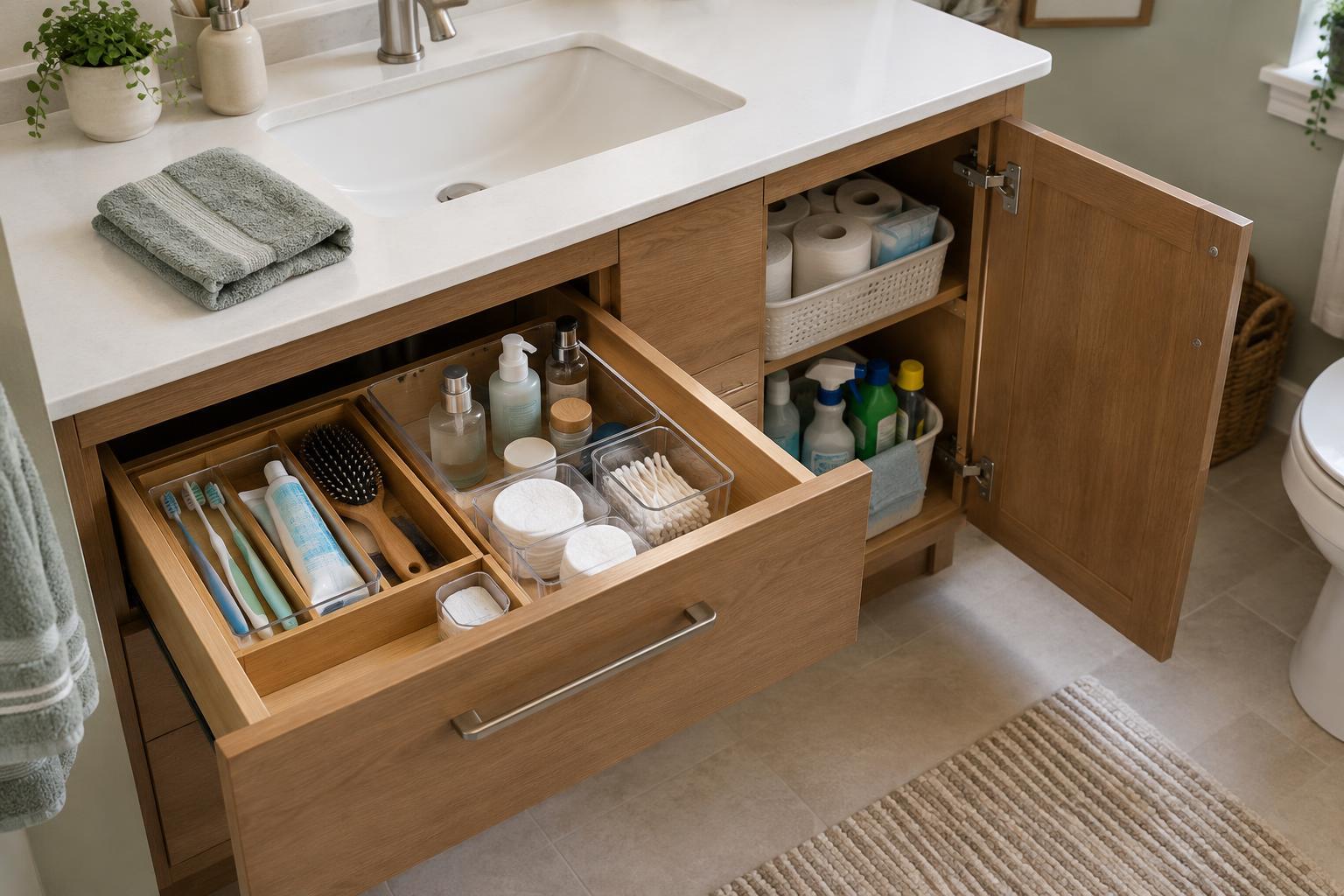
The simplest organizing rule is to give the easiest-to-reach spots to the items you use most. A top drawer might hold a toothbrush, hairbrush or other daily tools, while a lower drawer holds less frequent supplies. In a cabinet, place regularly used items toward the front and extras behind them. If you share the bathroom, separate personal items by person where space allows so nobody has to search through someone else’s things.
Think about where you stand when using each item. If you brush your hair at the mirror, a brush stored near the sink makes sense. If spare towels are used only after a shower, they may belong in a nearby cabinet rather than the busiest drawer. Good placement removes small points of friction from the routine; it does not require every shelf to look symmetrical.
Choose organizers after you measure
Dividers, shallow trays and small open containers can stop little items from sliding into a mixed pile. Measure the inside width, depth and height of a drawer before choosing them, and remember to leave room for the drawer to close. Test a layout with containers you already own, if possible. A row of narrow trays can work well for small tools, while a larger open section may be better for bulky items that are awkward to fit into compartments.
Cabinets need a different approach because their contents are often taller and harder to see. A handled bin can keep related spare supplies together and make the back of a shelf easier to reach. A shelf riser may help when there is unused vertical space, but it is worth checking that bottles still clear the shelf above. Under a sink, measure around the plumbing rather than treating the cabinet as a simple rectangle. Organizers should make items easier to retrieve, not create an extra layer to unpack.
Give extras and awkward items clear homes
Backups are useful, but they can quietly take over prime storage space. Keep one accessible place for current products and a separate place for unopened extras. You can group the extras in a cabinet bin and check it before buying more. This also makes it easier to notice duplicate purchases without imposing a complicated inventory system.
Store damp items where they can dry rather than sealing them into a closed container. Keep cleaning products in their original containers and follow their labels, especially when deciding where to place them in a shared household. If children or pets can access a lower cabinet, consider a more secure location for products that should be kept out of reach. For items that do not tolerate bathroom humidity well, another room may be a better long-term home.
Make the system easy to maintain
Once everything has a place, try the arrangement for a week or two. Notice what gets left on the counter or dropped into the wrong drawer. That is useful feedback: the assigned home may be too far away, too full or too fiddly to use. Move a container or simplify a category before assuming you need more storage.
A brief reset can keep the system working. Return stray items, remove empty packaging and check whether the spare-supplies bin still fits comfortably. Labels can help with shared or seldom-used categories, but obvious daily items may not need them. The best bathroom organization is flexible enough to accommodate changing routines while keeping the things you need visible and easy to put away.