Start where paper actually arrives
Paper clutter often begins before anyone has decided what to do with it. An envelope lands on the kitchen counter, a school form goes beside the door, and a receipt stays in a coat pocket. The first improvement is not a larger filing system. It is one dependable place to put paper until you can look at it.
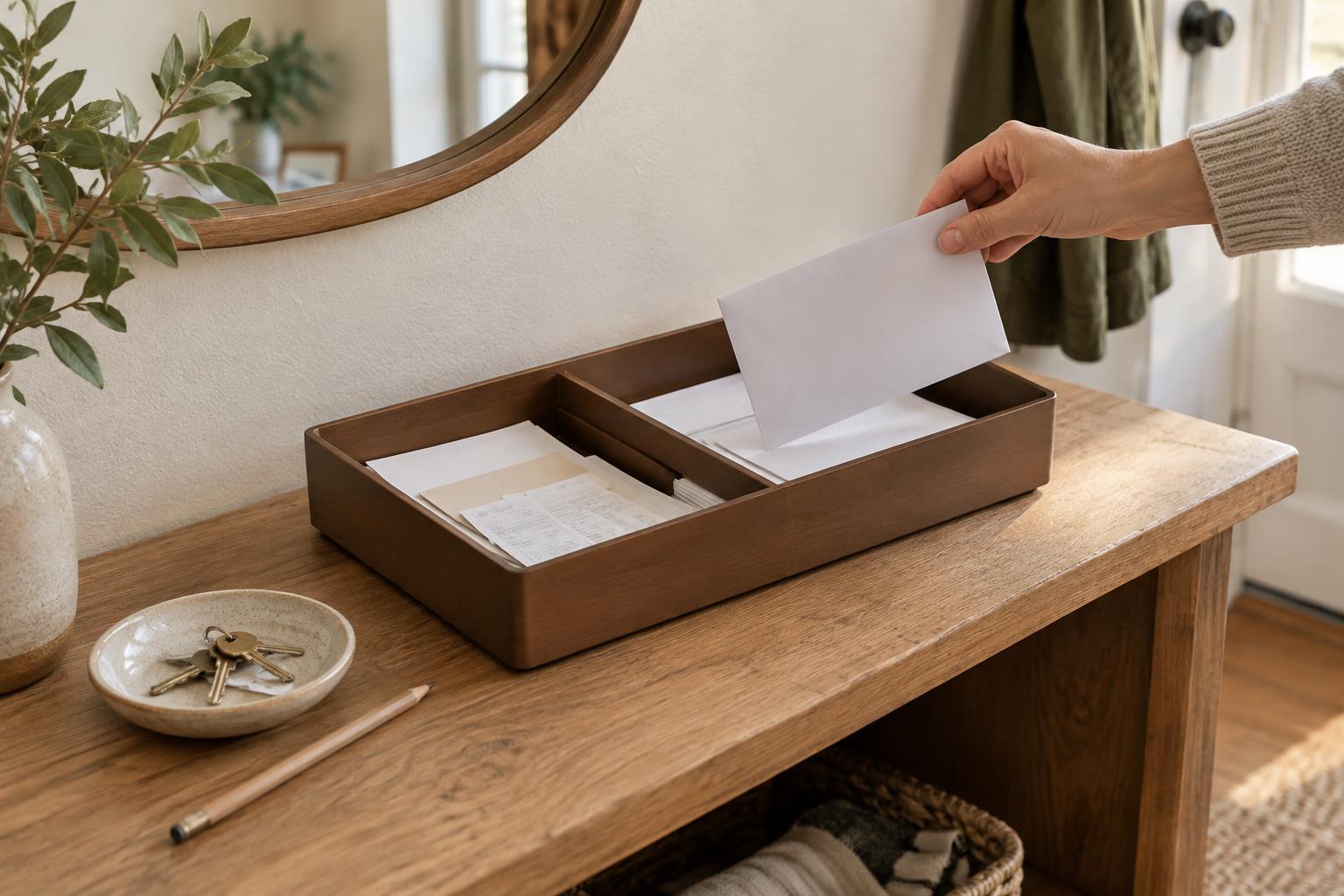
Choose a spot along the route paper already takes into your home. A shallow tray on a console or a wall pocket near the entry may work better than a cabinet across the room. Keep it easy to reach and visible enough that you will remember to check it. If several people bring paper home, explain that this is the landing spot for anything someone else may need to see.
Give the spot a clear boundary. A tray that holds only a modest stack makes a backlog noticeable; an oversized basket can hide it. You do not need to sort every envelope at the door. The landing zone simply keeps unreviewed paper from spreading across multiple surfaces.
Sort by the next action, not by the type of paper
When you review the tray, ask what must happen next. A useful arrangement has three destinations: action, reference, and discard. Action includes papers that need a reply, a signature, a decision, or a task you have not yet completed. Reference is for information you have a reason to find again. Discard is for material you no longer need, handled in a way appropriate to any personal details it contains.
This approach prevents a common mix-up: putting an unfinished form into a neat folder of completed records. Keep action papers in one visible folder or upright holder, and place any relevant deadline or next step where you will notice it. If the task belongs on a calendar or household task list, record it there as well. The paper can then wait with other active items rather than trying to serve as its own reminder.
Reference papers need a different home from incoming mail. A few broad labels, such as home, appliances, and household records, may be easier to maintain than dozens of narrow categories. Keep important original documents and any papers with specific retention requirements according to your circumstances; a general sorting habit is not a substitute for checking those requirements.
Make the review small enough to repeat
A landing zone works only if paper leaves it. Choose a regular moment to empty it, such as before a routine household planning session. During that review, open what needs opening, move active items to the action holder, file useful reference material, and remove what you do not need. The goal is to finish sorting the incoming stack, not to complete every task it reveals.
Keep the tools close: a pen, a place for outgoing paper, and access to whatever you use for safe disposal. If you must walk to another room for each step, half-sorted piles are more likely to remain on the table. When an item needs a longer decision, write its next step on a note and place it with the action papers. That small prompt makes the next review easier.
If the tray repeatedly overflows, look at what stays behind. Perhaps completed papers have no reference home, or action items are waiting for someone who does not check the holder. Adjust that handoff before adding more containers. A second inbox rarely fixes a decision that keeps being postponed.
Give temporary papers an exit
Not every useful piece of paper should become a permanent record. Event flyers, shopping notes, packaging inserts, and project reminders often matter only for a short time. Keep them with the task they support when possible: a project note with project materials, for example, or an upcoming event note with other plans. This reduces the number of unrelated items competing for attention in the action holder.
For papers you are unsure about, create a small temporary folder and review it occasionally. Give it a physical limit rather than allowing it to become another archive. As the folder fills, reconsider older items before adding new ones. The question is not whether a paper might conceivably be useful someday, but whether you know how you would use or retrieve it.
The best paper system is one you can reset without a long organizing session. A clear arrival point, a few next-action choices, and a regular review turn an unpredictable stream of paper into a manageable routine.