Start with the trip from sink to storage
The best place for a cleaning tool is not always the place with the most spare space. It is a spot you can reach during the task, return to afterward, and use without leaving water trapped against a shelf or another tool. Before buying an organizer, notice where you actually finish cleaning. A dish brush may belong beside the kitchen sink, while a bathroom scrub brush may be more useful in that room than in a central supply closet.
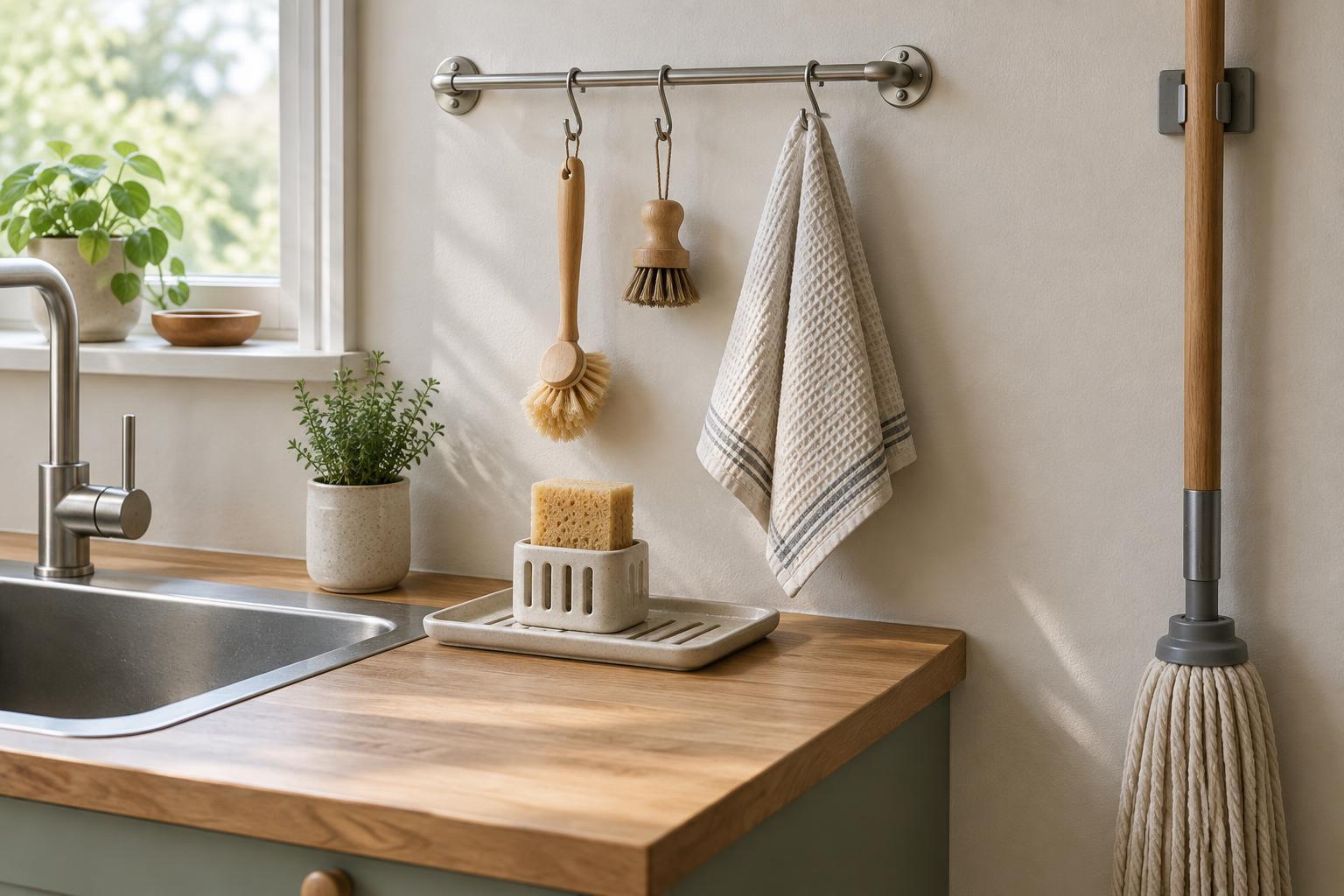
Think of storage as two parts: a drying position for recently used items and a tidy home for items that are already dry. Sometimes those are the same place. A brush hanging above a sink, for example, can drain and remain ready for the next job. Where that is impractical, let the tool dry in an open, protected spot before moving it into a cupboard or bin.
Give water a way out and air a way in
Damp tools do poorly when pressed together in a deep container. Choose a holder that leaves space around brush heads and cloths, and consider where drips will land. A tray that can be emptied and washed is useful beneath sink-side tools. A hook or rail can keep a brush suspended over a surface that tolerates occasional water. If a holder has a closed bottom, check whether water collects there after use.
Cloths need room to spread out. Drape a frequently used cloth over a rail rather than bunching it in a basket; once dry, it can go into a drawer with clean spares. A sponge can rest on a rack that exposes more than one side to air, rather than sitting flat in a puddle. Rinse and squeeze tools after use as appropriate, and clean or replace them when they become difficult to keep fresh. Storage helps them dry, but it does not take the place of cleaning the tools themselves.
Match the holder to the tool
Long-handled tools need a different solution from small sink accessories. A wall rail with clips can hold a broom, mop and dustpan off the floor, provided the clips suit their handles. Leave enough clearance below a damp mop head so it is not pressed into the floor or another item. Check that the mounting surface and fixings can support the load, and place the rail where a handle will not block a door or walkway.
For small brushes, a few hooks may work better than one crowded caddy. Hooks let you see each tool and remove it without shifting the others. If drilling is not an option, a freestanding rack or an over-door organizer may be useful, but check that it stays stable and lets damp items hang freely. Closed drawers and boxes are better reserved for dry refills, spare cloths and tools that are not wet after use.
Keep everyday tools close without cluttering the room
Accessibility matters because an awkward storage spot makes a quick wipe-down feel like a larger chore. Keep the tools used most often near their work area, then group less-used supplies elsewhere. A narrow sink-side rail, a small washable tray or a hook inside a cupboard door can make use of otherwise idle space. If storing tools inside a cupboard, avoid crowding the drying area and check it periodically for lingering dampness.
Visibility is a design choice, not a requirement. Open storage makes it easy to notice whether a tool is still wet. If you prefer a quieter look, choose a partly concealed spot that you can reach and inspect easily. A tidy arrangement also benefits from limits: assign each holder a small number of tools, rather than filling every available gap. That leaves room to lift one out and put it back without disturbing the rest.
Test the setup before making it permanent
Try a temporary arrangement for a week or two. Set a tray where drips are likely, hang tools from removable hooks where suitable, and pay attention to what you leave out instead of putting away. Those leftovers often reveal the real working location. Also look for water marks, crowded brush heads and holders that are annoying to empty or wipe clean.
A good system should be easy to reset after an ordinary cleaning session. Each tool has a clear place, damp parts have room to dry, and any surface that catches water is simple to clean. If the arrangement fails one of those tests, change the position or the holder before adding more storage. The goal is not to hide every cleaning tool; it is to give each one a sensible place between uses.