Make the oldest item the easiest choice
The goal is not a pantry that looks perfectly arranged. It is a pantry that helps you notice what you already have, especially food that has been there the longest. Start by taking everything off one shelf at a time. Group similar items together, set aside anything that needs a closer look, and wipe the shelf before putting food back. Working shelf by shelf makes the job manageable and keeps you from losing track of where things belong.
As you sort, check packages for damage, signs of pests and storage instructions. Read the dates on items you are unsure about rather than treating every printed date as the same kind of deadline. Follow the package’s guidance and use your judgment about condition; if an item appears unsafe, do not keep it simply to avoid waste. Once you know what is usable, place older items toward the front and newer purchases behind them. This small change is the foundation of a first-in, first-out pantry.
Give each category a clear home
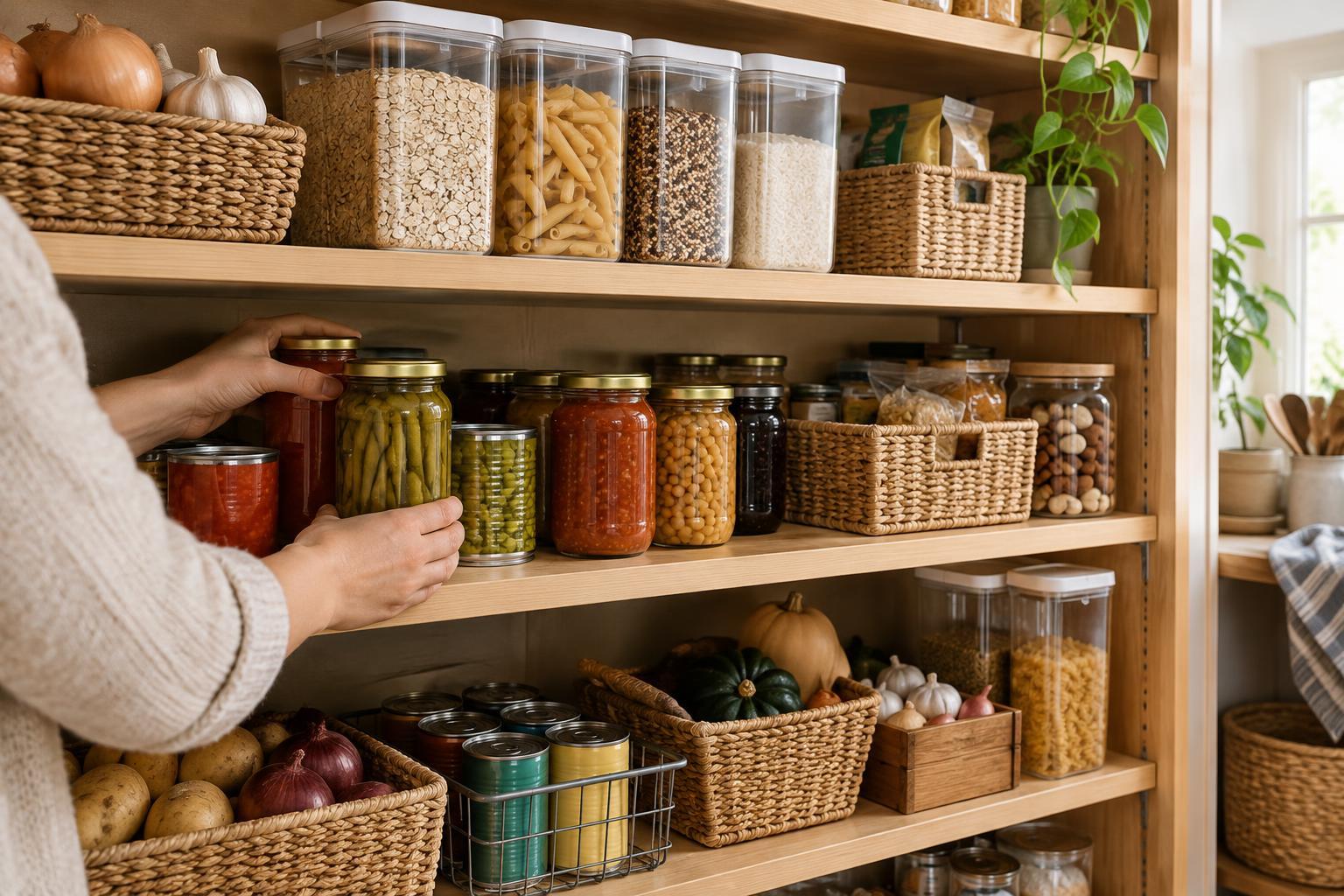
Set up broad zones based on how you cook: breakfast foods, baking supplies, canned meals, grains, snacks and so on. The exact categories matter less than being able to find an item and return it to the same place. Keep frequently used foods at a comfortable height. Reserve high or low shelves for lighter, less-used supplies where practical, and avoid stacking heavy containers where they are difficult to handle.
Within each zone, arrange matching items in short rows. Put the older can, jar or box at the front of its row and add new ones at the back. If a shelf is deep, a shallow bin can let you pull the whole group forward. Avoid bins so large or full that their contents disappear. For small packets, use a container you can lift out and look through without emptying the shelf.
Leave some open space if you can. A tightly packed pantry makes it hard to move new food behind old food, even when you intend to. It also hides partial packages and duplicates, which can lead to buying another item you did not need.
Make opened food visible
An unopened backup and a half-used package are not equally easy to overlook. Choose one visible spot for opened dry goods and return them there after each use. A small basket or a section at the front of a shelf can work. Before opening another package, check this area. It is a simple habit that helps prevent several partly used bags of the same ingredient from accumulating.
Clear containers can make quantities easier to see, but they are optional. If you transfer food, choose a container that closes properly and suits the product’s storage needs. Keep useful information from the original package, such as preparation directions, ingredient details or a date, where you can find it. A label with the contents and the date you opened or transferred them can help when similar ingredients look alike. You do not need to decant every item for the system to work.
Build rotation into restocking
The moment you put groceries away is the best time to keep the system working. Before adding a new purchase, pull the older matching item forward. Place the new one behind it, even if that takes an extra few seconds. If you have several versions of an ingredient, group them together so you can see the choice you need to use first.
Keep a short “use next” area for items you want to plan around soon: an older bag of rice, an opened box of crackers or a can left over from a recipe. It should be small enough to scan at a glance. This is a prompt for meal planning, not a place to put food indefinitely. When an item leaves the area, either use it, return it to its category or reassess whether it belongs in the pantry.
Maintain the system with a quick check
Before making a shopping list, glance through the front of each zone and the “use next” area. Check quantities rather than assuming a container is full, and look behind rows for anything that has slipped out of sight. This brief check can guide what you cook and help you avoid buying duplicates.
Adjust the layout when it stops fitting your habits. If snacks regularly end up in the baking zone, the snack area may need more room. If you never move new cans behind old ones, shorten the row or use a pull-out bin. A useful pantry system should make the next sensible action easy: see what you have, choose the older suitable item and put new food where it will wait its turn.