Start with the work, not the containers
Before buying a shelf or matching set of bins, notice what happens during an ordinary load. Where do you set the basket? Where do you check pockets, treat a stain and measure detergent? The most useful storage location is close to those actions, not simply the nearest empty wall. A supply that requires moving a basket or reaching over an open washer lid will soon feel farther away than it looks.
Take everything currently kept in the laundry area and group it by use: washing products, stain-treatment tools, drying items and spare stock. Keep only the regularly used supplies in the easiest-to-reach spot. Less frequent items can go on a higher shelf or in another storage area. This leaves room to handle clothes instead of turning every available surface into a place for bottles.
Give the everyday supplies one reachable home
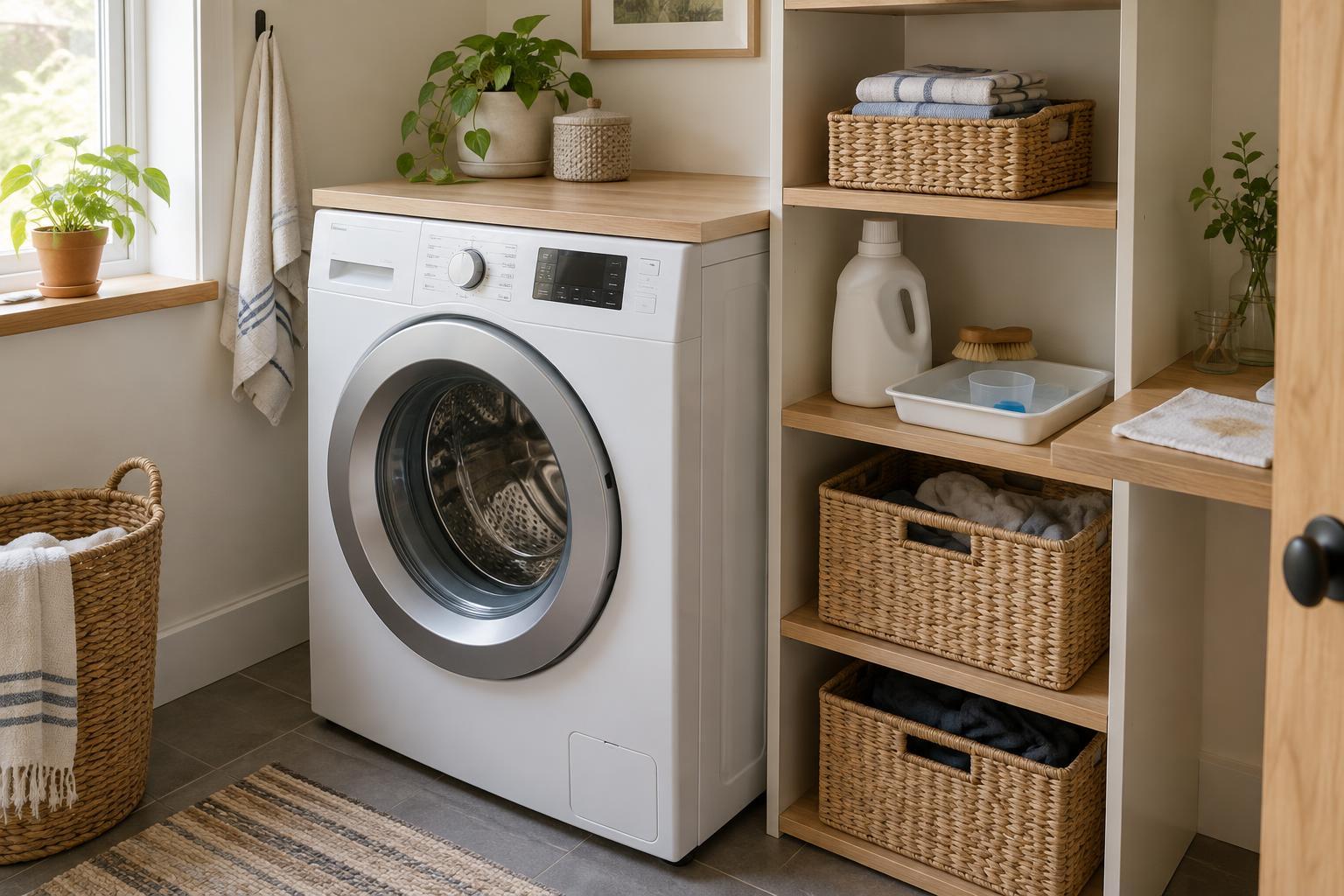
A small shelf, cabinet or sturdy rolling cart beside the washer can hold the supplies used for most loads. Aim for a position where you can pick up detergent and put it back with one hand while standing at the machine. Check that the arrangement does not block doors, controls, hoses, outlets or the path for carrying a basket. If shelves sit above a top-loading washer, leave enough space to open the lid fully.
Use a tray or shallow bin to keep everyday bottles together and catch minor drips. A washable tray is easier to wipe down than the bottom of a crowded cabinet. If several people do laundry, simple labels such as “wash,” “stains” and “drying” help everyone return items to the same place. Keep the products in their original, labeled packaging so instructions remain available.
Protect space for sorting and stain treatment
Storage is only part of the setup. Laundry also needs a temporary landing place: a clear patch of counter, a fold-down surface or a spot for a basket beside the washer. Keeping that area open makes it easier to check pockets and separate items before loading. If no counter is available, a basket with a firm rim or a small, stable side table may be more useful than another stack of shelves.
Collect stain-treatment tools in one small caddy: the product you use, a soft brush or cloth if appropriate for your garments, and a place for items awaiting attention. Keep the caddy close enough to reach before a garment goes into the washer, but out of the way when the surface is needed. A separate, clearly designated basket or bag for clothes needing attention helps prevent them from disappearing into a routine load.
Choose storage that suits the room
Laundry areas can be damp, narrow or shared with other household functions. In a humid space, avoid packing paper boxes tightly against a wall, and choose shelves or bins that can be cleaned and dried. Leave a little room around stored items so you can spot a spill or leak. If the machines vibrate, avoid balancing supplies on top of them; a nearby shelf or secured cabinet is a more dependable home.
For a tight closet, use the inside of a suitable door for light accessories, provided it still opens freely and the hanging storage does not hit the machines. A narrow cart can make use of a gap, but measure the gap and the cart first, including handles and wheels. Whatever the layout, keep access to machine connections and ventilation clear. Store laundry products according to their labels and out of reach of children and pets.
Make the system easy to reset
A good arrangement should survive a busy wash day. Give each supply a place that is obvious when your hands are full: bottles on the tray, small tools in the caddy, spare products in a separate bin. Avoid filling every shelf edge to edge. A little empty space lets you lift out a bottle without rearranging its neighbors and gives you somewhere to put a newly opened package.
After a few loads, check what gets left out. That item may need a closer home, or its assigned container may be awkward to use. Move storage to match the habit rather than adding more organizers. Finally, wipe up drips and return supplies when the last load is done. The goal is not a perfectly staged laundry room; it is a clear, workable place where the next load can begin without first clearing away the last one.