Start with how you use the refrigerator
The best refrigerator layout is not necessarily the neatest one. It is the one that lets you find what you need without moving five other things first. Before buying bins or rearranging shelves, notice which foods you reach for every day, which ones disappear behind taller containers, and where groceries tend to pile up after a shop. Those patterns tell you more than a picture of a perfectly stocked refrigerator.
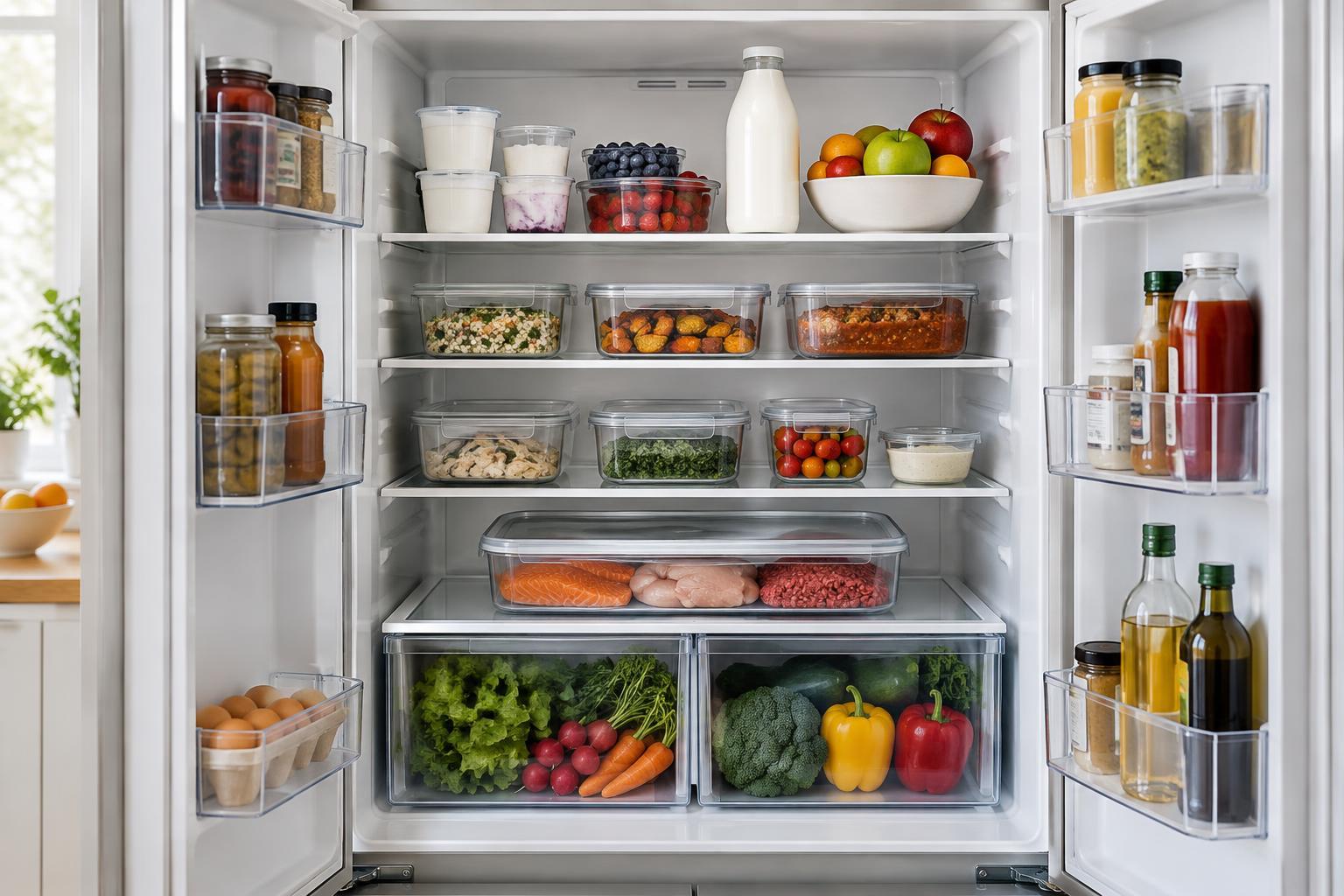
Give the most convenient shelf space to food you want to use soon: prepared lunches, opened ingredients, and leftovers. A small area near the front can serve as an “eat first” spot. Keep it small enough that its contents remain visible, and check it before making a shopping list or planning dinner. This simple habit is often more useful than a complicated system of labeled containers.
Use shelves for visibility and separation
Eye-level shelves are valuable because they are easy to scan. Place ready-to-eat foods and regularly used items there, with shorter containers toward the front so they do not hide what is behind them. If a tall bottle creates a blind spot, move it to a shelf with more headroom rather than building a row of small items around it. Leave some open space so you can take out one container without disturbing the rest.
Store raw meat, poultry, and seafood securely wrapped or in a leakproof container on a low shelf, away from foods eaten without further cooking. A shallow tray can catch drips and make cleanup easier. The point of this zone is not to fill the bottom shelf with equipment; it is to make separation obvious and prevent a package from leaking onto other food.
Adjustable shelves can solve more problems than extra organizers. Set one shelf high enough for the containers you actually own, then use another for flatter items. When every shelf is made equally tall, small foods may end up stacked or pushed far back. A layout that matches your usual groceries makes the available space easier to see.
Give drawers and the door clear jobs
Drawers are useful for gathering produce, but they can also conceal it. Keep similar items together and avoid packing a drawer so tightly that the bottom layer is forgotten. If your refrigerator has drawers with humidity controls, follow the appliance guidance for how to use them. Otherwise, a practical starting point is to keep produce in the drawer where you can see and retrieve it most easily. Delicate items you often forget may do better in a visible container on a shelf, if they are stored appropriately.
The door is convenient for items used often, such as condiments and drinks, but its temperature may vary more as it opens and closes. For foods that benefit from steadier chilling, interior shelves are generally a better choice. Do not feel obliged to fill every door compartment: a little spare room makes bottles easier to lift out and reduces the chance of knocking over a crowded row.
Choose containers that reveal their contents
A container helps only if it makes food easier to identify and remove. Clear, stackable containers can make leftovers visible; opaque boxes need a simple label. Add the food name and the date you put it away when that information will help you decide what to use next. Keep lids with their matching containers outside the refrigerator so putting food away does not become a search.
Use bins sparingly. A bin is helpful when it gathers several small items that belong together, such as lunch ingredients or jars used for breakfast. It is less helpful when it hides food behind a high front wall or requires you to pull out a heavy collection to reach one item. Try moving things around on the shelves you have before buying accessories. A washable tray, a modest bin, or no organizer at all may be the better tool.
Make the layout easy to reset
A refrigerator changes every week, so leave room for it to change. Avoid assigning every square inch to a permanent category. One flexible space for a large pot, a grocery overflow item, or a dish for a gathering prevents the rest of the layout from collapsing whenever something unusual comes home.
When putting groceries away, move older items forward before placing new ones behind them. Take a quick look through the leftovers and produce at the same time. Wipe spills promptly and keep packages from blocking the refrigerator’s air vents. These small resets preserve both visibility and access without requiring a full cleanout.
Finally, arrange shared foods for the people who use them. If children prepare their own snacks, a reachable spot can make that routine easier; keep foods that need closer supervision elsewhere. The aim is a refrigerator that explains itself at a glance: what is ready to eat, what should be used soon, and where a newly opened ingredient belongs.