Gather materials and plan the stage
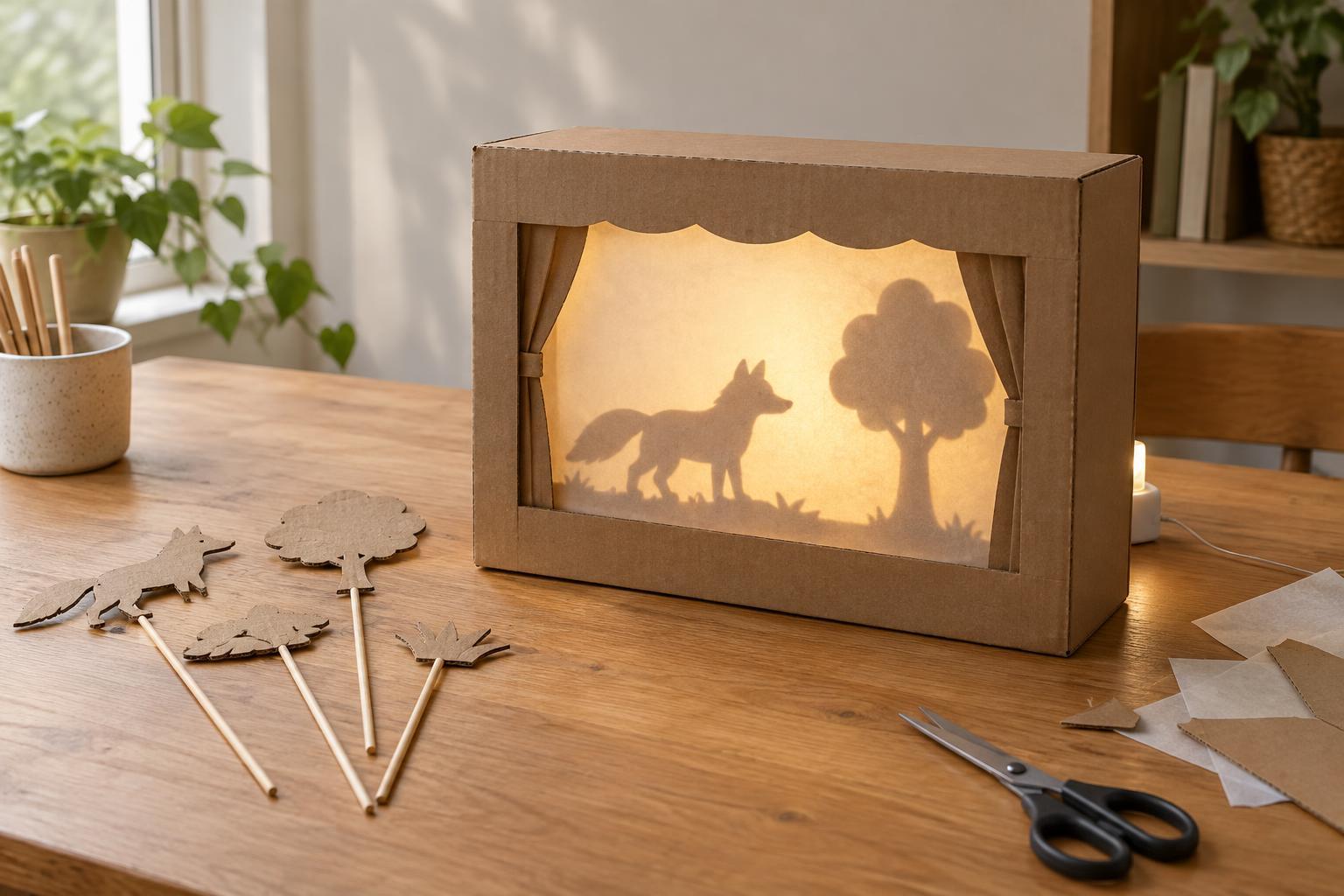
A cereal box is nearly a ready-made theater: its broad front gives you room for a screen, while its depth leaves space for puppets to move. You will need an empty box, a sheet of tracing paper or baking parchment, scrap cardboard or stiff paper, tape, a pencil, scissors and a battery-powered flashlight or book light. Craft sticks make convenient puppet handles, but strips cut from spare cardboard work too.
Stand the box upright with a broad face toward the audience. That face will hold the screen; the opposite face will become an access opening for the puppeteer. Before cutting, decide where the box will sit and where the puppeteer will stand. The light needs to shine toward the screen from behind the puppets without shining directly into the audience’s eyes. If children are helping, have an adult handle any cuts that are difficult to make safely.
Make a sturdy screen
Draw a large rectangle on the front of the box, leaving a border about two finger-widths wide on every side. The border is more than decoration: it keeps the box from becoming floppy once the center is removed. Cut out the rectangle, then turn the box around and cut a generous opening in the back. Leave some cardboard around that opening as well, especially near the corners.
Cut the translucent paper slightly larger than the front window. Tape it to the inside of the front panel, pulling it gently flat rather than stretching it tight. A smooth screen gives the shadows clear edges, but a few wrinkles will not stop the theater from working. If you want a finished appearance, cover the exposed front border with colored paper or draw a curtain around it. Keep decoration away from the screen so the silhouettes remain easy to see.
Test the empty theater on a table. If it tips when you reach through the back, tape folded cardboard triangles to its lower sides as supports. Another option is to tape its bottom to a wider piece of cardboard. Aim for stability without closing off the access opening.
Design puppets that read as shadows
Shadow puppets depend on outlines, not surface details. Start with a few recognizable shapes: a person with an expressive pose, an animal with distinctive ears or a tree with an uneven canopy. Draw each character on stiff paper or scrap cardboard and cut around its outer edge. Small drawn features will disappear in silhouette; if an eye, window or doorway matters to the story, cut it out so light can pass through.
Tape a handle to the back of each shape, placing it low enough that your hand can stay out of the screen’s center. Make one test puppet before cutting an entire cast. Hold it between the light and screen to see whether its outline is clear. A wider arm or a larger gap between two legs can make a character much easier to recognize. Simple scenery, such as a house or hill, can be taped near an edge of the screen while the characters move.
Set the light and rehearse
Place a battery-powered light behind the box, aimed toward the screen through the back opening. Start with the puppet close to the screen. Its shadow should appear relatively crisp; moving it toward the light generally makes the shadow larger and softer. Experiment with that change to suggest a character approaching or retreating. Keep the light steady so the audience sees the movement of the puppets rather than a shifting beam.
Dim the room lights if the picture looks faint, and check that the screen is lit fairly evenly. If a handle casts an unwanted shadow, change your grip or move the character higher. A box theater has limited space, so short scenes with a few puppets often work better than a crowded cast. Never use a candle or open flame as the light source: the theater and screen are made of combustible materials.
Turn the build into a repeatable show
Give the story a beginning, a small problem and an ending before making extra props. For example, one character might search for a lost object while a second character offers misleading clues. Practice where each puppet enters, pauses and exits. Those pauses give viewers time to understand the silhouettes, especially when one person is both speaking and operating the puppets.
When the show is over, remove the light and store the puppets inside the box. If the paper screen tears, replace just that sheet rather than rebuilding the stage. The simple structure makes it easy to revise: a wider screen, sturdier handles or a new set of characters can all grow from what you noticed during the first performance.