Start with the task, not the texture
A soap dispenser, watering can and shower shelf all encounter water, but they present different handling problems. The dispenser needs to stay put while someone presses down. The watering can must remain comfortable as its weight changes. The shelf needs to let a person retrieve a bottle without knocking over its neighbors. Before changing a surface, watch how the object is picked up, moved, squeezed, turned or set down.
Pay attention to the moment when control is most likely to be lost. Is the hand soapy as well as wet? Is the object heavy, or is it small enough to pinch between two fingers? Does the user need to operate it with one hand? A grip feature placed where fingers never land will do little good. Sometimes the best improvement is not on the object at all: a stable resting place can make handling easier before and after use.
Give fingers a shape they can work with
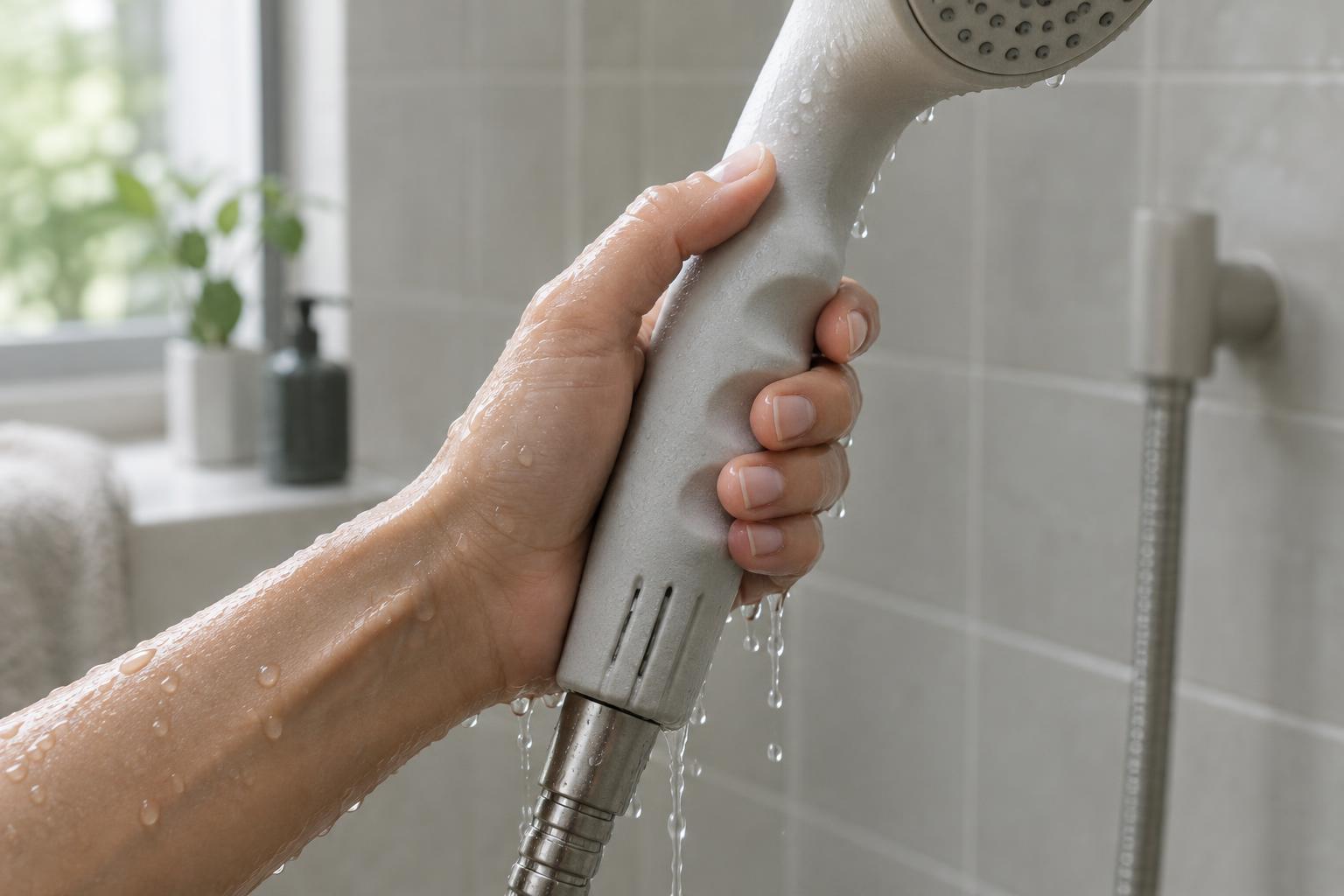
A secure hold does not have to depend entirely on friction. A handle with enough room for fingers, a shallow thumb rest or a gently narrowed waist can help the hand locate a consistent position. On a lid or dial, a raised edge may give fingers a place to push rather than forcing them to squeeze a smooth cylinder. These shapes are particularly useful when hands are wet because they offer a physical cue as well as a surface to grip.
Avoid solving slipperiness with sharp ridges or deep finger grooves by default. A ridge that catches a finger can also feel uncomfortable under load, and fixed grooves may not suit different hand sizes. Rounded transitions tend to be more forgiving. Consider balance, too: if the center of weight sits far from the handle, the object may twist in the hand even when the grip itself feels secure.
Use texture where it earns its place
Texture can improve control, but its pattern and location matter. Fine grooves, shallow ribs or a modestly matte finish can give fingertips more purchase than a uniformly glossy surface. Place the texture on the areas people actually touch, while leaving room to clean around it. Deep recesses may collect soap residue or grime, especially on objects that rarely dry completely.
Material choice affects the result. A soft-feeling grip can be pleasant, but it should stay attached, tolerate routine cleaning and resist becoming unpleasantly tacky with use. A hard material can still work well when its shape and finish support the hand. Rather than assuming one material is universally better, compare samples in the conditions the object will face: wet hands, soapy hands and the cleaners likely to be used.
Help water leave the grip area
An object that holds a film of water or a puddle where fingers land may be harder to use than one that drains and dries readily. Gentle slopes, open ends and unobstructed channels can guide water away from a handle or control. On a soap dish or shower accessory, drainage also helps keep the object from sitting in water between uses.
Look at where the object rests. A bottle with a broad, stable base may be less likely to tip when set down with wet hands. A hook should allow a hanging item to settle into place without precise aim. If an added sleeve or grip traps moisture underneath, it may make cleaning more difficult. Design for the whole cycle of use: pick up, operate, put down, rinse and dry.
Test the awkward moments
Simple prototypes can reveal problems that look fine in a drawing. Wrap a proposed grip area with different textured materials, build up a handle with removable padding, or mock up a thumb rest with modeling clay. Keep the object's weight and intended motion in mind; a lightweight empty container may feel very different when full.
Try each version with dry, wet and mildly soapy hands over a sink or another surface where a dropped object will not cause harm. Ask people with different hand sizes to use it without coaching. Notice whether they change their grip, need a second hand, or struggle to put it down. A good revision should make the intended action easier without introducing a new problem, such as a hard-to-clean crevice or a handle that no longer fits its storage space.