Start with the action, not the outline
A product does not need to look symmetrical to work well in either hand. What matters is the sequence of actions a person takes: picking it up, finding the grip, reaching a control, applying force and putting it down. A desk lamp with a centered switch, for example, may welcome either hand even if its shade points to one side. A perfectly mirrored handle may be less successful if its button sits under the thumb only when held in the right hand.
Before drawing a shape, describe the main task in simple verbs. Does the user squeeze, twist, pull or slide? Which part must stay steady while another moves? Then imagine the task performed from both sides of a desk or counter. This reveals where handedness affects the object and where it merely affects its surroundings.
Where symmetry earns its place
Symmetry is especially useful when an object is picked up quickly, passed between people or used without much visual attention. A centered pull on a drawer can be reached from either side. A container with matching grips on opposite edges offers two ways to lift it. A round dial with a clear pointer can be approached from several directions. In these cases, a balanced layout reduces the need to rotate the object or search for its usable side.
It can also make storage more forgiving. A tool that works in either orientation need not be placed in a particular direction before the next use. For shared household items, that small convenience matters: each person can start the task without first resetting the object for their preferred hand. The benefit comes from equal access to the working features, not from mirroring every decorative detail.
When a mirror image is not enough
A symmetrical form can hide an unequal experience. Consider a squeeze bottle with a centered nozzle but a cap that opens more easily when twisted in one direction. Or a desktop dispenser whose lever can be pressed from either side, while its outlet is visible only from one. The whole interaction includes motion, sight lines and the position of the material being handled. Balance on paper does not guarantee balance in use.
Some tasks also call for an intentional working direction. Scissors must keep their blades in useful contact while cutting, and the view of the cutting line matters. Simply mirroring the handles of one pair would not address every part of that interaction. Rather than forcing symmetry onto a directional mechanism, a designer may need a genuinely reversible arrangement, distinct left- and right-handed versions, or a different mechanism altogether.
Three alternatives to a fully symmetrical object
First, make the important feature movable. A clip, hook or cable exit that can be repositioned may adapt to the user's setup without requiring the entire product to be mirrored. The adjustment should be easy to understand and secure once set. If changing sides requires tools or several hidden steps, many people will leave the object in its original configuration.
Second, provide access from more than one side. A wide opening, two clearly placed grips or a control reachable from the front can serve either hand while leaving the rest of the form asymmetrical. Third, separate the hand-held part from the directional part. A rotating head on a stationary base, for example, can preserve a comfortable grip while aiming the working end where it needs to go. Each approach should be judged by the actual task, not by how adaptable it appears in a drawing.
Test with both hands and the real surroundings
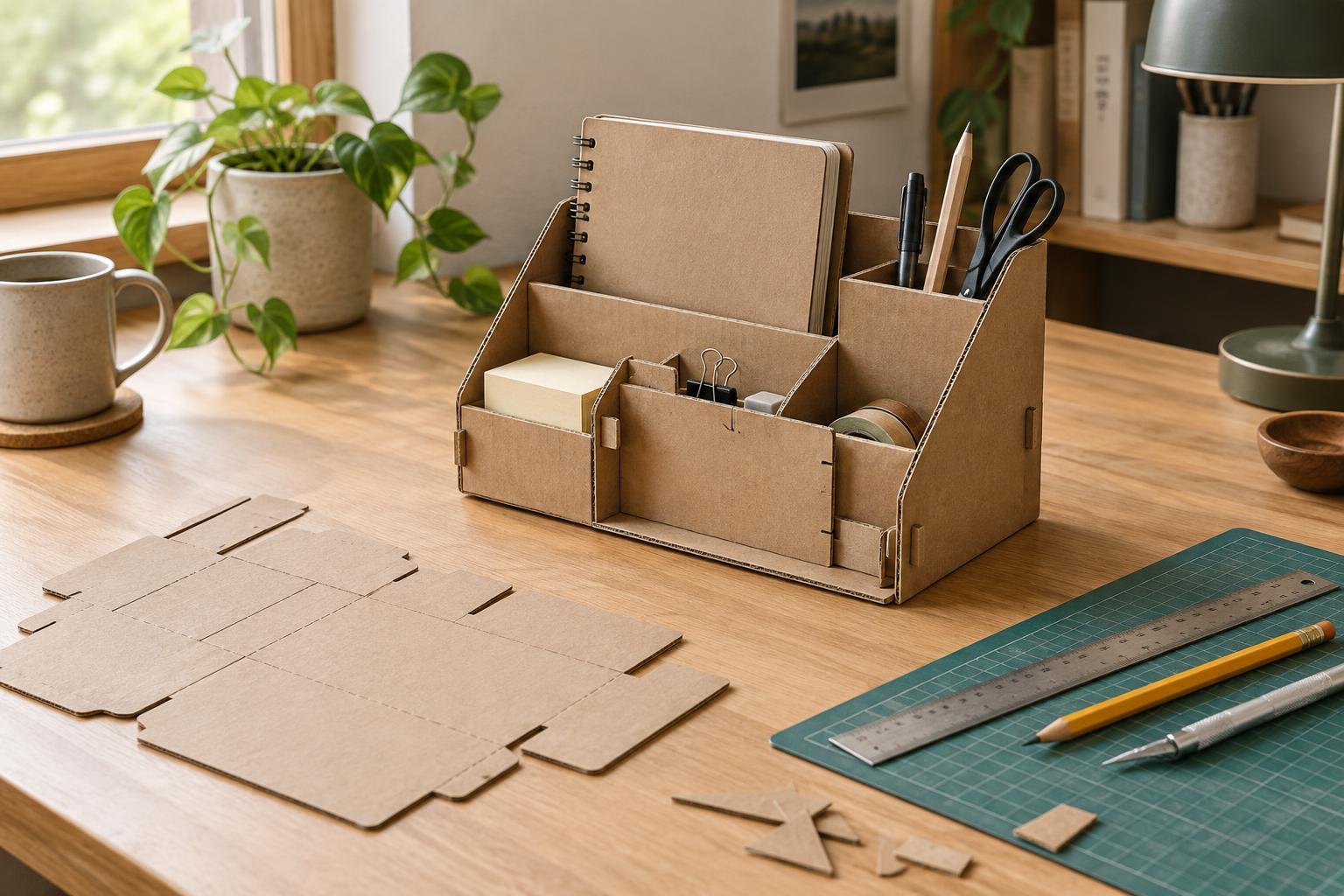
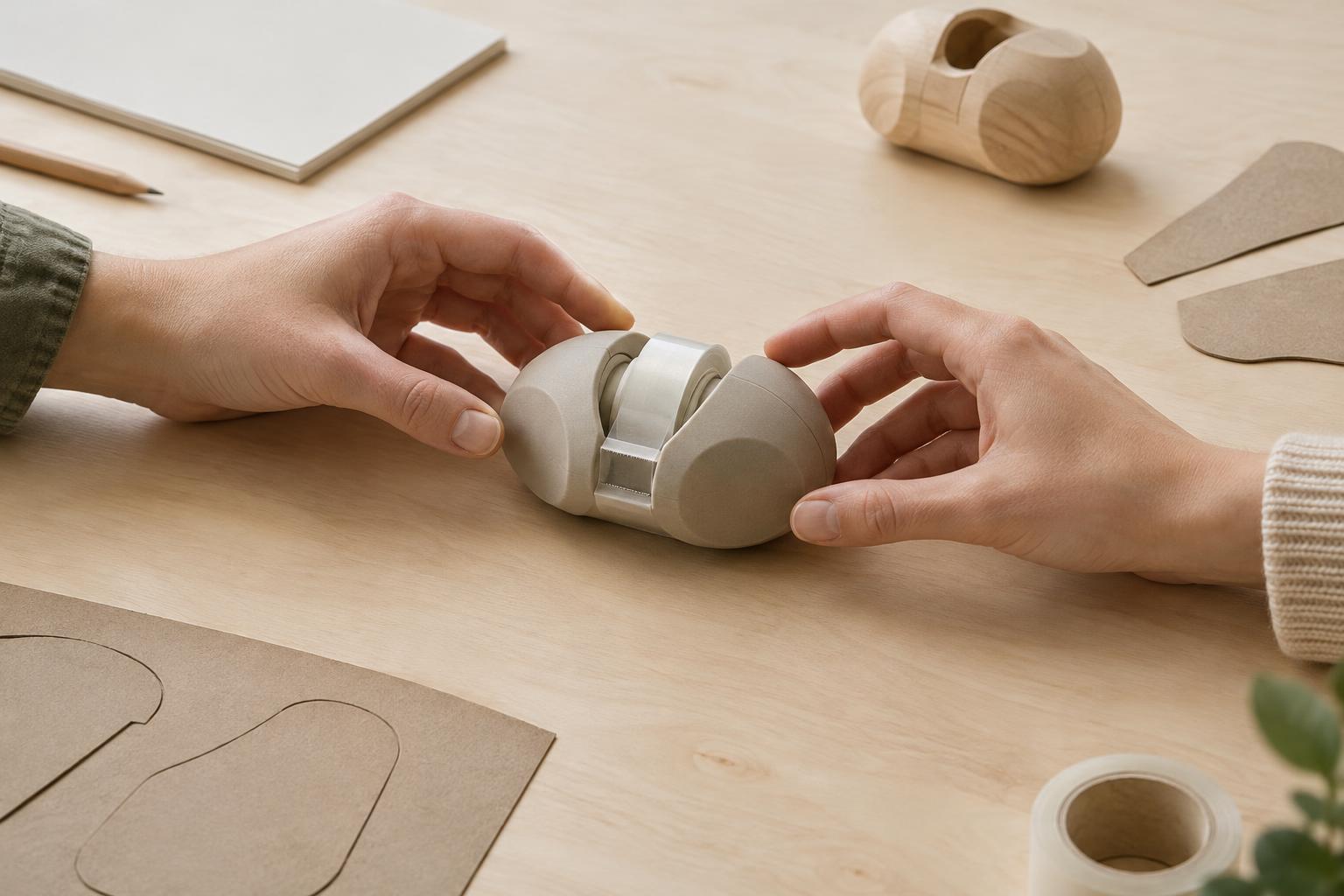
A quick prototype can reveal problems that a tidy rendering misses. Make a rough version at usable size and place it where the finished object would live. Try picking it up with each hand, operating it without changing grip, and returning it to its usual spot. Note any extra steps: turning it around, reaching across the body, blocking a view or moving another item out of the way. Repeat the trial with the object near a wall or another common obstruction.
Ask other people to try it without first showing them the intended grip. Watch where their fingers land and which features they notice. Hand preference is only one source of variation; hand size, strength and the space around an object also shape the experience. The goal is not perfect sameness for everyone. It is a clear, comfortable route through the task, whether the user starts with the left hand or the right.