Design for the whole refill, not just the container
A refillable soap bottle, pantry jar or watering can may look simple when it is sitting on a shelf. Its design gets a tougher test when someone must pick it up, open it, pour into it, close it and put it away. Each step offers an opportunity for a drip, an awkward grip or a misplaced cap. Designing around the complete sequence makes a refill feel like a normal part of using the product rather than a separate chore.
Start by considering where refilling will happen. A bathroom sink offers less elbow room than a kitchen counter, while a workshop container may be handled with dusty fingers. Think about how much of the contents remain when it is time to refill, where the open container can stand and what a user must hold at the same time. These questions reveal whether a promising opening or handle will remain practical outside a drawing.
Make the opening easy to reach and easy to aim for
A generous opening gives the person pouring a larger target, but diameter alone does not determine whether filling is easy. A tall rim can block the view into a container; an opening tucked beneath a handle can leave little room for a refill pouch. The user should be able to see the opening, bring the refill source close to it and keep both vessels under control.
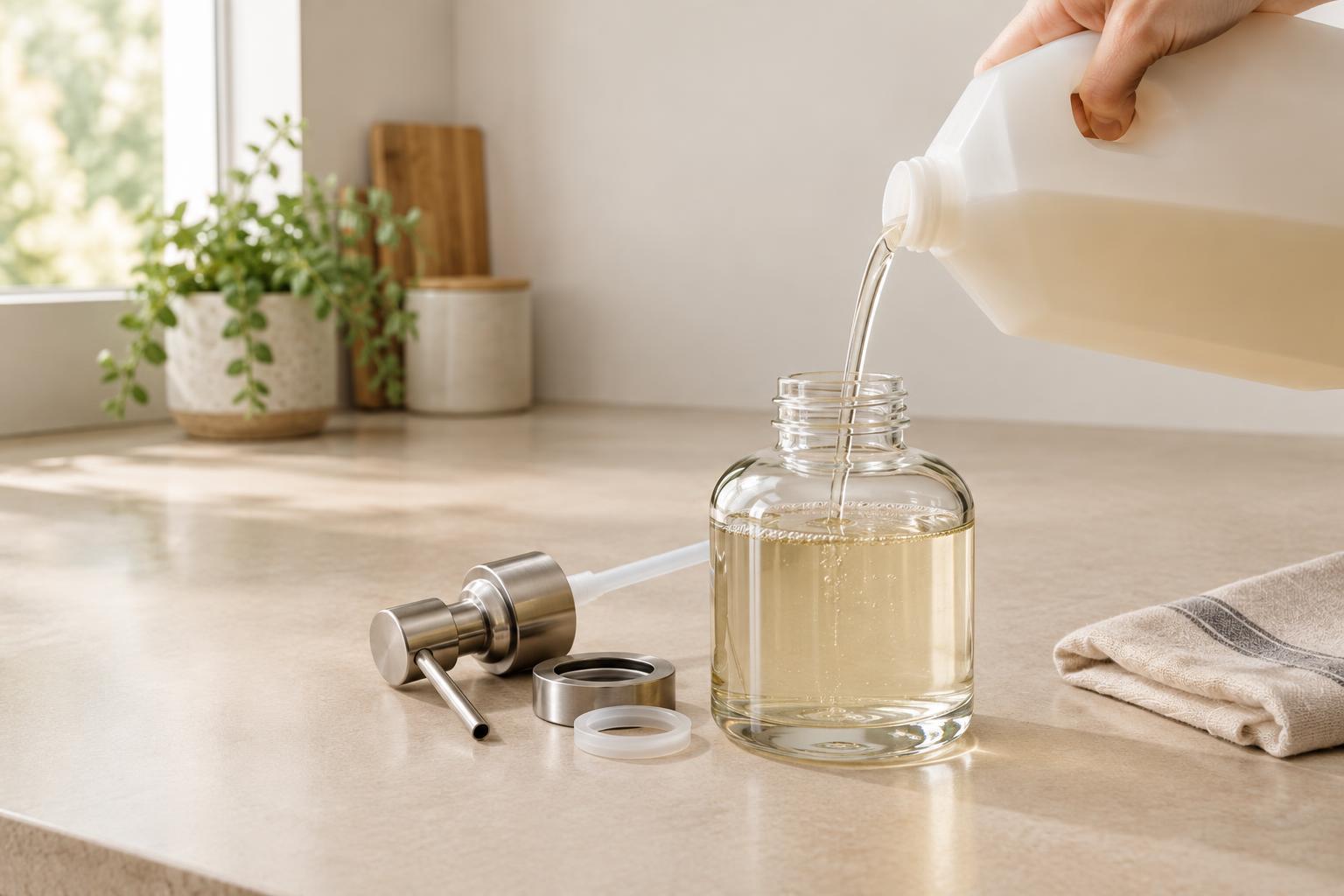
A removable top can create good access if it comes off without a struggle and has an obvious place to rest. If the lid includes a pump or other attachment, consider whether it will drip on the counter while the container is open. A shallow recess or a lid that can sit upright may help, provided that feature does not add a hard-to-clean pocket. For dry goods, access also means leaving enough room for a scoop or funnel without forcing a hand against the rim.
Give liquid and loose contents a predictable path
Spill prevention is partly a matter of guiding movement. A refill poured from high above an opening is harder to control than one whose spout can approach the rim. A shaped lip, short guide or funnel can help direct the stream, but it should be sized for the refill packaging a person is likely to use. If the opening is too narrow for a common pouch spout or for a steady pour from a larger bottle, the product may quietly require an extra tool.
The receiving container matters too. A stable base reduces the need to steady it with one hand while pouring with the other. Enough empty space near the top can give the user time to stop before liquid reaches the rim. For powders and grains, a broad opening and clear sight line may do more than an elaborate pouring feature. In either case, avoid surfaces that invite contents to collect on the outside and run down the container when it is lifted.
Make closure and cleanup part of the design
A refill is not finished until the product is closed. Threads should be easy to align, and a cap should offer enough grip to turn without requiring excessive force. A closure that looks shut but is not fully seated can undermine careful pouring. Clear physical feedback, such as an unmistakable stopping point, helps a user know when to put the container back in service.
Even a well-designed refill process will sometimes leave a few drops or grains behind. Smooth, reachable surfaces are easier to wipe than deep grooves around the mouth. Removable parts should be simple to rinse and dry before reassembly, especially when contents could linger in a seam. The goal is not to promise a mess-free product; it is to make an ordinary small mess quick to notice and easy to handle.
Test with an ordinary refill, then revise
A useful prototype can be as simple as a modified container and a few possible lid shapes. Try refilling it in the sort of space where it will be used, with a plausible refill package and a realistic amount left inside. Watch where each hand goes, whether the opening stays visible and what happens when the pour ends. Repeat the test with the container nearly empty and partly full; each condition can expose different handling problems.
Look for small frictions rather than only major spills. Does a cap need a clean surface to rest on? Does liquid cling to a rim before the lid goes back on? Can the container stand securely while someone reaches for a cloth? Improving those moments may be more valuable than adding a complicated feature. A good refillable design makes the intended routine clear, manageable and easy to repeat.