Start with the job the calendar needs to do
A desktop calendar is easy to choose by appearance and surprisingly easy to ignore once it is on the desk. Before picking a format, decide what you expect to see at a glance. Do you need today’s date, the shape of the coming month, or room to jot down deadlines? Those are different jobs, and no single calendar handles them equally well.
Placement matters too. A calendar beside a keyboard should have a small footprint and legible type from a seated position. One at the edge of a shared worktable may need to face more than one person. If you plan to write on it, leave enough clear surface for your hand and a pen. A calendar tucked behind a monitor may look tidy but do little to help you plan.
Flip calendars: compact and easy to scan
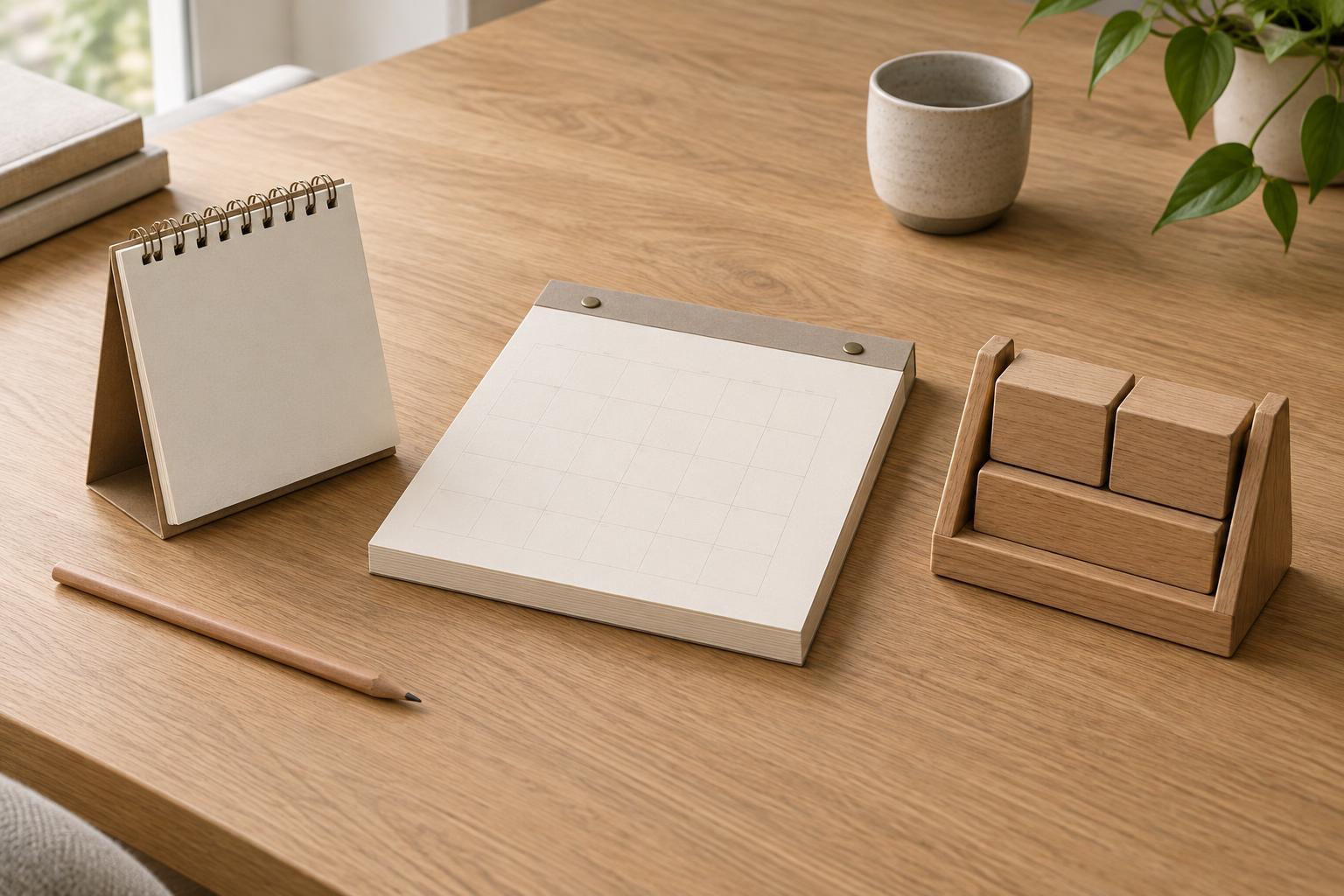
A flip calendar presents one day, week, or month at a time on pages held by a stand or binding. Its main advantage is focus: you see the current page without a large field of competing information. A well-made stand can sit upright in a narrow strip of desk space, making this format useful where a flat calendar would crowd a mouse or notebook.
The trade-off is that other dates are often hidden. Checking next month may mean flipping ahead and then finding your place again. If you want to mark several appointments on one view, look for a monthly flip calendar with squares large enough to write in; a daily version is better suited to date checking or brief notes. Check that the stand stays put when you turn a page and that the binding lets pages move without snagging.
Flip calendars also create a small maintenance decision. Some are refillable, while others are replaced as a whole. A reusable stand can make sense if compatible refills are easy for you to obtain; otherwise, a simple paper format may be less troublesome.
Calendar pads: a broad view with room to work
A desk pad calendar usually lays out a month across a stack of large sheets. It works well as a visible planning surface: deadlines, trips, and recurring tasks can sit together in one view. Because it lies flat, writing on it is generally straightforward. It can also define a dedicated planning zone on a desk, especially if you tend to lose small notes.
That generous surface is also its biggest cost. A pad can occupy the space needed for a keyboard, sketchbook, or project materials. Measure the open area of your desk rather than the desk itself, and allow room to write near the top edge. If you use a mouse on the pad, consider whether its surface and any written notes will hold up to daily contact.
Pads vary in how pages turn or tear away. A sturdy backing helps keep the current sheet flat, while corner holders can stop edges from curling. Think about what happens to a finished month: you might keep a sheet as a record, transfer unfinished tasks to the next page, or discard it. If you rarely write on paper, the extra space may offer little benefit.
Perpetual calendars: a lasting date display
A perpetual desktop calendar uses movable pieces—such as numbered blocks, cards, or dials—instead of dated pages. It is primarily a date display, not a schedule. That makes it a good fit for a desk already served by a notebook or another planning tool. Its visual character can be part of the appeal, but the date must remain easy to read amid the pieces and decoration.
The daily interaction is worth considering. Some designs take a quick turn of a dial; others require rearranging several parts. Neither is a problem if you enjoy that ritual, but a calendar you forget to update can become misleading. Before choosing one, check whether its pieces cover every needed date and month, sit securely, and are easy to handle without tipping the base.
Materials affect how this format feels in use. Wood, metal, and sturdy card can all work; stable construction and clear printing matter more than weight alone. Look for surfaces you can wipe or dust easily, particularly if the calendar will live beside drinks, plants, or craft supplies.
Make the choice fit your desk habits
Choose a flip calendar if you want a compact, upright prompt and are comfortable turning pages to look ahead. Choose a pad if you regularly write plans by hand and have room to keep a month visible. Choose a perpetual calendar if you mainly want the date in view and already track commitments elsewhere.
Whichever format you prefer, test the same three things: can you read it from your usual chair, update it without moving other objects, and keep it in a spot you naturally look at? A desktop calendar earns its place not by showing every possible detail, but by making the information you need easy to notice.