Start with what the garment needs
Folding and hanging are two ways of supporting a garment. A shelf or drawer supports its weight from below; a hanger suspends it from a few points. That difference matters more than a blanket rule such as “all tops go on hangers.” Heavy, stretchy clothes may change shape when suspended, while structured or crease-prone clothes often benefit from hanging.
Before putting something away, ask three questions: Will its weight pull on the shoulders or waistband? Will a fold leave a mark that is difficult to smooth out? Does it have a built-in shape, such as a jacket’s shoulders, that needs support? The answers give you a starting place. Your available space and how often you wear the item can then help you choose between two reasonable options.
Fold heavy knits and easygoing basics
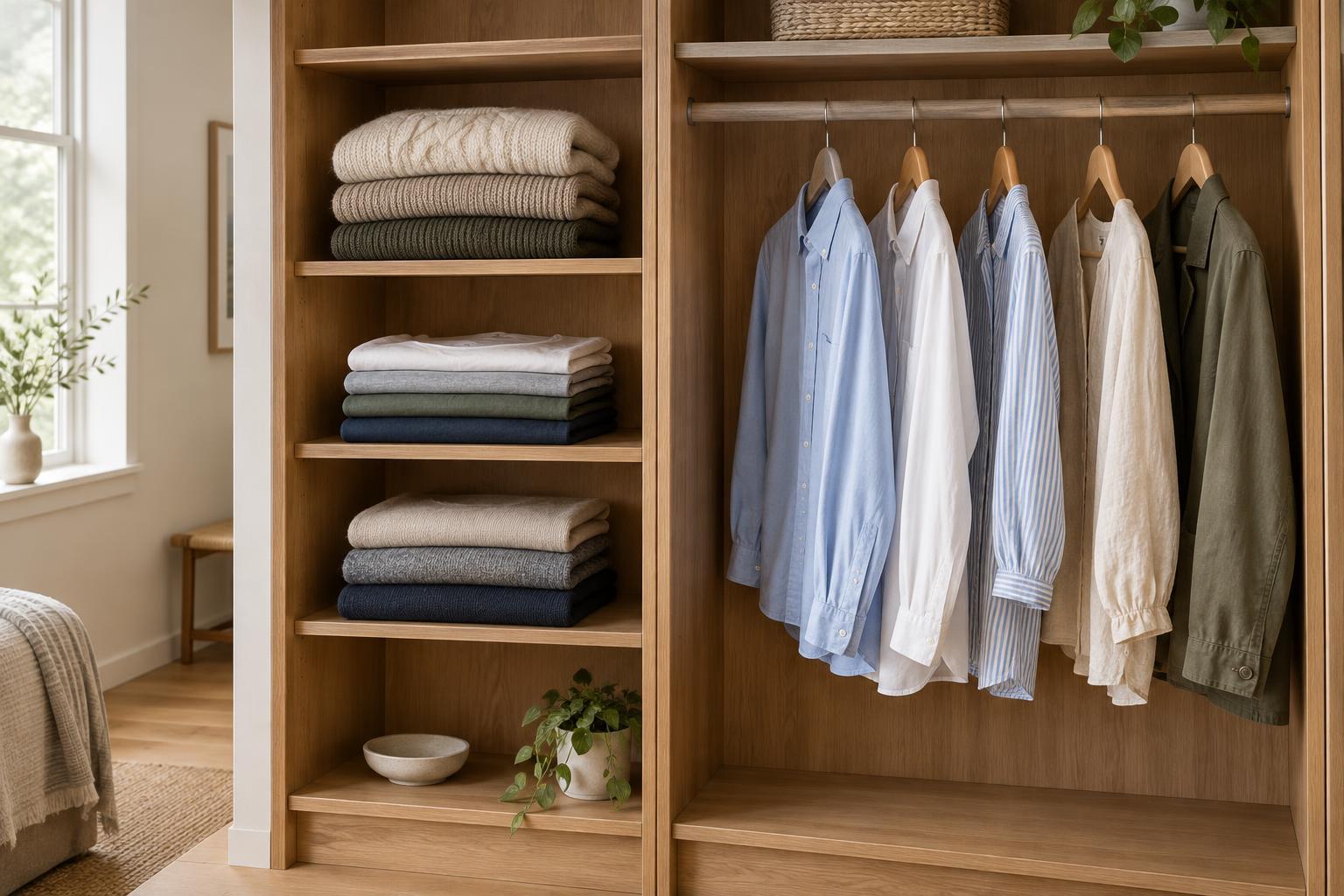
Sweaters, chunky cardigans and other substantial knits usually belong on a shelf or in a drawer. Their own weight can pull them downward on a hanger, sometimes leaving stretched shoulders or a longer-looking body. Fold them loosely enough that the fabric is not crushed, and avoid building a tall stack that makes the bottom pieces hard to retrieve. If shelf space is scarce, a sweater can also be folded over the bar of a sturdy hanger rather than hung by its shoulders.
T-shirts, sweatshirts, leggings, casual shorts and many jeans also fold well. These pieces generally tolerate a fold and often take up less usable space in drawers than on a crowded rail. A row of folded items placed upright in a drawer can make colors and styles visible at a glance; on an open shelf, shorter stacks are easier to maintain. For delicate fabrics, keep rough fasteners and abrasive details from pressing against neighboring pieces.
Hang clothes that need their shape or a smoother finish
Tailored jackets, blazers and structured coats are usually better on hangers that support their shoulders. A narrow hanger can create pressure points, so choose one broad enough for the garment without pushing beyond its shoulder seams. Leave some room around these pieces rather than squeezing them tightly between other clothes.
Woven shirts, blouses, dresses and trousers that show fold lines readily are often easier to store on a rail. Buttoning one or two buttons on a shirt can help it stay put. For trousers, a smooth hanger bar distributes the fold, while a suitable clip hanger lets them hang from the waistband; check that clips do not leave marks on the fabric. Lightweight garments with slippery necklines may need a hanger with a grippy surface or gentle notches. The goal is support without stretching, snagging or pinching.
Treat the exceptions as design decisions
Fabric and construction can pull a garment in different directions. A lightweight knit dress may hang without trouble, but a heavier one may stretch at the shoulders; folding it may be the safer choice. A pleated skirt may be easier to keep orderly on an appropriate hanger, whereas a simple casual skirt might fold neatly. Delicate pieces with embellishments can need extra care: look for a storage position that does not put the full weight of the decoration on one seam.
Also consider time. Folding a woven shirt is practical for travel or a short stay in a drawer, even if you prefer to hang it at home. A crease does not necessarily mean the storage method is wrong; it may just mean the garment needs smoothing before wear. Try a method, inspect the piece after a few weeks of normal use, and change course if you see stretching, persistent marks or troublesome wrinkles.
Make the storage space do its share of the work
A good sorting rule will fail if the closet is overloaded. Give hanging garments enough space to slide aside when you choose one, and keep rails free of sharp edges that could catch fabric. Use hangers that fit the garment rather than forcing every item onto one style. For folded clothes, match the fold to the depth of the shelf or drawer so pieces remain visible and accessible.
Put frequently worn items within comfortable reach, and store less-used pieces where they will not block the everyday ones. Clothes should be dry before they go into a closed drawer or crowded closet. Once those basics are in place, the rule is simple: fold garments that need support from below, hang those that need room to keep their shape or shed creases, and let each item’s behavior settle the close calls.