Grain is a direction, not a texture
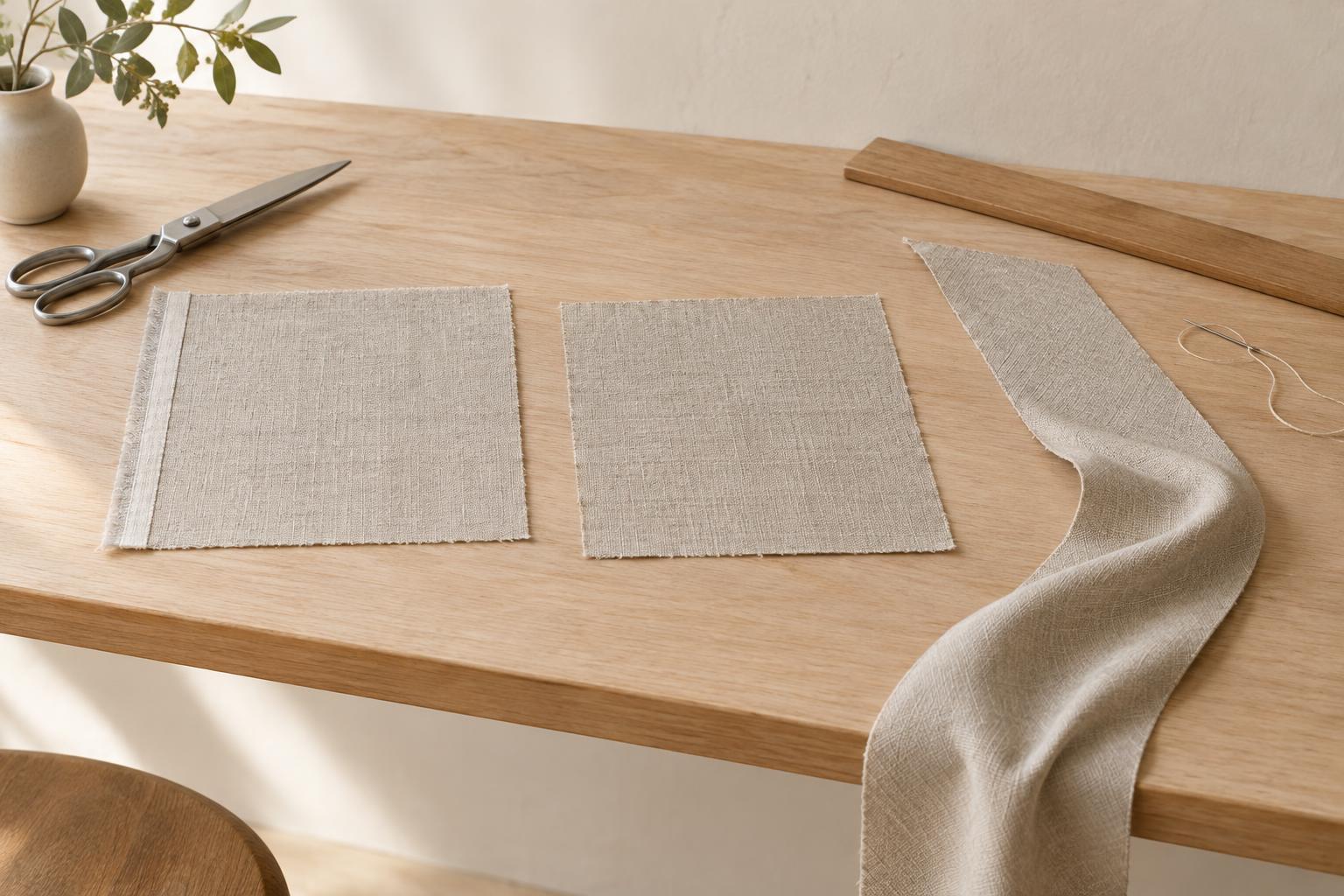
In woven fabric, two sets of threads cross each other. The lengthwise threads run parallel to the finished edges, called selvedges; the crosswise threads run from one selvedge to the other. These directions form the fabric’s grain. You may not be able to see individual threads easily, but you can usually find the lengthwise direction by locating a selvedge.
The direction of a cut piece matters because fabric does not behave identically in every direction. Lengthwise grain is often relatively stable, while cross grain may have a little more give. The exact difference depends on the weave, fibers and finish. A pattern’s grainline arrow tells you how to orient a piece on the cloth, usually with the arrow parallel to the selvedge. It is part of the shape instructions, not merely a way to fit pieces onto the fabric.
Why straight grain helps a piece keep its shape
When a woven panel is cut with its main axis along the lengthwise grain, it tends to resist stretching along that axis. This is useful where predictable dimensions matter: the sides of a tote bag, the front of an apron or a rectangular storage pocket. Cross grain can work too, but substituting it may change how a finished piece hangs or how readily it gives under a load.
A piece cut slightly off grain can behave differently from one cut deliberately on the bias. Imagine a long fabric organizer with two sides intended to be straight. If one side is cut at an angle to the threads, it may lengthen more as the organizer hangs, making the lower edge look uneven. The stitching might be straight and the measurements correct, yet the object can still appear to twist. Careful layout prevents a problem that pressing alone may not fix.
Bias trades stability for movement
Bias is the diagonal direction across a woven fabric, commonly about 45 degrees to the lengthwise and crosswise threads. Pull a small piece gently on that diagonal and you will often feel more give than you do along either straight direction. The threads are shifting in relation to one another; the fabric has not become elastic in the way a stretch knit or elastic band is.
That movement lets bias-cut fabric follow curves and fall in softer folds. Bias binding, for example, can bend around a rounded edge more readily than a strip cut on straight grain. A bias-cut panel can also drape differently from the same panel cut straight. The trade-off is that it may stretch while being handled, stitched or hung. An edge that began at the right length can grow before it is joined to its matching edge.
Cut and sew with the direction in mind
Before cutting, smooth the fabric without pulling it taut and check the grainline against the selvedge. For a rectangular project without a printed pattern, decide which direction needs the most stability and place that dimension along the lengthwise grain. If the fabric has been folded, make sure the layers lie flat rather than twisting against each other. Preparing fabric according to its care needs before cutting can also help reveal changes in size or finish that would otherwise occur after sewing.
Handle bias edges gently. Avoid letting a cut piece dangle from one corner while you work, and support long edges as you move them. Pin or clip matching edges without stretching one to fit the other. If a project includes a curved opening that must retain its measured length, a line of staystitching near the edge can help limit distortion during construction. For binding, by contrast, controlled flexibility is the reason to choose bias in the first place.
Make a small test before committing
A quick comparison makes grain easier to understand than a diagram alone. Cut three equal strips from a scrap of woven fabric: one lengthwise, one crosswise and one on the bias. Mark the same measured distance on each, then gently pull them and let them relax. Notice which strip changes shape most readily. You can also hold each strip from one end to compare how it hangs.
Use those observations when choosing a layout. A crisp pocket flap may benefit from a stable direction, while a curved fabric trim may need the give of bias. There is no universally best grain for every part: the useful question is whether an edge should stay put, bend around a curve or fall softly. Once you ask that question before cutting, fabric direction becomes a design choice rather than an invisible source of surprises.