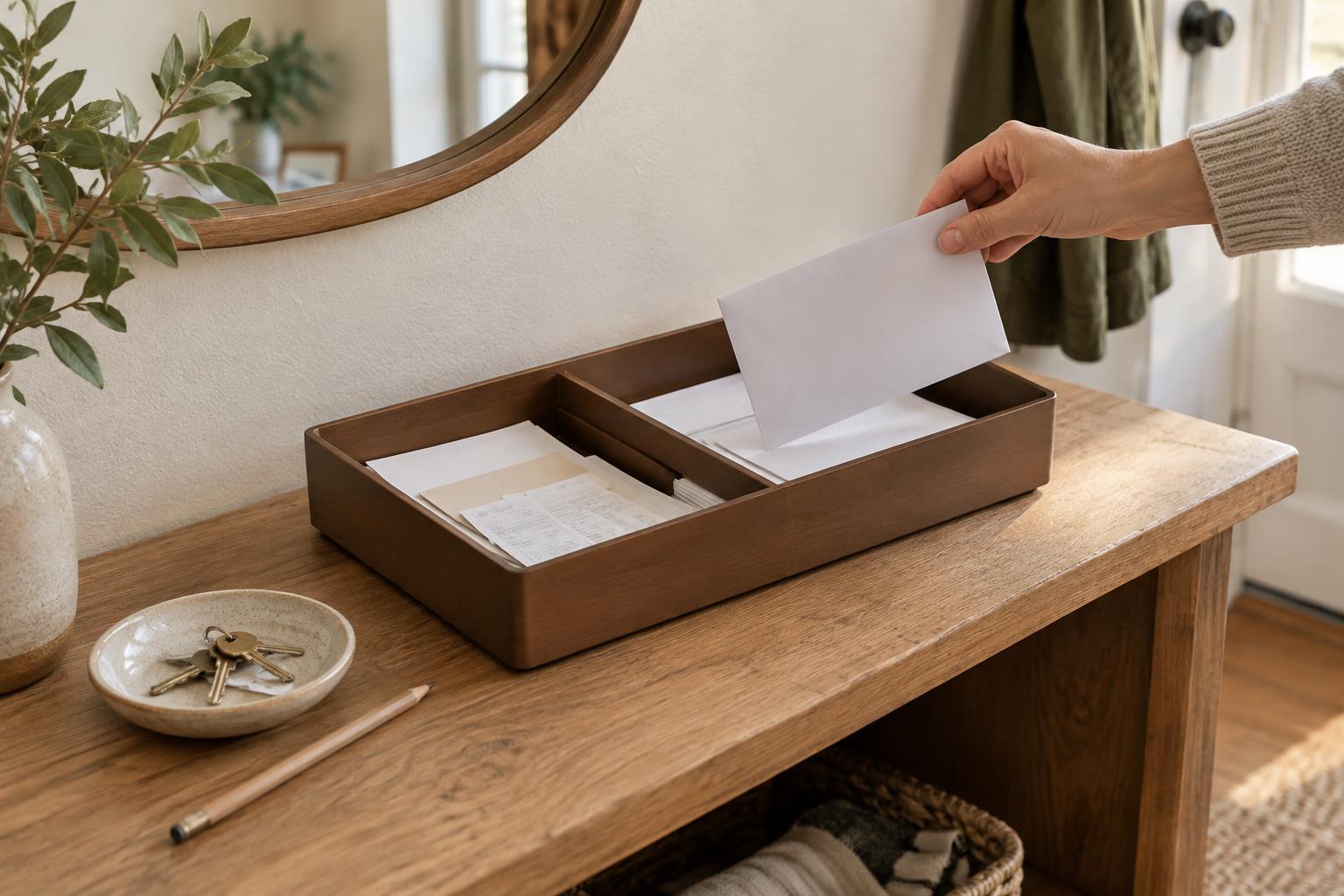
Start with the object, not the finish
A wooden pencil tray, a bookshelf and a dining table do not ask the same things of a finish. Before choosing a product, consider what will touch the object, how often it will be handled and whether spills are likely. A decorative piece may need little more than a pleasant surface and modest dust protection. A tabletop needs a finish that tolerates frequent wiping and occasional moisture.
Also decide what you want the wood to look and feel like. Some finishes leave an almost bare-wood impression, while others deepen the color or build a noticeable surface layer. A smooth, sealed surface can be easy to wipe clean, but it may feel less like raw wood. There is no single best finish: the useful choice is the one whose appearance, protection and upkeep match the object.
Understand the main finish families
Wax gives wood a soft sheen and a tactile surface. It can work well on low-wear decorative objects, but it offers limited resistance to water and abrasion and may need renewing. Wax can also interfere with later recoating, so it is worth considering whether you might want a different finish in the future.
Drying oils and oil-based blends soak into the surface to varying degrees and often emphasize the grain. Their labels matter: a product sold as an “oil finish” may also contain resins or solvents, and its performance can differ from that of a simple oil. These finishes are often appealing on small objects because they can be wiped on thinly. They still need careful application and enough time to cure.
Film-forming finishes, such as many varnishes and polyurethanes, create a more distinct protective layer. They are often a practical choice for surfaces exposed to repeated handling or spills. Water-based versions may change the wood’s color less than some oil-based products, although the result depends on the wood and the formulation. If you are unsure which family a product belongs to, read its label rather than relying on the name on the front of the container.
Test the appearance before committing
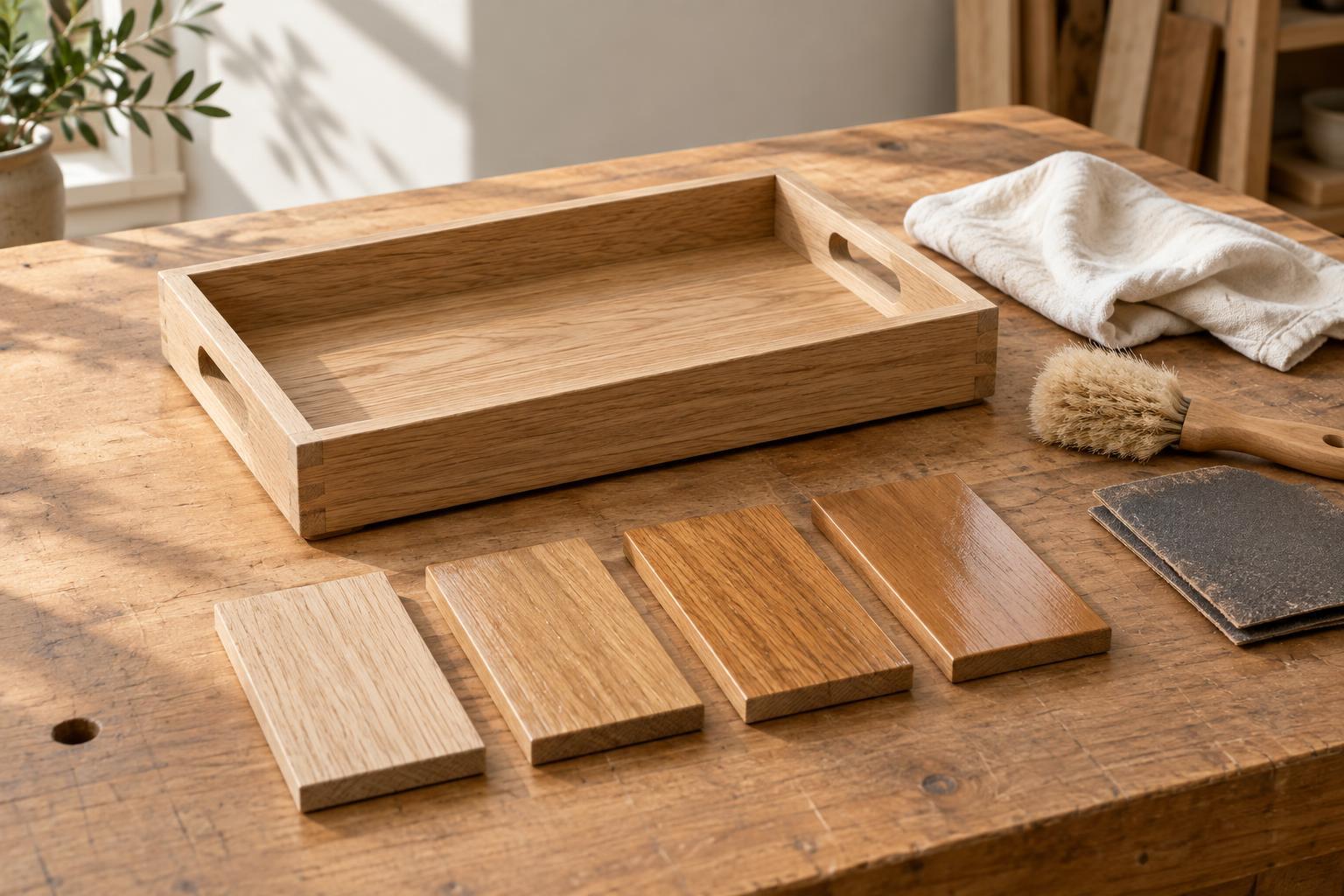
A finish can look different on two pieces of the same species, particularly if one has darker grain, end grain or previous treatment. Make a sample using an offcut if possible. Otherwise, test an inconspicuous area. Sand the sample the same way you plan to sand the object, then apply the intended number of coats according to the product directions. Judge it after it has dried, not just while it is wet.
Look at the sample in the room where the object will live. Check the color, sheen and feel, as well as whether fingerprints or dust show easily. If the wood has already been painted, stained or finished, check that the new product is suitable for coating over it. When the existing finish is unknown, a small compatibility test is more useful than a guess.
Prepare and apply with restraint
Even a well-chosen finish cannot fully hide poor preparation. Remove dirt and grease, smooth rough areas and clear away sanding dust. Sand with the grain where practical, and avoid sanding so aggressively that you round over crisp details you meant to keep. If the object has joints or moving parts, think about where a thick coating might cause them to stick.
Follow the manufacturer’s directions for stirring, application thickness, drying time, recoating and cleanup. Several thin coats are often easier to control than one heavy coat, but the correct method depends on the product. Work in a clean, well-ventilated area and use any protective equipment specified on the label. Drying and full curing are not necessarily the same: an object that feels dry may still need more time before regular use.
Treat used finishing materials as part of the job. Rags soaked with some oils or solvent-based finishes can heat as they dry and pose a fire risk if left in a pile. Follow the product’s disposal instructions and local rules rather than putting wet rags straight into a bin.
Plan for care and future repairs
A finish reduces wear; it does not make wood immune to heat, standing water or scratches. Use the finished object in ways that suit it, and clean it with a gentle method recommended for that coating. For frequently used surfaces, consider how you would deal with a worn patch. Some wiped-on finishes can be refreshed locally, while a damaged film may need more preparation to make a repair blend in.
If you want the simplest decision rule, start with the expected wear. Choose a light-touch finish for a low-use object when feel matters most. For an object that will be handled, wiped or occasionally splashed, compare finishes that offer stronger protection and test their appearance first. The small sample and the product instructions will tell you more about your particular project than a universal favorite ever could.