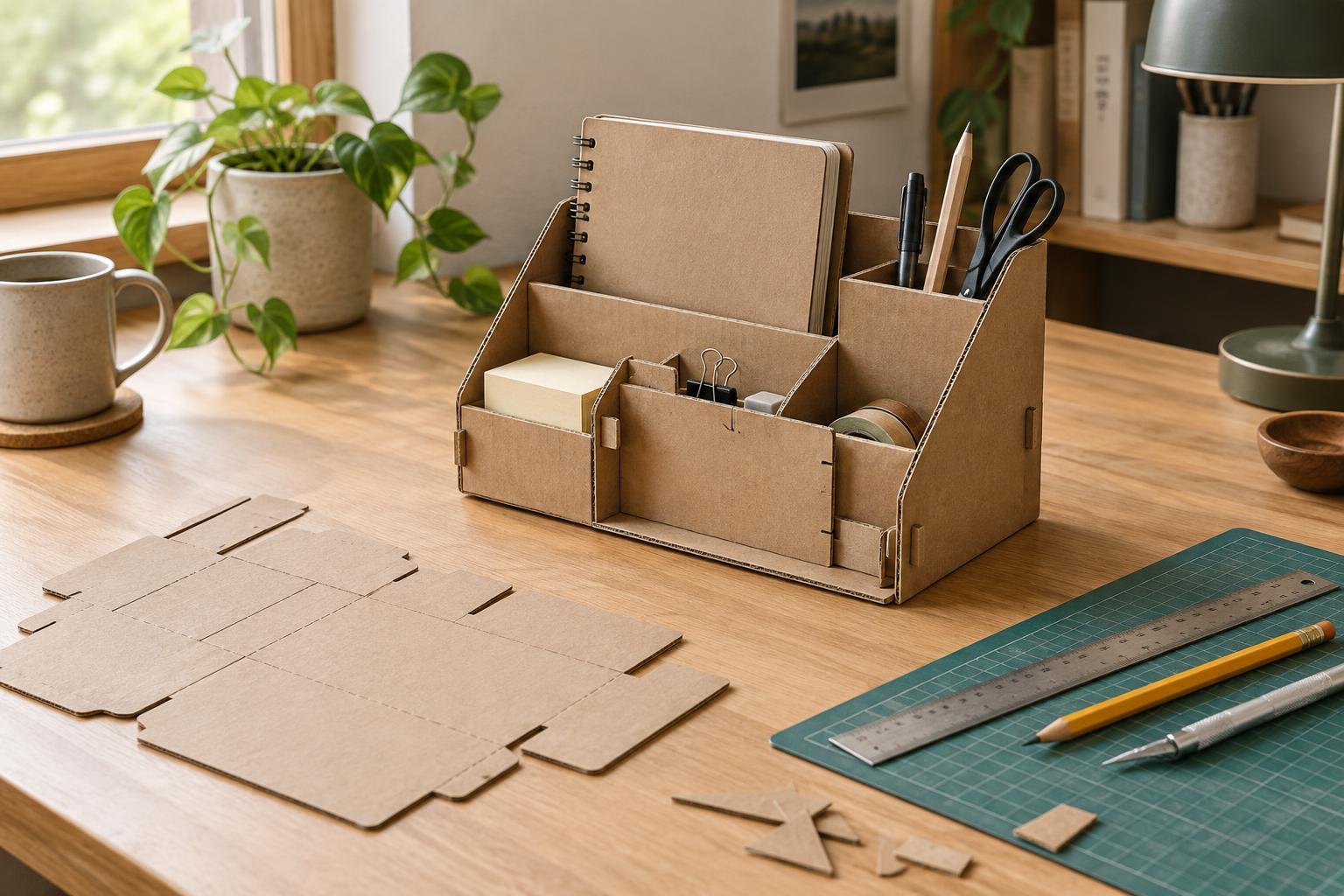
Start with the person opening the box
Assembly begins before two parts touch. Someone opens a box, identifies its contents and tries to work out what should happen first. A designer who knows the object inside out may overlook this moment: two panels that look obviously different in a workshop can look nearly identical on a kitchen floor. Designing for correct assembly means considering what a person can see and feel at each step, not just whether the finished object works.
A useful starting point is to lay out every part and ask simple questions. Which face goes up? Which end goes forward? Are there left and right versions? Can any part fit in the wrong place? If a decision depends on noticing a tiny hole or remembering an earlier instruction, the design is asking for more attention than it may need to. Sometimes a change to the part itself can remove the decision altogether.
Make the right fit easier to recognize
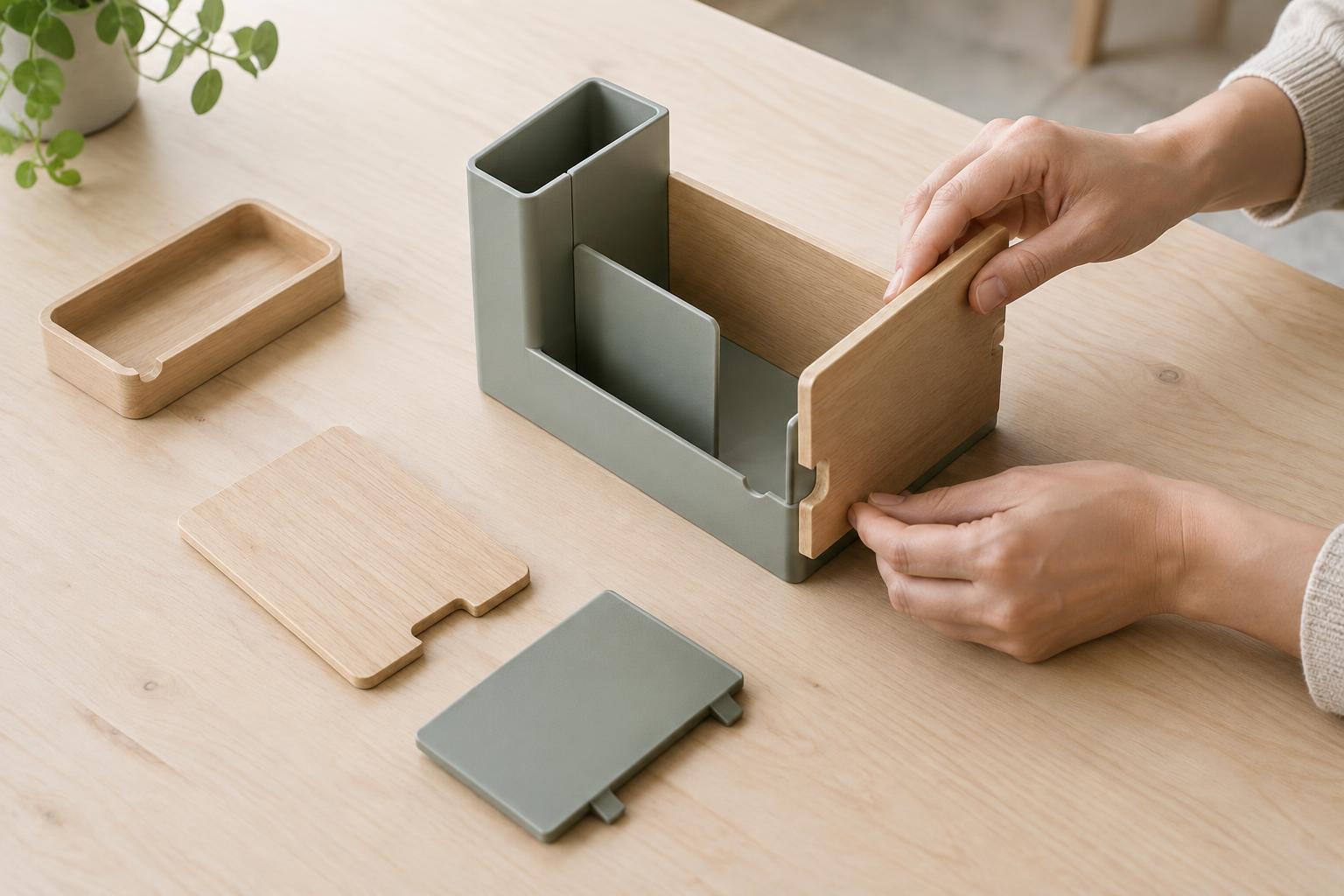
Parts can communicate their orientation through shape. A tab and slot with one angled corner, for example, can make the intended alignment apparent while preventing the reversed one. This is often called keying: the geometry guides the connection. It is especially helpful when two orientations would otherwise appear equally plausible. The goal is not to add unusual shapes everywhere, but to use them where a wrong choice would be easy and consequential.
Visual cues can reinforce physical ones. A visible front edge, a consistent pattern of holes or a clear mark on paired parts can help someone check their progress. Cues work best when they remain visible at the moment they are needed. A label hidden beneath a part after the first step is less useful later. Color can help distinguish components, but shape or position should carry important information too, since lighting and color perception vary.
Treat connections as decisions
Every screw, clip or joint asks the assembler to choose a part, find a location and apply the right amount of force. Reducing the number of fastener types can make those choices simpler. If two screws look similar but have different lengths, for instance, they are easy to mix up. Where different fasteners are necessary, packaging them by step and making their destinations distinct can reduce uncertainty.
A connection should also offer feedback. A clip that settles into place with a noticeable stop is easier to judge than one that feels the same whether it is seated or half-engaged. Screw holes that line up without forcing parts into position give a useful sign that the preceding steps are correct. Feedback need not be loud or dramatic; it simply needs to help someone tell the difference between progress and a mistake. Tool-free assembly may be convenient, but it is not automatically clearer or more durable than a well-designed connection that uses a tool.
Plan for errors and recovery
Even a carefully shaped product may be assembled incorrectly. The next question is what happens then. If an early mistake makes the final step impossible, the problem may be discovered only after considerable work. Ideally, incorrect orientations are blocked early or become obvious before additional parts are attached. A small trial fit can be more forgiving than a joint that locks permanently on the first attempt.
Reversibility matters, particularly for products people may move, repair or store. A snap connection that can be released without breaking may serve them better than one designed only for the factory floor. This does not mean every joint should come apart easily in use. It means considering both the strength required in the finished object and the likely need to undo an assembly step. A simple way to release a part, where appropriate, turns a mistake into a correction rather than a damaged product.
Let instructions and testing finish the design
Good instructions support the object rather than compensate for avoidable confusion. Show parts from the viewpoint a person will actually have, and make each step answer three questions: what to pick up, where it goes and how to tell it is in place. A close view of an important joint may be more useful than a polished image of the completed product. If a step requires leaving a screw loose until later, explain that at the step where someone might be tempted to tighten it.
The most revealing test is to watch someone unfamiliar with the product assemble a prototype without coaching. Note pauses, reversed parts, repeated checks and moments when they reach for the wrong fastener. Asking what they expected to happen can clarify whether the trouble lies in a part, a connection or the instructions. Then change the product where possible and test again. Straightforward assembly is not just a matter of fewer steps: it is a sequence in which the next action makes sense, the correct result is recognizable and a wrong turn is manageable.