Start by finding the hiding places
A freezer can look full even when much of its space is hard to use. Small bags of vegetables, leftover portions, and single-serve items slip behind larger packages or collect under them. Before buying organizers, empty one shelf or drawer at a time and group similar items on the counter. Work promptly so frozen food spends as little time out of the freezer as practical.
Notice where packages tend to vanish. Deep drawers often hide items at the bottom; shelves let soft bags slump into gaps. This quick survey tells you what kind of containment will help. The goal is not to give every item a perfect place. It is to make the smallest packages visible without having to unload the freezer.
Give small items a defined home
Create a few broad zones based on how you use the food: ingredients, ready-to-heat meals, bread and breakfast items, and small extras, for example. Keep the number of zones modest. If you need to debate where an item belongs, the system may be too complicated to maintain during a busy grocery unpacking.
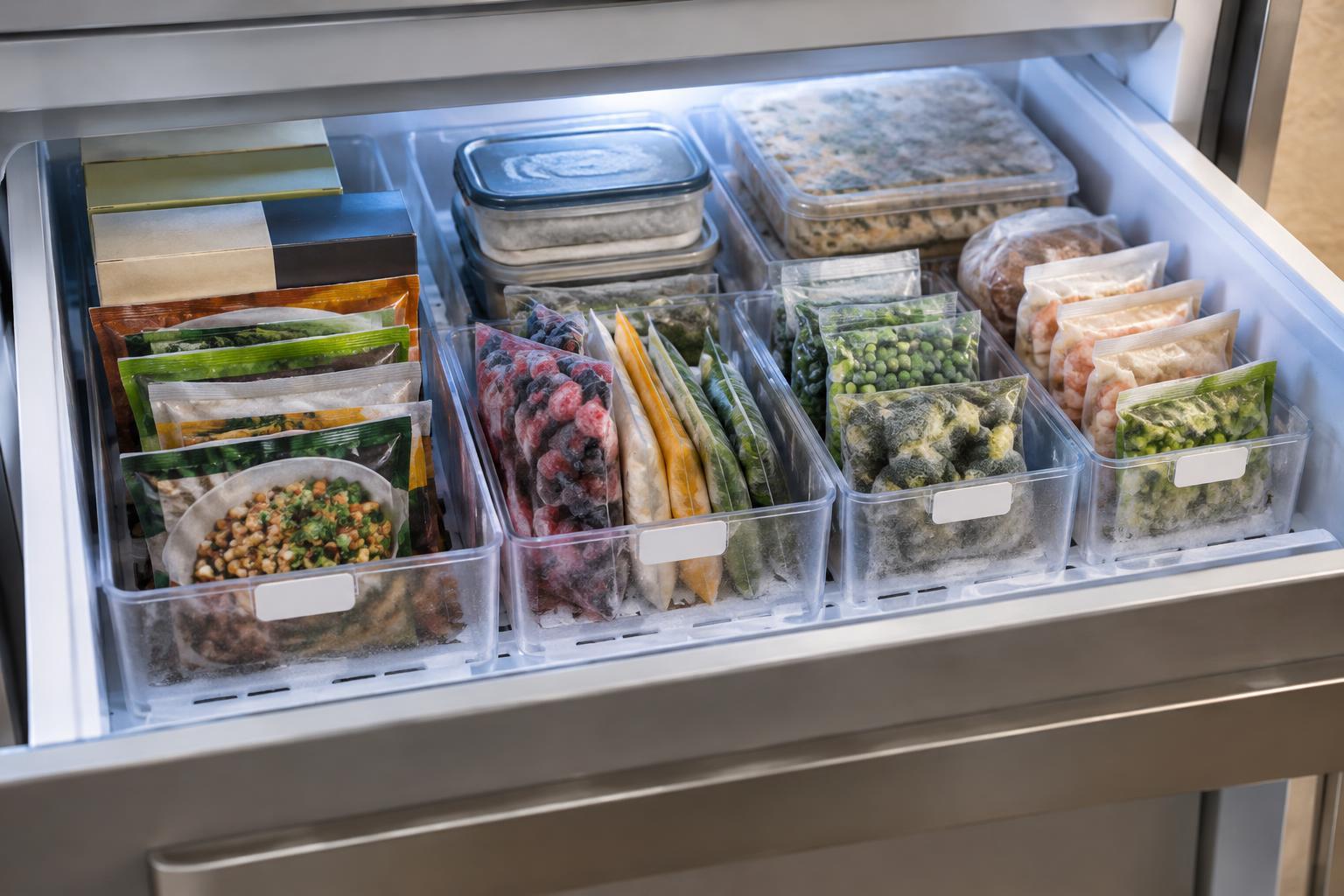
Put the smallest packages together in a shallow bin or sturdy open-topped container. A bin acts like a removable drawer: you can pull it forward and see what is inside instead of reaching past larger food. Choose one that fits easily, leaves room for air to circulate according to your freezer’s guidance, and does not block vents or prevent the door from closing. In a narrow freezer, a compact container may work better than a wide bin.
Store packages so their faces show
Visibility matters more than perfectly matched containers. If your drawer is deep enough, stand flat bags and boxes upright like files, with their labels facing up or forward. Use a bin, divider, or larger box to keep them from falling over. Arrange shorter items toward the front so they are not hidden by tall ones.
For food you freeze yourself, flatten filled freezer-suitable bags before freezing when the contents allow it. Once frozen, flat portions are easier to stack or stand upright than irregular lumps. Leave suitable space for liquids to expand, and use packaging that closes securely. If a package is too small to carry a readable label, place it in a larger labeled bag or bin rather than relying on memory.
Make labels useful at a glance
A label only helps if you can read it while searching. Write the contents and the date you froze them on homemade portions, then position that information toward the visible edge. For store-bought food, keep identifying information and preparation directions with the package. If you transfer food into another container, make sure you can still tell what it is and how you intend to prepare it.
You can also label the front of each bin with its broad category. That small cue makes it easier for everyone in the household to put items back in the same place. Avoid making an elaborate inventory unless you will maintain it. A visible bin of small packages is often more dependable than a list that stops reflecting what is actually inside.
Build a short reset into regular use
The most useful freezer arrangement is one you can restore in a minute or two. When putting groceries away, place new items behind or below similar packages already there, so older ones remain easy to reach. When you take something out, glance into the small-items bin for open bags, duplicate ingredients, or portions that would suit an upcoming meal.
Periodically pull the bin out, wipe away spills if needed, and return stray packages to their zones. Check labels and packaging as you go; follow the product’s instructions and applicable food-safety guidance when deciding whether to use an item. A freezer will still get crowded from time to time, but a defined home and a clear view make small packages far less likely to disappear.