Start with the cabinet, not the containers
An under-sink cabinet looks like a small cupboard, but it works more like a service space. Supply lines, a drain and sometimes a disposal or filter occupy the area where a neat row of bins might otherwise go. Before buying organizers, empty the cabinet and wipe it down. Check for dampness, drips, softened cabinet material or a persistent musty smell. If something appears to be leaking, address it before putting supplies back; an organizer should not hide a problem that needs attention.
Measure the usable floor and the clear space around the plumbing, including the room needed to reach shutoff valves. Then group what came out of the cabinet: cleaners, sponges and brushes, spare soap, bags, and things that belong elsewhere. Discard empty packaging and set aside products you no longer use for disposal according to their labels and local guidance. This first pass often frees more room than an extra shelf would.
Give cleaners a deliberate, secure zone
Convenience should not be the only reason a cleaner lives under the sink. If children or pets can reach the cabinet, use an appropriate child-resistant lock or choose a secure location they cannot access. A closed door on its own is not a safety measure. Keep products upright in their original, clearly labeled containers, with caps closed. Transferring a cleaner into an unmarked spray bottle or a food container makes it much harder to identify and use safely.
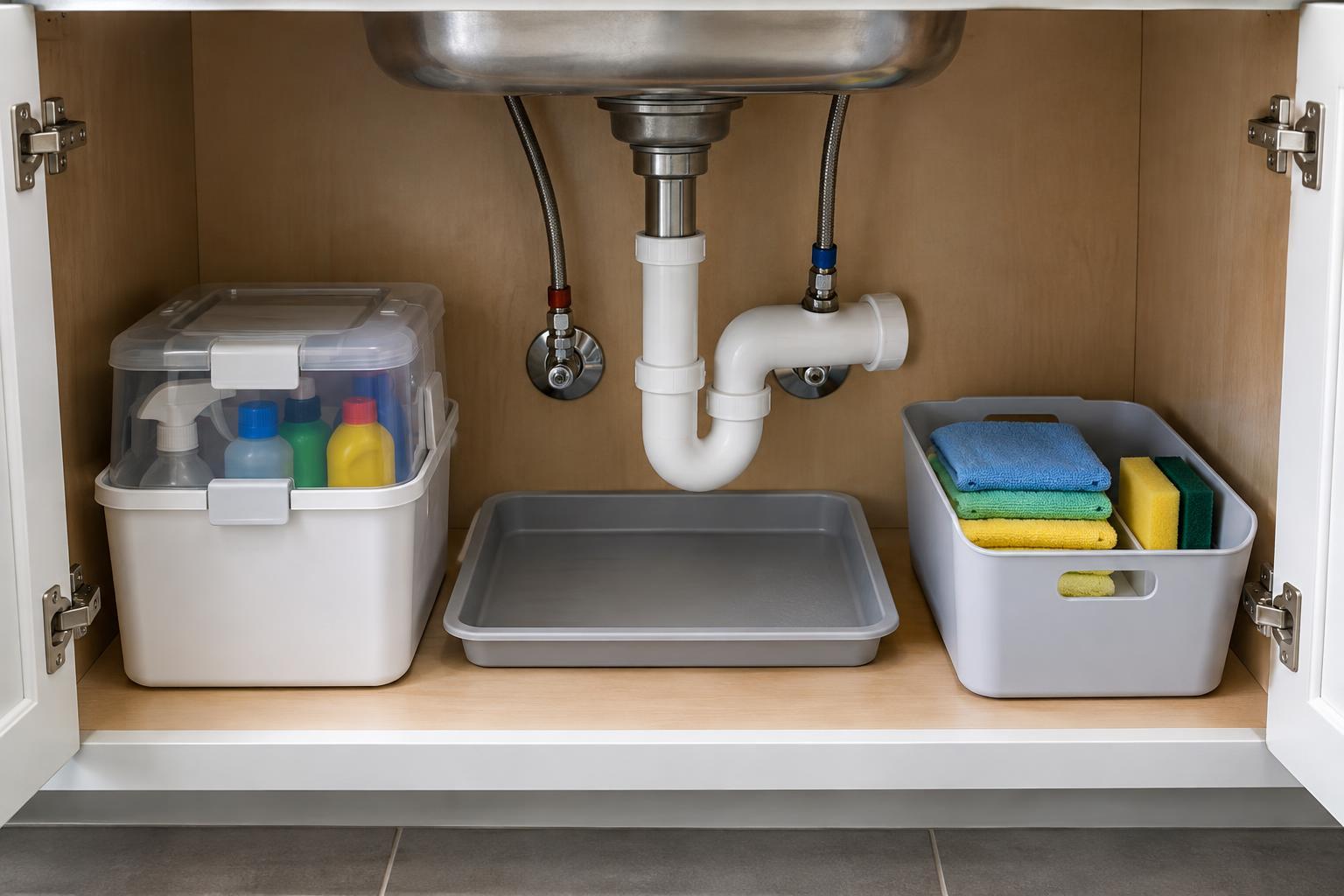
Use a sturdy, wipeable tray or bin to contain small spills and keep bottles from tipping into the plumbing. It is useful to group products by task, but do not crowd different chemicals together simply to make the layout symmetrical. Follow each label’s storage directions, and keep products that should not be combined—such as bleach and ammonia-based cleaners—separate. Never mix cleaners. If a product’s label is missing or unreadable, do not guess what it contains or how to use it.
Build the layout around access
Place the heaviest bottles low and toward the front, where they can be lifted without reaching around a pipe. Put frequently used items in a carryable caddy if you routinely clean several rooms. Reserve a separate small bin for dry supplies such as spare sponges or cloths so they do not sit beside a damp bottle or on a cabinet floor that may get wet.
Choose organizers that can be removed quickly. A narrow shelf may work beside the plumbing, while a low bin may fit beneath a horizontal drain, but neither is helpful if it blocks a valve or must be dismantled to inspect a leak. Door-mounted storage can hold light items where the door and hinges allow it; check that nothing strikes a pipe or bottle when the door closes. Avoid stacking loose products high enough that they can fall when the cabinet is opened.
Keep moisture visible
A liner or shallow tray makes routine cleaning easier, but it should not create a hidden reservoir. Choose one that can be lifted out so you can see and dry the cabinet floor. Do not seal over signs of moisture or rely on a tray to manage an ongoing leak. If the space stays damp, storing paper goods, cloths or cardboard there may lead to damage or odors; move those items to a drier place.
Leave some open space around pipes and connections rather than packing every gap. That breathing room makes it easier to notice a drip, reach a valve and remove a container without knocking over its neighbors. If an outlet or electrical equipment is present, keep liquids from being stored where a spill could reach it, and follow the equipment’s instructions for clearance and access.
Make the system easy to maintain
A useful under-sink setup has a simple rule for each item: where it goes, whether it must stay dry, and who can access it. Labels on bins can help, but they should describe the contents rather than replace the original product labels. Avoid buying duplicates just because a bin has room; extra bottles can make the cabinet harder to inspect and use.
Every so often, pull the bins forward, wipe their bottoms and look at the cabinet floor and plumbing. Return each item upright, check that caps are secure, and remove anything that has migrated into the wrong zone. The goal is not a perfectly filled cabinet. It is a space where supplies are easy to find, cleaners remain securely stored, and a small plumbing problem has nowhere to hide.