Sort for the way you decorate
The best time to organize seasonal decorations is while you are putting them away. Everything is already out, and you can see which pieces you used. Before reaching for a storage box, group items by how you will want to unpack them next year: by room, display, or task. A box marked “front door” may be more useful than one marked “wreaths and ribbons” if those items always go up together.
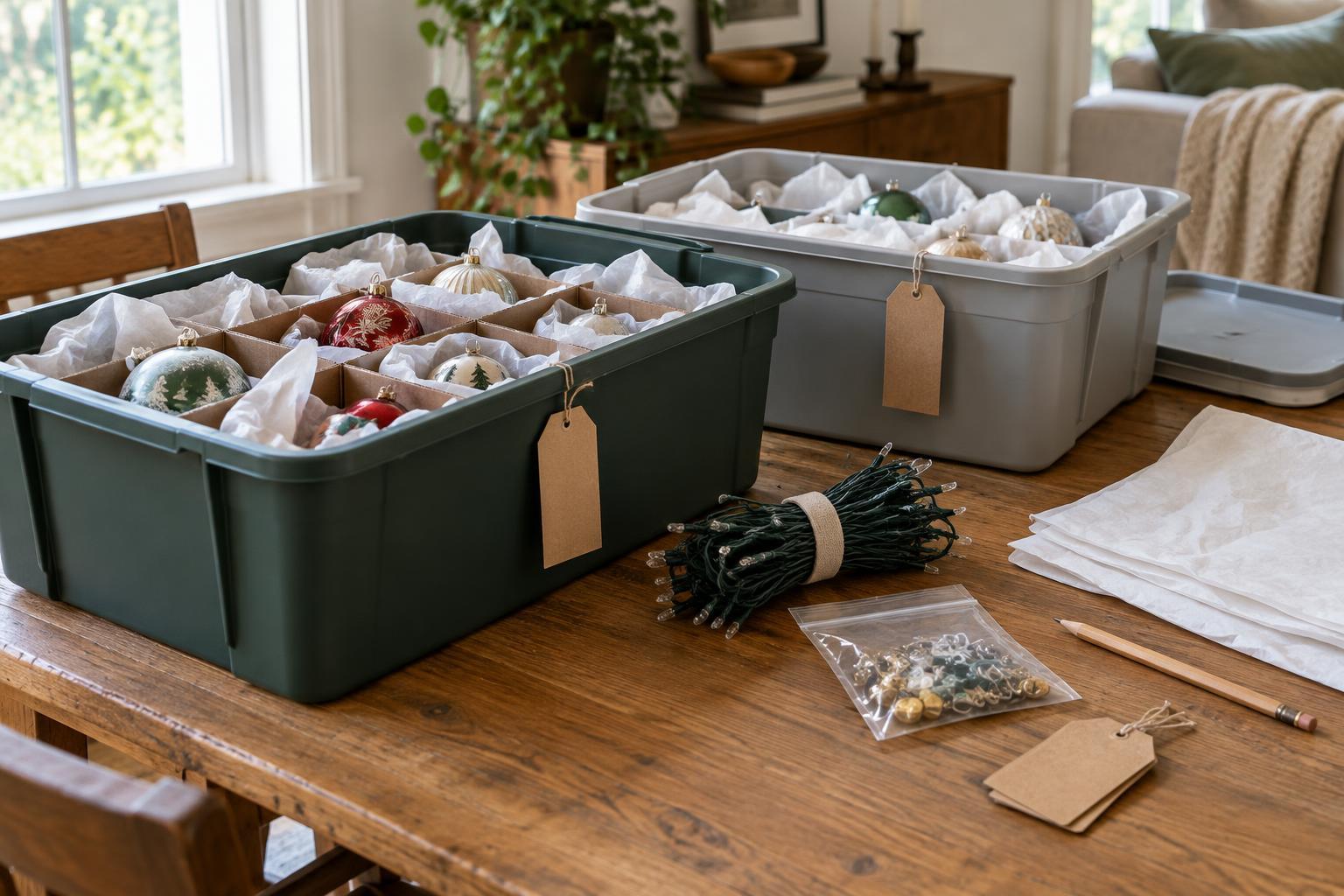
Set aside anything broken, incomplete, or no longer wanted before it returns to storage. Check that a decoration has all its parts, including hooks, stands, clips, and power adapters. Keep small accessories with the objects they serve in a labeled bag or envelope. This prevents a familiar problem: finding the centerpiece immediately but spending the rest of the afternoon looking for its base.
Choose containers around the contents
A container should fit both the decorations and the place where it will be stored. Smaller boxes are easier to lift and less likely to become a jumble of unrelated objects. If you already own sturdy cartons or bins, reuse them where they work; a uniform set is convenient but not necessary. Avoid packing heavy pieces on top of delicate ones, and leave enough room to remove an item without pulling everything else out.
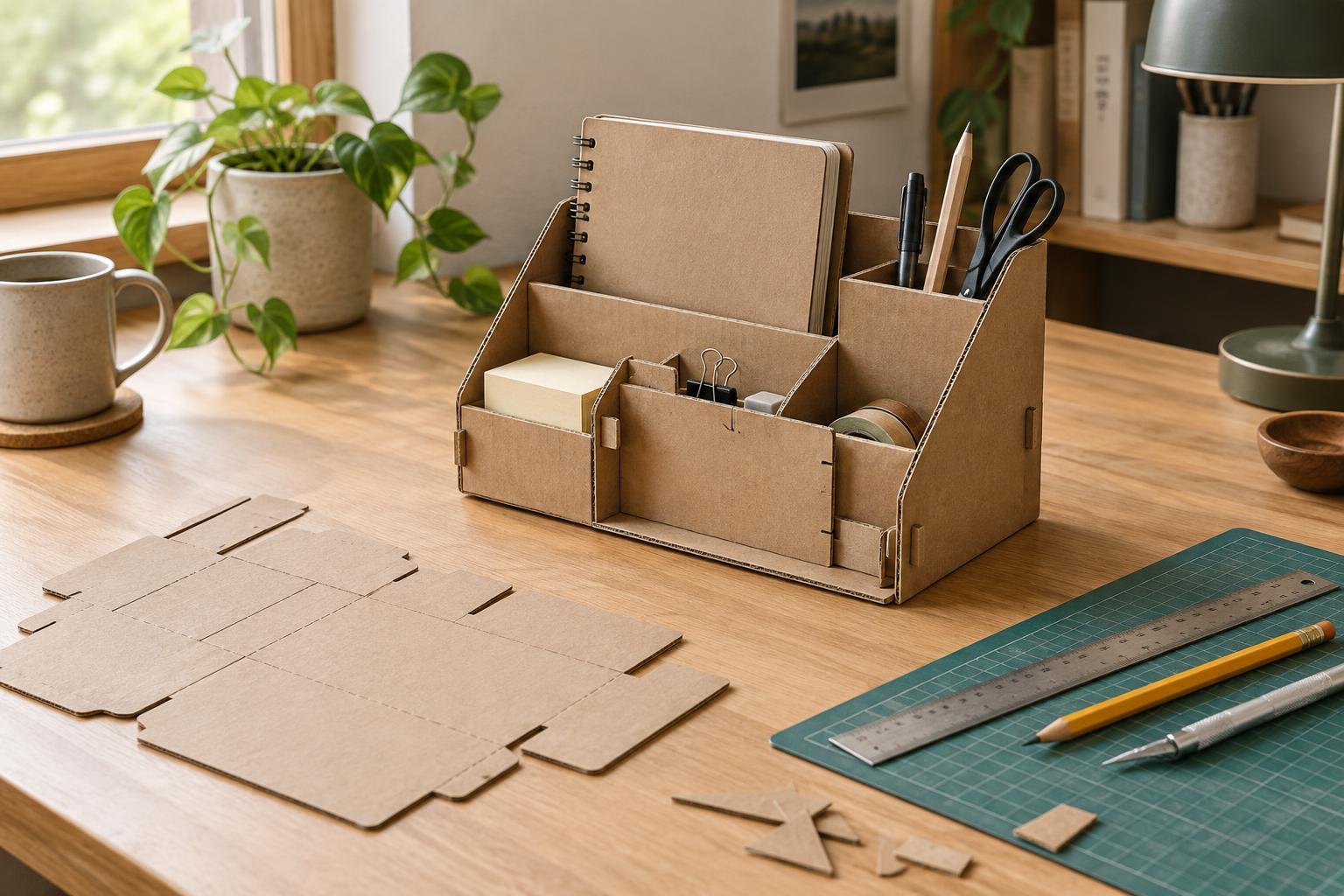
Wrap fragile pieces individually with clean paper, soft cloth, or other cushioning that will not snag their surfaces. Add a divider between layers, and fill empty spaces so objects cannot shift freely. For unusually shaped items, a simple cardboard cradle can be more useful than extra wrapping: cut or fold cardboard to hold the piece in position, then test the fit before closing the box. Store textiles clean and dry, with folds loose enough to avoid sharp creases where possible.
Keep cords, lights, and small parts under control
Cords and string lights are easier to handle when each set is packed on its own. Coil a cord loosely or wind lights around a piece of cardboard, then secure the bundle without tightening it against the wire. Label the bundle with its usual location and any matching adapter. If a set has a plug or controller that is easy to confuse with another, keep them together in one bag.
Remove batteries from decorations that will sit unused for an extended period, following the item’s instructions when available. Put remote controls, spare hooks, and similar small parts in clearly marked bags rather than dropping them into the bottom of a bin. Before closing a box, take a moment to check whether every item inside is dry. Moisture trapped against paper, fabric, or metal can cause problems during storage, particularly in a damp space.
Write labels for the person opening the box
A useful label answers three questions at a glance: what is inside, where it goes, and whether anything needs special handling. “Winter dining table: runner, candleholders, clips; fragile” is more helpful than “Holiday stuff.” Write on the side of the box as well as the lid, because lids are often hidden when boxes are stacked. If the container is reused, attach a replaceable paper label or remove old writing so it cannot send you to the wrong box.
For a box with mixed contents, add a short inventory card inside the lid. Keep the list specific enough to help you find an item without unpacking the entire container, but simple enough to update each year. Numbering boxes can also help when several belong to one season: “Autumn 1 of 3” tells you whether you have found the whole set. Labels do not need to be elaborate; clear handwriting and consistent names do most of the work.
Store for the next unpacking day
Put frequently used or early-season items where they are easiest to reach. Decorations you use only occasionally can sit farther back, provided you can still retrieve them safely. Place heavier containers below lighter ones, and avoid stacking on boxes that might crush. If your storage area experiences large temperature changes or dampness, consider a different spot for especially delicate paper, fabric, or keepsake pieces.
Finally, leave yourself a brief note about anything you want to change next year: a missing hook, a light set to check, or a display that would benefit from a smaller box. Tuck it into the relevant container or add it to the inventory card. Good storage is not about making every box look identical. It is about making the next season’s first step obvious: find the right box, open it, and get started.