First, identify what is making contact
A rattle and a thud may sound like one problem, but they usually call for different fixes. A rattle comes from repeated movement between parts with room to shift. Impact noise is the sound of one surface striking another, as when a lid closes against a hard rim. A product may do both: a loose lid rattles while it is carried and bangs when it is set down.
Begin by observing when the sound occurs. Does it happen only while the object is moving, when a drawer reaches its stop, or when someone presses a particular corner? Remove loose contents, then test the product again. Gently hold one suspected part at a time while repeating the motion. If the sound changes, you have a useful clue. This simple test is more reliable than adding padding everywhere and hoping for the best.
Take away unwanted movement
For rattles, the first question is whether a part should move at all. A loose screw, worn latch or poorly seated panel may need to be secured rather than cushioned. Check accessible fasteners and fittings, and tighten only as appropriate for the material. Overtightening can strip threads or distort a plastic housing, creating a new gap elsewhere.
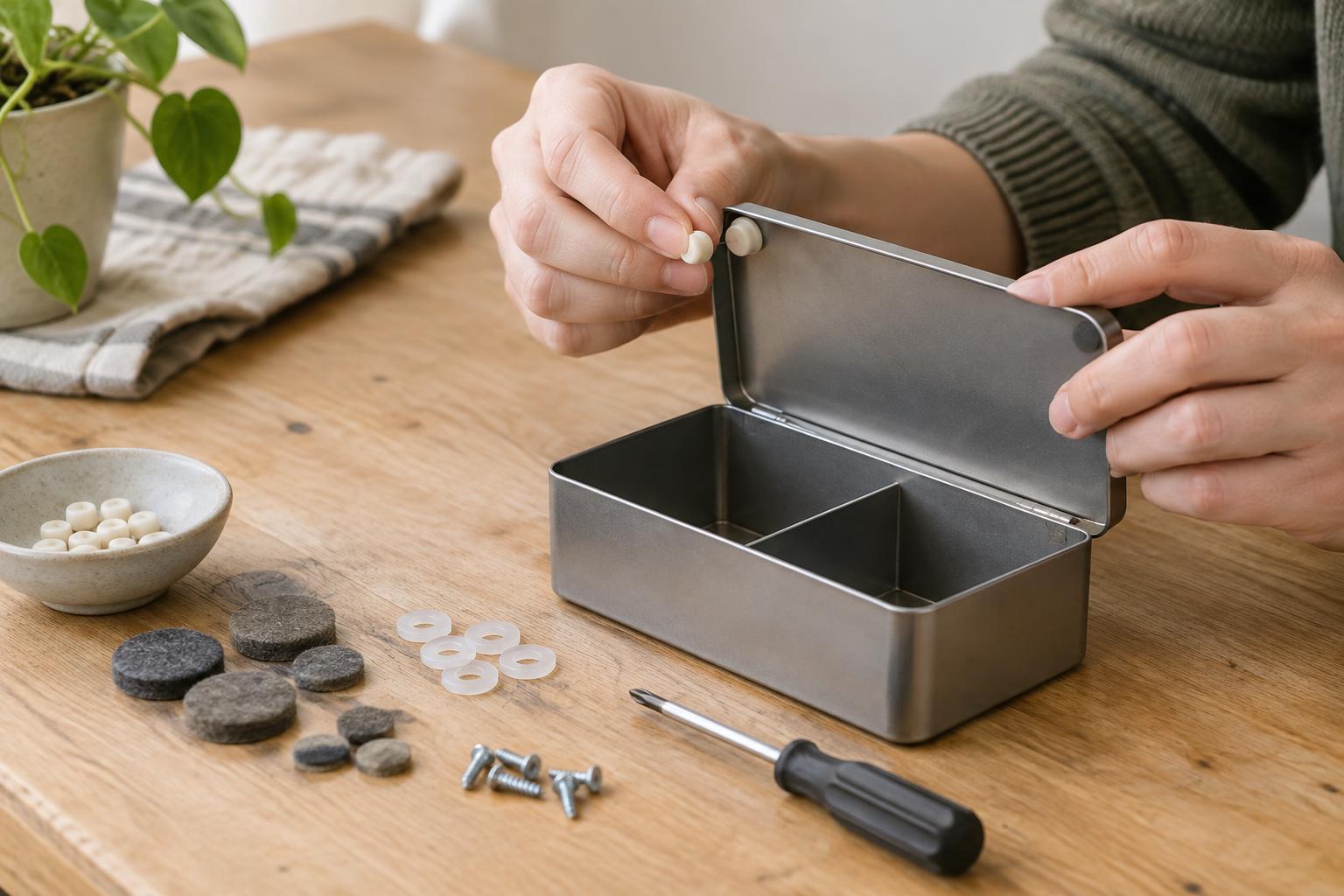
If the product needs a little clearance to work, aim to control the movement rather than eliminate it. A thin felt pad inside a storage box can keep a tray from shifting. A small adhesive bumper can hold a removable cover against its frame. Place padding where the parts actually touch, then check that the lid still closes, the latch engages and removable pieces can still be taken out. A fix that makes an object quiet but awkward to use is not much of an improvement.
Soften impacts at the right point
Impact noise is often easiest to address at the landing surface. A rubber or silicone bumper on a cabinet door, a soft stop at the end of a sliding tray, or a liner beneath a set of tools can reduce the sharpness of contact. The cushion needs enough room to compress; a pad squeezed flat before the parts meet may have little effect.
Material choice depends on the job. Felt is useful for light contact and sliding surfaces, but it can collect dust and wear with repeated rubbing. Foam can fill an irregular gap, though some foams gradually lose their shape. Rubber and silicone tend to suit repeated bumps, but a thick or grippy pad may interfere with movement. Start with the thinnest practical option and test it through several normal cycles before adding more.
Keep vibration from spreading
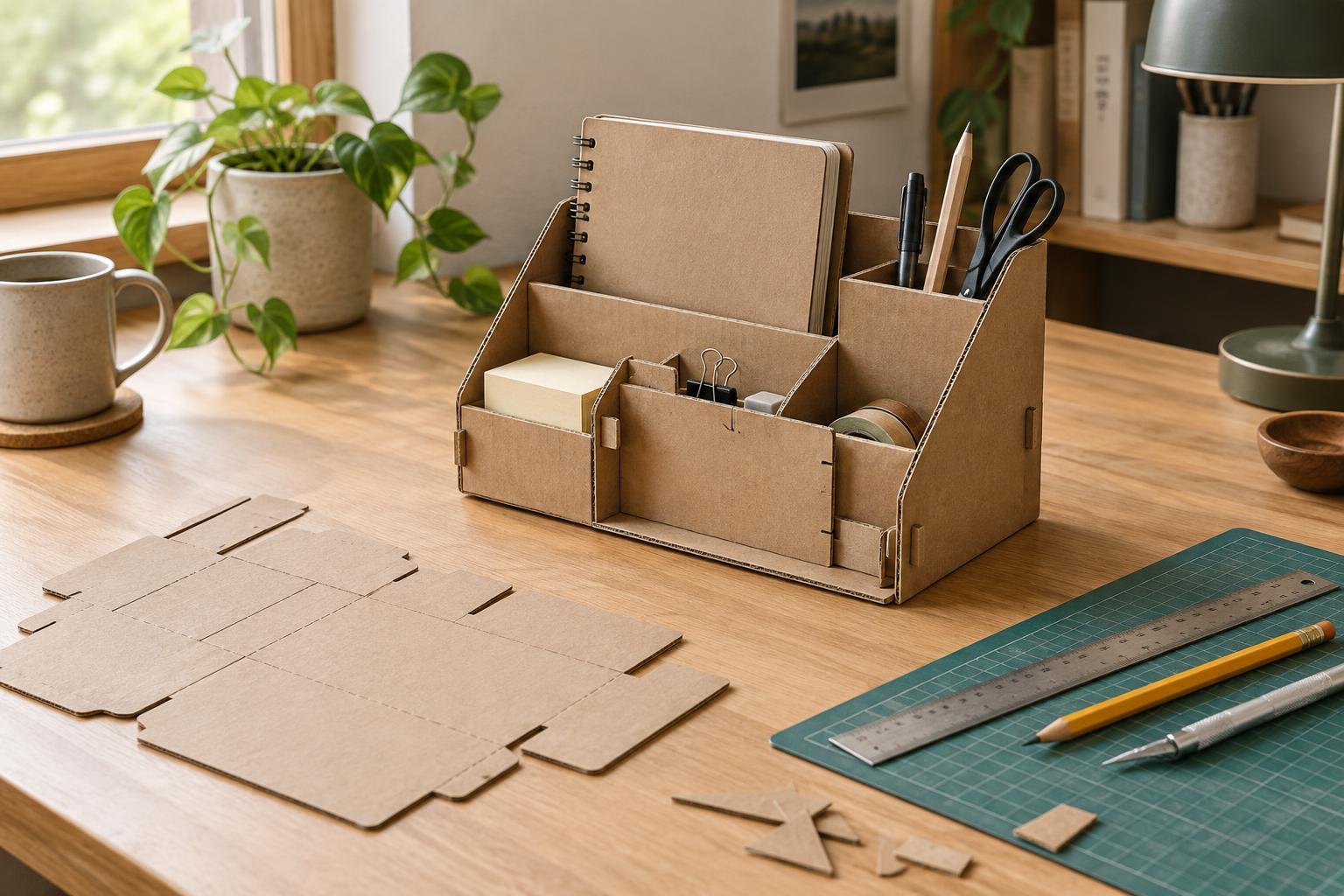
Sometimes the contact itself is modest, but a broad panel makes it sound louder. A thin bin wall or desk organizer can vibrate when a small part taps against it. In that case, look at how the vibrating part is supported. A liner beneath the object, a soft washer at an accessible mounting point, or a better-fitting insert may prevent the vibration from passing into a larger surface.
Think about the full path of the noise: what moves, what it hits, and what carries the resulting vibration. Padding the outside of a container may do less than separating the objects inside it. Likewise, a soft foot under a tabletop accessory may help with noise transmitted to the desk, but it will not stop loose pieces rattling within the accessory. Address the earliest practical point in the path.
Design for quiet without making maintenance difficult
For a new product or a hands-on project, quietness is easier to build in than to add later. Give parts a clear resting position, avoid long unsupported panels where practical, and plan stops that meet gently. If a removable component needs a loose fit for easy cleaning, provide a small cushioned contact point rather than relying on an extremely tight fit. Consider whether that pad can be replaced when it wears.
For an existing object, favor changes you can inspect and reverse. Clean a surface before applying an adhesive pad, and keep padding away from hinges, vents, electrical contacts and hot areas. Test the object in normal use after each change, paying attention to whether it still opens, closes and sits securely. A quieter product is not necessarily one with more soft material; it is one whose parts move only where intended and meet in a controlled way.