Choose the right cut for the method
Scoring and snapping is a useful way to make straight cuts in thin acrylic sheet without creating as much cutting debris as a saw. You make a shallow groove along the intended cut, then bend the sheet at that groove until it separates. It works best when the sheet is thin, the cut is straight, and there is enough material on both sides to grip or support.
This method is less reliable for thick sheets, curves, small notches, or very narrow strips. Those cuts may call for a suitable saw or another acrylic-cutting tool. If you are unsure how your sheet will behave, try a short cut on an offcut first. Different acrylic sheets can respond differently, and a practice cut is more useful than trying to rescue a cracked finished piece.
Set up a stable, protected workspace
Gather an acrylic scoring tool, a rigid straightedge, clamps, a ruler, a pencil or removable marker, and eye protection. A scoring tool has a tip designed to scrape a groove in plastic. A sharp utility knife may mark the surface, but it is harder to use for a controlled, repeated score; a dedicated tool is a better choice. Work on a firm, flat table with room to support the entire sheet.
Leave the sheet’s protective film in place if it does not interfere with the tool. Mark the cut line on the film, checking measurements from a straight factory edge where possible. Put a piece of scrap wood beneath the sheet if your work surface needs protection. Position the straightedge on the side of the line you plan to keep, then clamp it securely without putting so much pressure on the acrylic that it bends. Keep your hands out of the scoring path.
Score one line, repeatedly
Hold the scoring tool against the straightedge and pull it steadily along the full length of the line. Use moderate, consistent pressure rather than trying to cut through the sheet in one pass. Repeat along the same groove until you have a clear, continuous score. The number of passes depends on the tool and sheet; what matters is that the groove is noticeably deeper than a surface scratch and does not wander away from the line.
Keep the straightedge fixed between passes. If it slips, stop and reset it rather than following two competing grooves. Work from one end to the other each time, paying attention to the ends, which are easy to score too lightly. Avoid pressing so hard that the tool catches or chips the surface. If your practice piece splinters while you score it, lighten the pressure and make more controlled passes.
Support the line and make the snap
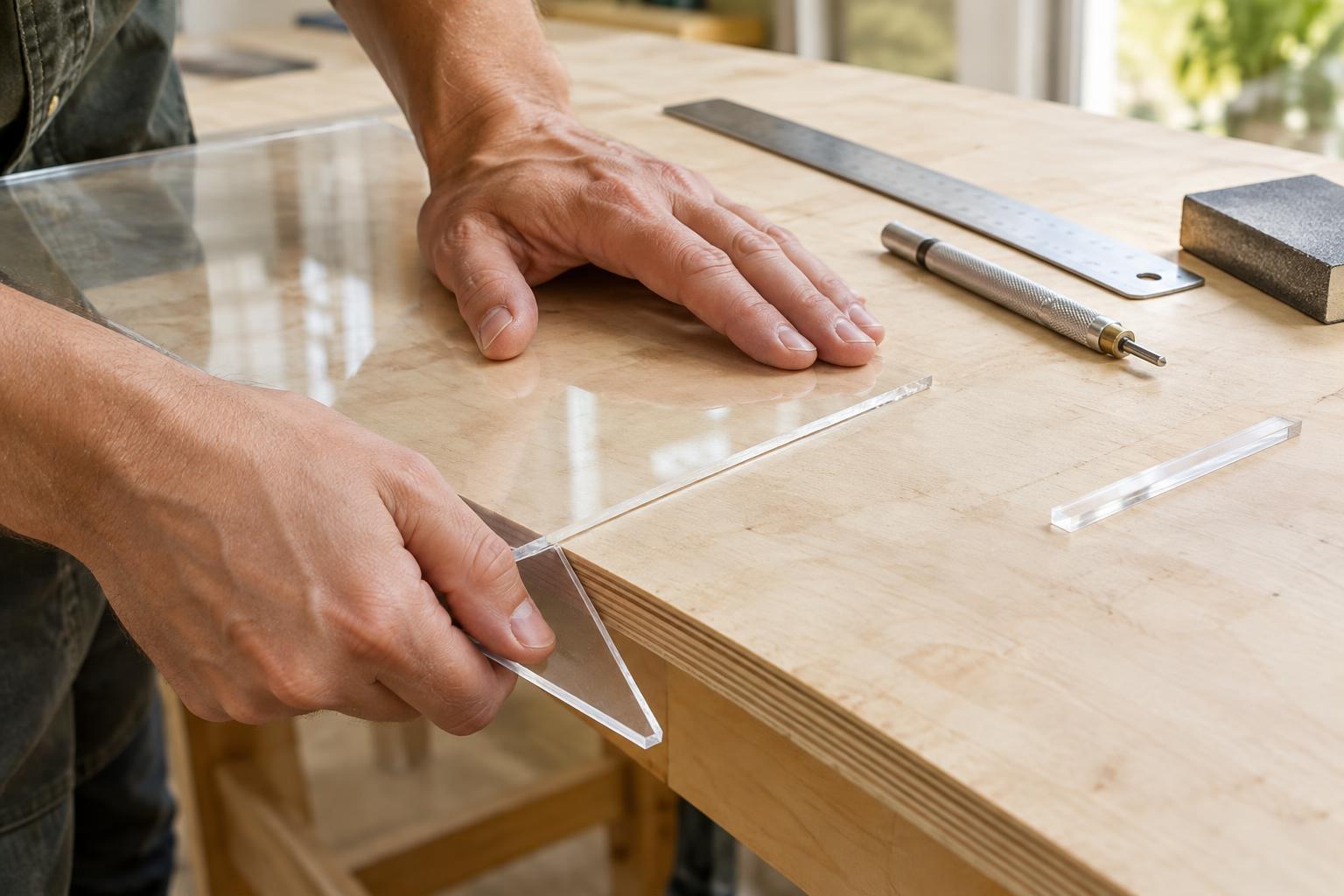
Move the scored sheet to the edge of a sturdy table, with the score line aligned closely with that edge and the section you want to remove extending beyond it. Clamp or hold the larger, supported section firmly. For a longer cut, a straight board on top can help hold the sheet evenly near the score. Make sure the overhanging piece has room to move and will not strike your legs or the floor unexpectedly.
Wearing eye protection, press down on the overhanging section with a steady, decisive motion. Apply pressure evenly along the cut rather than twisting one corner. The sheet should break along the scored line. If it starts to bend without separating, stop; check whether the score is deep and continuous before trying again. Forcing a poorly scored sheet can send a crack away from the intended cut. Handle the new edges carefully, as they may be sharp.
Smooth the edge and learn from the result
A snapped edge may be slightly rough even when the cut is straight. To make it more comfortable to handle, support the piece on a flat surface and use fine-grit sandpaper wrapped around a small block. Make light, even strokes along the edge, then soften its sharp corners. Keep dust contained, avoid breathing it, and wipe the piece and work area when finished. Leave the protective film on until the sanding and fitting are done if it is still doing its job.
Check the cut against the part it needs to fit rather than judging it only by eye. A wavy break often points to an uneven score or poor support during the snap. A crack that runs past the line may mean the sheet was twisted or the score was too shallow. Save a small offcut for testing: a few minutes spent adjusting your pressure and setup can make the next cut both cleaner and easier to control.