Start with the route you already take
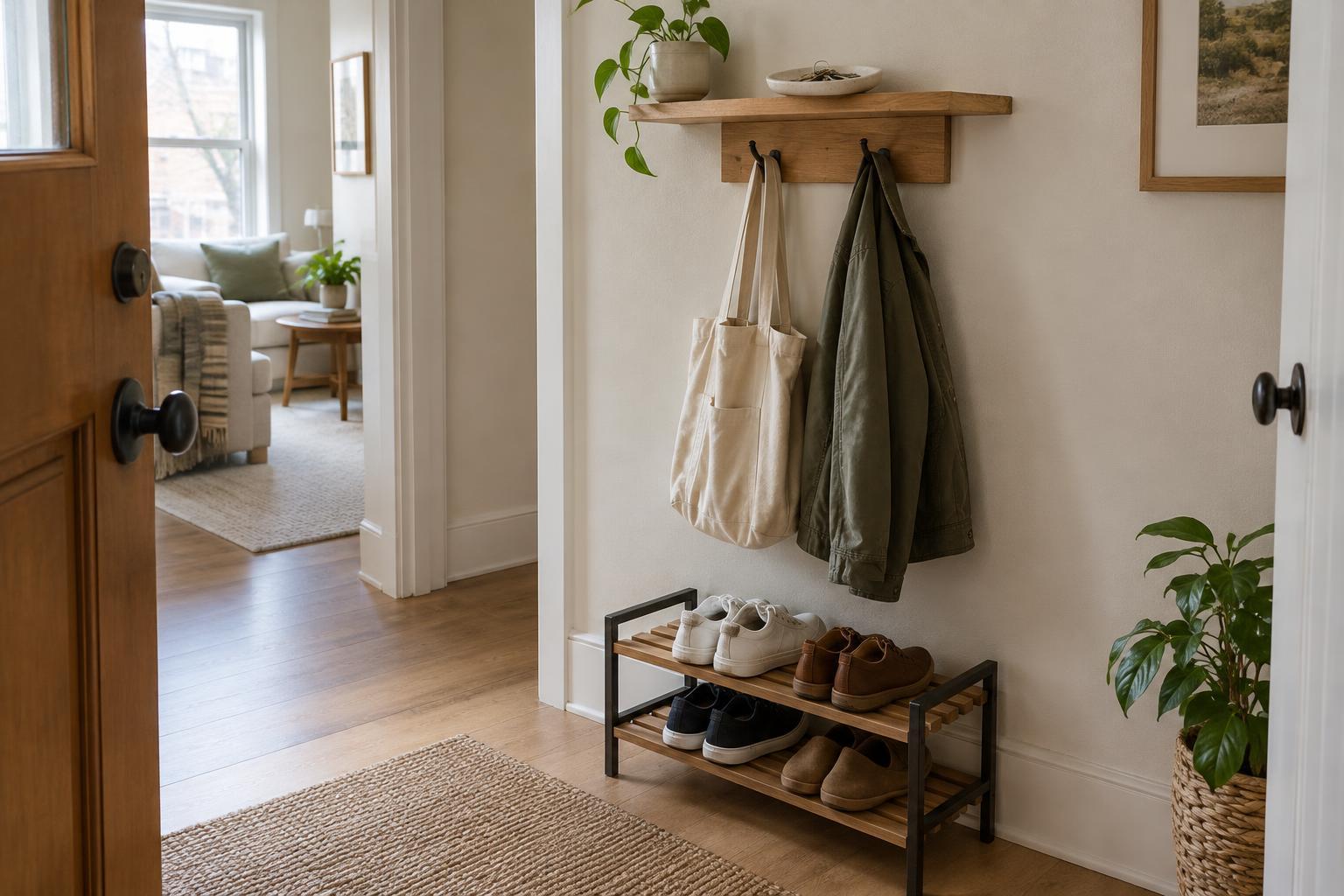
An entryway drop zone is a place to put everyday belongings as you come home and pick them up as you leave. It does not need to look like a dedicated mudroom. A narrow wall, a corner beside the door, or part of a nearby closet can work if it is convenient enough to use without thinking.
Before buying anything, notice what happens when you enter. Where do you naturally set your keys? Do bags end up on the floor because the nearest hook is too far away? Which shoes stay by the door, and which could live elsewhere? Put temporary containers in likely spots for a few days. This small test can reveal whether your proposed layout supports your habits or asks you to change too many of them.
Give small essentials one clear landing place
Keys are easiest to find when they have one consistent home close to the door. Choose a hook, shallow dish, or small tray that is visible on your way out. A tray can also hold a transit card or other pocket-sized essentials, but avoid making it a catch-all for mail and loose objects. If it fills up, the one item you need quickly becomes harder to spot.
Consider how the surface feels in use. A dish with a raised edge keeps small items contained, while a wall hook frees up counter space. If several people share the entryway, separate hooks or clearly distinct spots may be simpler than one crowded bowl. Place them at heights the intended users can reach comfortably, without blocking a door swing or light switch.
Make bags easy to hang and easy to lift
Bags need enough room for their straps and their full shape. A row of hooks can work well, but leave space between them so one bag does not bury another. Sturdy hooks with rounded ends are generally kinder to straps than narrow pegs. Check the hook and wall fixing against the weight you expect it to carry, especially for a work bag that may hold a laptop or books.
If hooks are not an option, try a small bench, a shelf, or an open basket for lightweight bags. Keep the everyday bag in the most accessible position and move occasional bags to longer-term storage. The goal is not to display everything you own at the door; it is to make the next departure straightforward.
Contain shoes without crowding the floor
A shoe area should match the number of pairs that actually need to be there. A low rack makes pairs visible, while a tray can define a spot for wet or muddy footwear and protect the floor beneath it. An open basket may suit soft slippers, but it can make frequently worn shoes harder to pair up. Choose the format based on what you reach for most often.
Leave enough clear floor space to stand, turn, and open the door comfortably. If the entry is narrow, a slim rack or a few pairs lined up on a washable mat may be more useful than a deep cabinet. Shoes that come in damp need a chance to dry; avoid packing them tightly into closed storage straight away. A place to sit can help with putting shoes on, but only if it does not turn the walkway into an obstacle.
Keep the system small enough to maintain
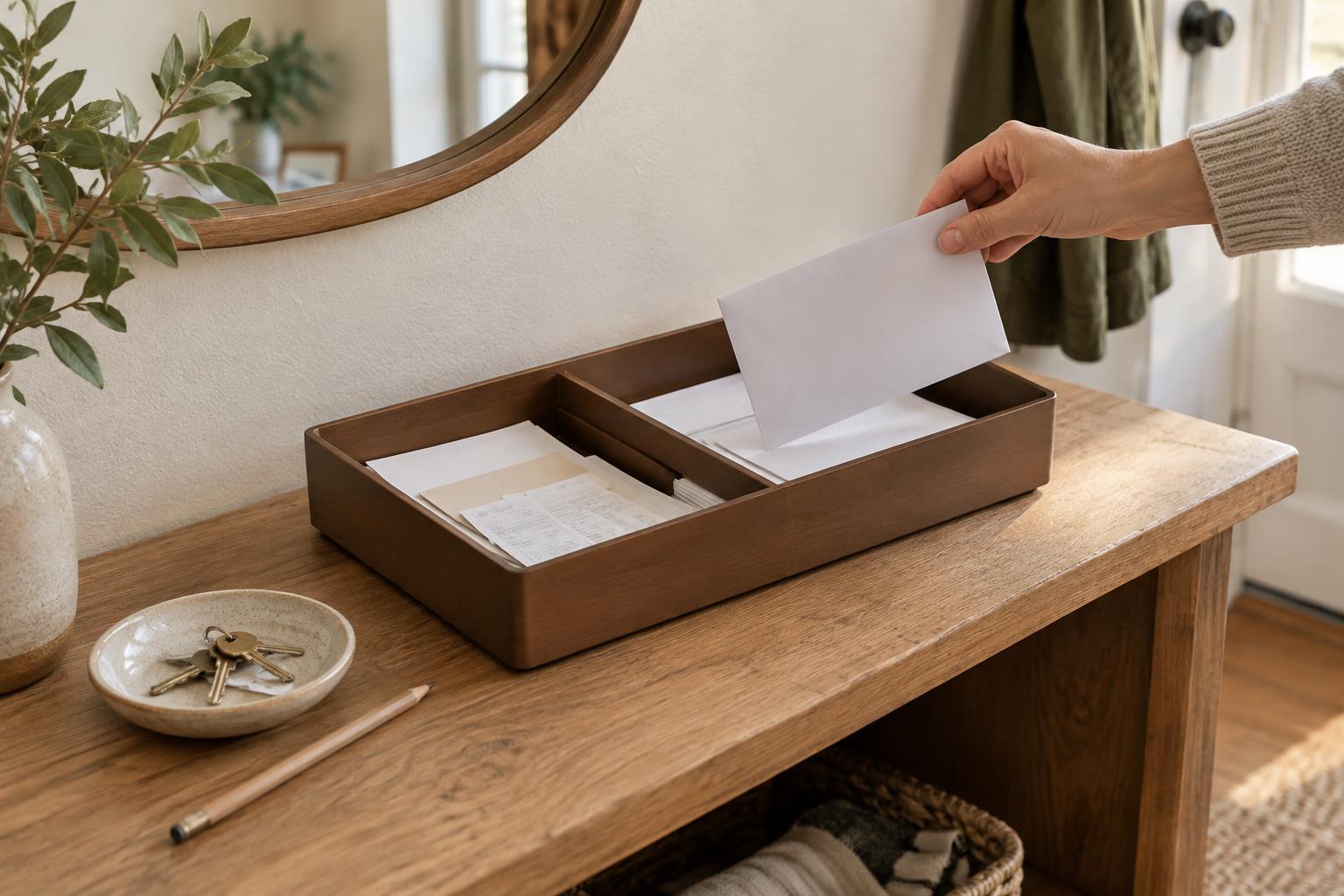
The best drop zone has limits. Decide how many pairs of shoes belong by the door and how many hooks are for everyday bags and coats. Give incoming mail a separate destination rather than letting it cover the key tray. If you share the space, assign places by person or by object type—whichever is easier for everyone to remember.
Once the essentials are in place, use the entryway for a week before adding more storage. Notice what still lands on the floor or travels into another room. A small adjustment, such as moving a hook lower or placing the shoe tray on the other side of the door, may do more than another organizer. A drop zone works when returning things to it is the easiest part of coming home.