Start with what the space needs to do
An unused corner can look like an invitation to add a shelf. Before filling it, watch how the surrounding area works. Does a door swing through it? Does a drawer need room to open? Is it where someone stands to put on shoes, reach a light switch or pull out a vacuum? Empty floor space may be doing a job even when it holds nothing.
Measure the available width, depth and height, then measure the space needed to use what is nearby. Open doors and drawers fully rather than estimating their reach. Note vents, outlets, access panels and anything that needs inspection or cleaning. A piece that fits the gap on paper may still make daily tasks awkward. A useful organizer should make an item easier to retrieve without making another item harder to reach.
Match the storage to the shape
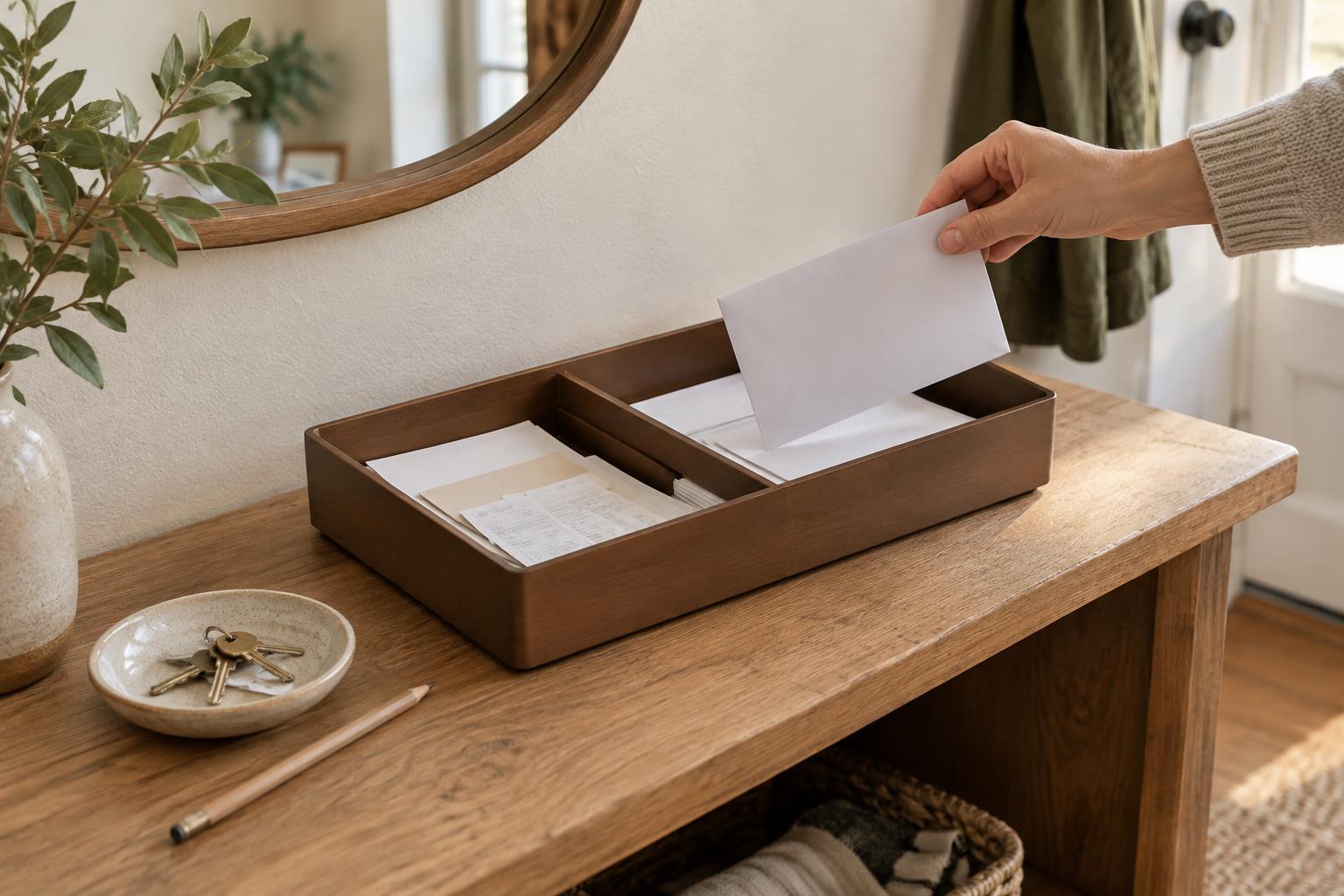
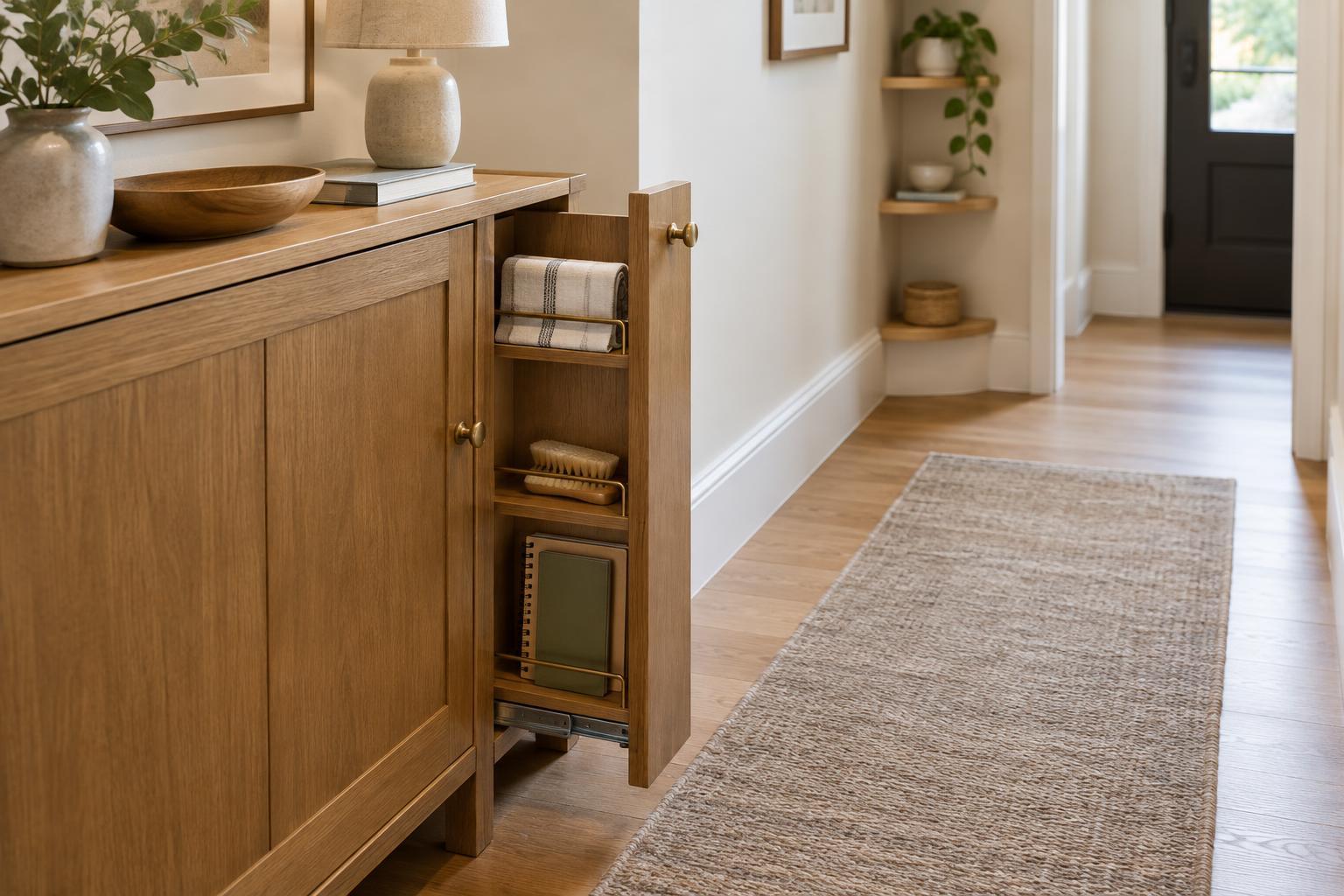
Shallow spaces work best with shallow storage. A narrow ledge, wall rail or slim cabinet can hold small things without projecting far into a room. In a hallway, that might mean a tray for keys rather than a deep console. Beside a desk, a wall-mounted pocket might hold notebooks without taking up legroom. Choose objects that fit the depth comfortably instead of allowing them to overhang.
Corners need a different approach because their back edges are often difficult to reach. Store frequently used items near the front and reserve the deepest part for light, occasional-use objects, if you use it at all. A small rotating tray can help on a countertop; an open shelf may work better where you need to see what is there. In a lower corner, a removable bin is often simpler than a fixed shelf that forces you to reach behind other belongings.
Design for the hand that has to retrieve it
Good storage is not just a place where an object fits. It also leaves room for a hand to grasp the object and bring it out. Test a proposed arrangement with the bulkiest item you intend to store. Can you lift it without tilting it around a door frame? Can you remove one thing without unloading everything in front of it? If not, reduce the number of items or choose a more open container.
Visibility matters in tight spaces. Clear containers, low-sided trays and simple labels can make small supplies easier to find, but they are not all needed at once. Group items by the task they serve: cleaning cloths together, for example, rather than scattered across several narrow gaps. Keep heavy objects low and avoid putting fragile items where a passing sleeve or bag could catch them.
Keep access and movement clear
Storage near a doorway, stair or shared walkway deserves particular restraint. Check the space with someone carrying laundry, a grocery bag or another everyday load, not just with empty hands. Avoid organizers that create sharp projections at shoulder or hip height. Where people brush past a corner, a rounded edge or recessed hook is usually less intrusive than a deep shelf.
Leave vents, electrical panels and other service points unobstructed, and keep any removable storage easy to move when access is needed. If a unit is tall or could tip when a drawer or basket is pulled out, follow its installation guidance for secure placement. Hooks and wall shelves also need fixings suited to the wall and the intended load. When you cannot attach something securely, a small freestanding solution may be the better choice.
Try a temporary setup before committing
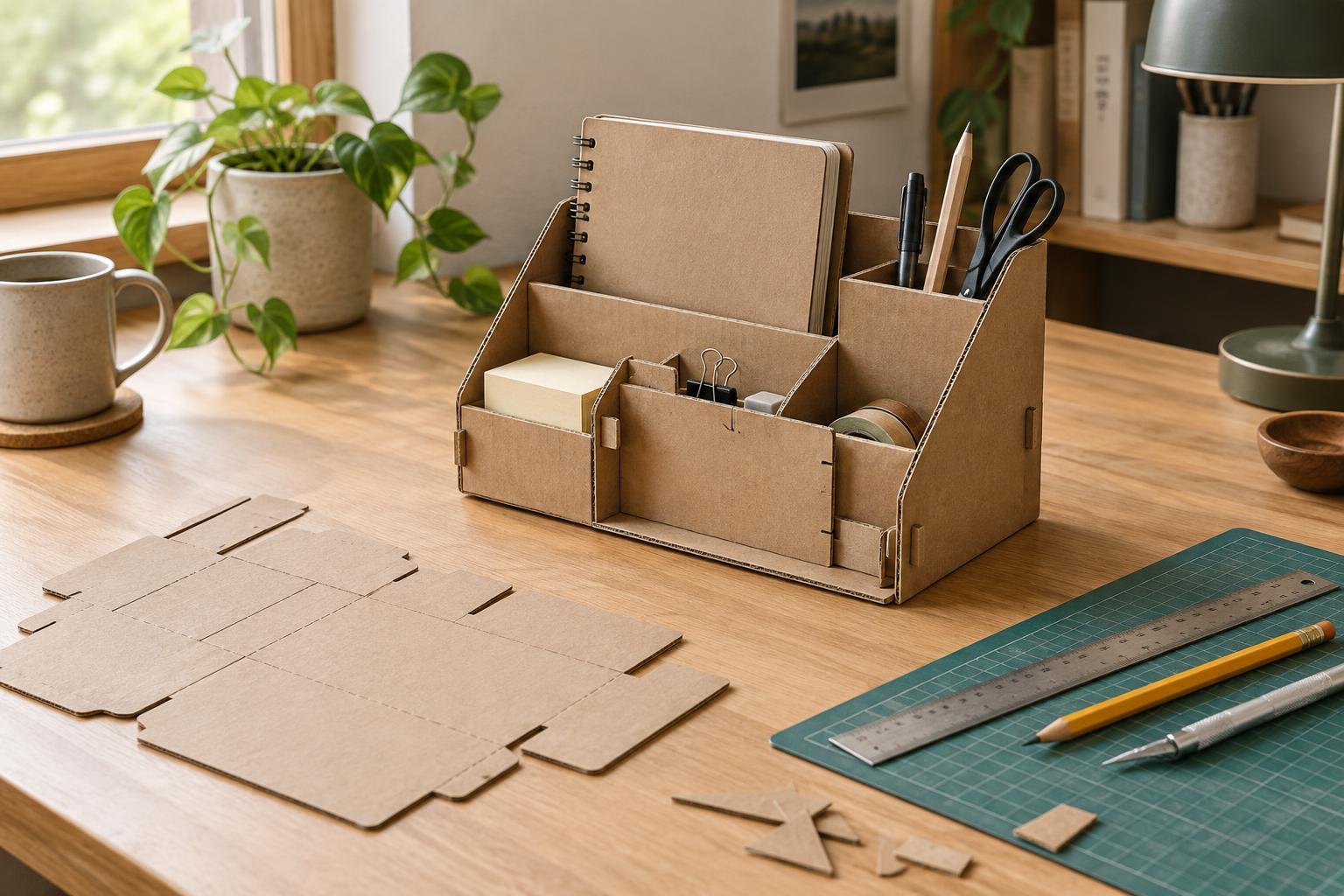
You do not need a custom-built unit to learn whether a space is useful. Mark a proposed shelf depth with removable tape, or place a cardboard box where a cabinet might stand. Live with the outline for a few days. Notice whether you step around it, bump it or stop opening a nearby drawer all the way. Those small frictions are valuable design information.
Start with one purpose for the space and only the items that support it. A shallow shelf for mail, for instance, needs a way to clear old papers; otherwise, its convenient position can turn it into a pile. Once the arrangement proves easy to use and clean around, you can choose a more durable version. The aim is not to fill every gap. It is to give neglected space a clear job while preserving the access that makes the room work.