Storage is part of the product’s job
A mixing bowl might be used for ten minutes and stored for the rest of the day. The same is true of a colander, a cleaning brush, or a folding stool. If an object works beautifully in the hand but is awkward to put away, its design has left a common task unfinished. Storage deserves attention alongside grip, weight, cleaning, and appearance.
The first question is not simply how small the object can become. It is where it will live and how often someone needs it. A bowl used daily should be easy to lift from a cupboard; one used occasionally may tolerate a more involved arrangement. Available space also matters. A deep cabinet, a shallow drawer, and an open wall reward different shapes. Nesting, stacking, and hanging each make use of space in a different direction, and each introduces its own compromises.
Nesting saves volume, but depends on clearance
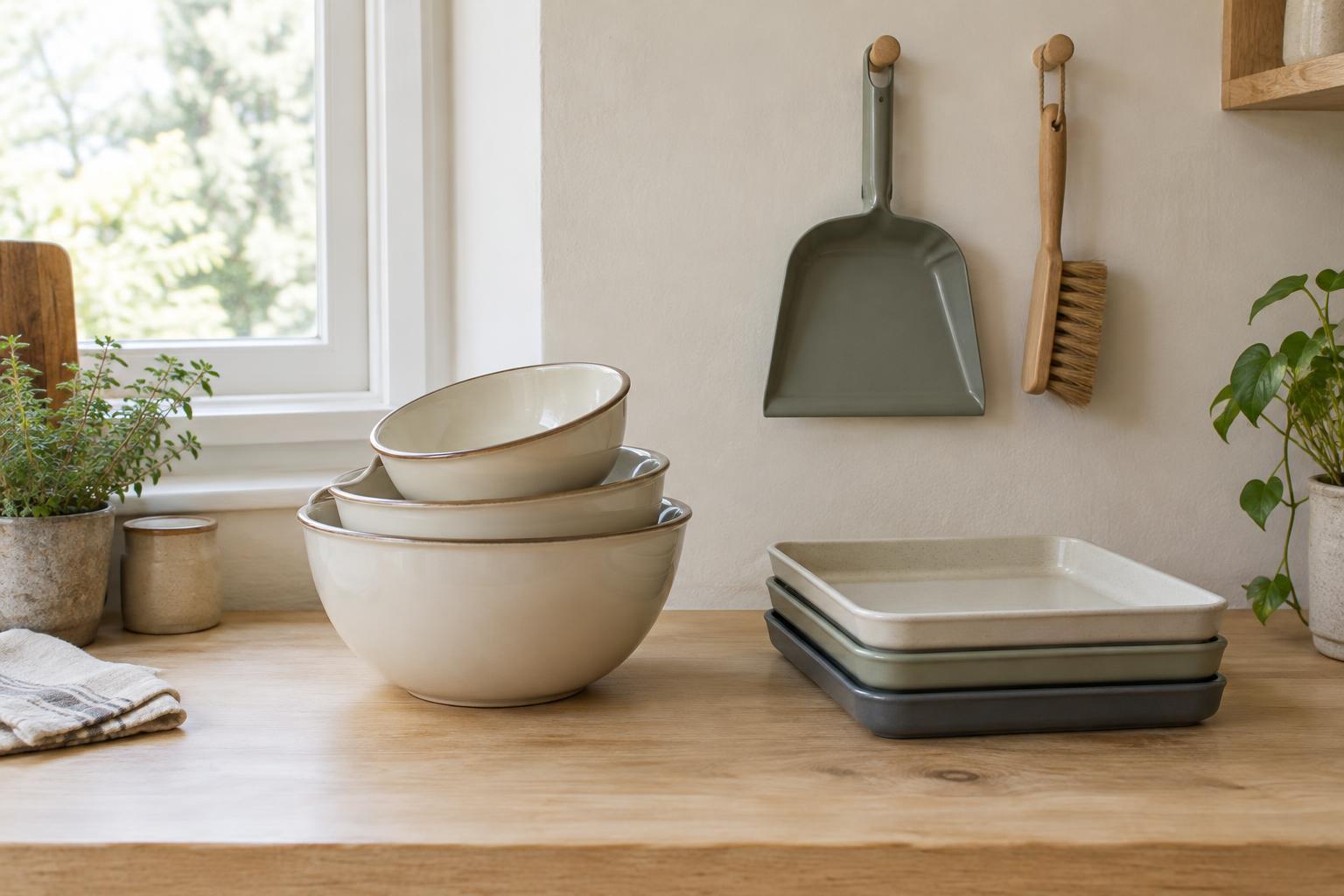
Nesting lets similar objects sit partly inside one another. Bowls, measuring cups, and food containers are familiar examples. Tapered sides create the clearance needed for one piece to enter another, while a rim or shoulder can keep the pieces from sliding too far together. A well-judged set occupies less cupboard volume than the same pieces stored separately.
Too little clearance can make objects stick, especially when surfaces are damp or slightly flexible. Too much can make the set wobble or take up more room than expected. Handles, lids, and pouring spouts may also interrupt the nesting shape. One possible solution is to align these features so they fit within a shared outline; another is to accept a less compact set in exchange for a more comfortable handle. The best choice depends on which task happens more often: storing the product or using it.
Nesting also changes how a set is retrieved. If the largest item is at the bottom, reaching it may mean removing everything above it. For products used individually, such as cups, that small inconvenience can add up. A compact set is useful only if its pieces remain easy to separate and identify.
Stacking needs a reliable landing place
Stacking places one object on top of another rather than inside it. It works when bases and tops meet predictably: a raised foot might locate inside a shallow recess, or a broad, flat base might rest securely on a matching lid. Trays, storage boxes, and some stools use these relationships to build upward without demanding much floor or shelf space.
A stack should feel stable before it is full. Small differences in shape, uneven loads, or a slippery surface can become more noticeable as the pile grows. Designers can use a modest lip, a textured contact area, or a clearly defined stacking position to help pieces settle. They should also consider access. A stack of boxes may look orderly, but the bottom box is difficult to open unless the upper ones are moved. Transparent sides, labels, or a different storage arrangement may be more valuable than adding another level.
Stacking surfaces take repeated contact, so details that seem minor on a single product matter across a set. An exposed decorative finish may scuff where two pieces meet. A deep recess may collect crumbs or water. A useful design makes the contact points durable and reasonably easy to clean.
Hanging trades shelf space for visibility
Hanging is often effective for objects that are light, frequently used, and comfortable to leave visible: dustpans, utensils, brushes, and some small tools. A hole, loop, hook, or rail connection can free a drawer or shelf while giving the object a clear return point. It also makes a missing item easy to notice.
The hanging feature must suit the object’s weight and the way people pick it up. A tiny hole at the end of a long handle may be hard to place on a hook. A loop can be easier to use, but it may swing or catch during work. Orientation matters too: a wet brush may benefit from hanging so water can drain, while an object with a heavy head may hang at an inconvenient angle. The wall or rail is part of the system, so the design is only successful if there is a practical place to mount it.
Test the return trip, not just the stored shape
When comparing storage approaches, try a short everyday sequence: take the object out, use it, clean it, and put it back. Can it be returned with one hand? Does it need to be completely dry? Must other items be moved first? These questions reveal friction that a tidy product photograph cannot show.
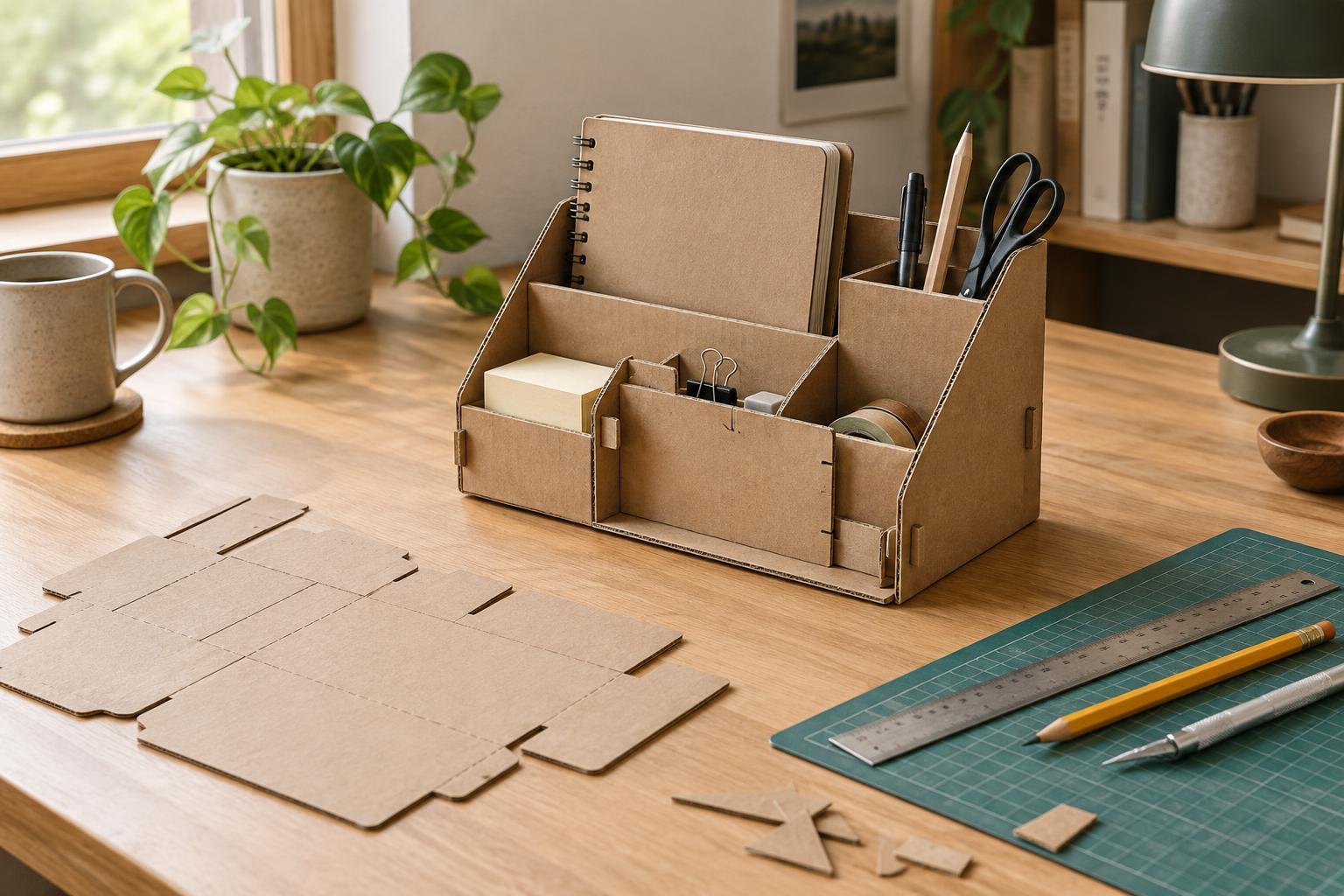
For a hands-on prototype, cardboard profiles or simple mock-ups can help check shelf height, handle clearance, and the reach needed to remove an item. Test with the actual cupboard, drawer, or rail when possible. Leave room for imperfect placement: people rarely align household objects with the care used in a display. The most successful storage feature is not necessarily the one that packs an object smallest. It is the one that makes putting the object away feel like a natural end to using it.