Start with what the joint must do
A joint is more than a way to keep two pieces of paper together. It can determine the angle of a fold, the stiffness of a wall, and whether a sculpture can be taken apart. Before choosing a method, hold the pieces in their intended position and ask where the weight will travel. A seam near the base of a tall form may need to resist bending; a seam on a lightweight decorative surface may only need to keep two edges aligned.
Also decide whether the connection should disappear or become part of the design. A smooth, continuous surface often calls for a concealed tab or carefully placed adhesive. Visible stitches can give an edge rhythm and make the construction legible. There is no single strongest choice for every form: paper thickness, the length of the seam, and the direction of the pull all affect how a joint behaves.
Use tabs when you want an integrated structure
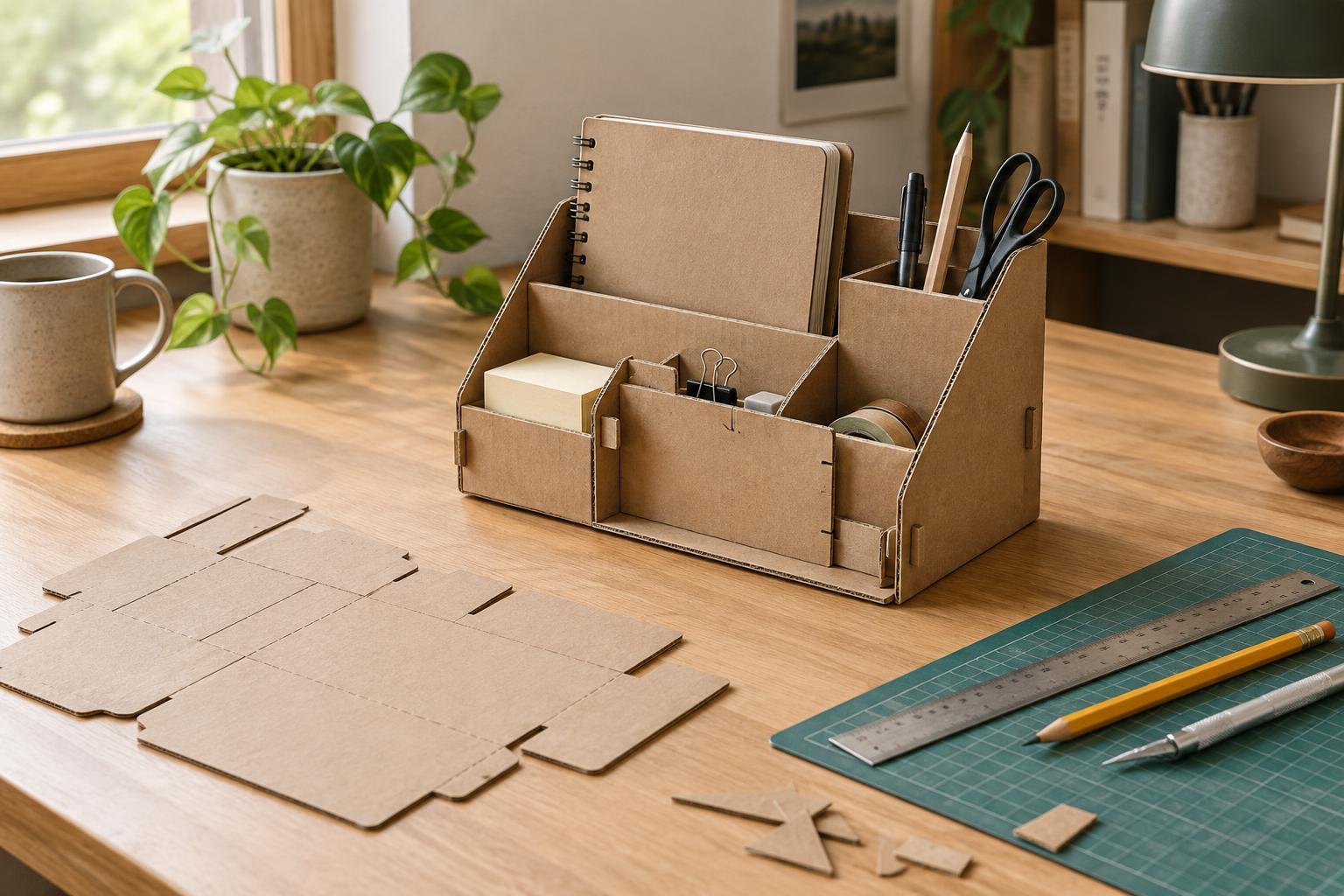
A tab is an extension of one paper piece that folds behind another and creates an area for attachment. Tabs work especially well on geometric forms, where a scored fold can establish a repeatable angle. They also make planning easier: cut and score the flat pattern, then check how its faces meet before applying adhesive.
Give a tab enough width to attach securely without crowding the inside of the sculpture. On a tight curve, one wide tab may buckle; several narrower tabs can follow the shape more easily. For a crisp edge, score the fold line lightly before bending it, using a ruler to guide the tool. Test the score on a scrap first, since a deep cut can weaken the paper.
Tabs are not always invisible. Thick stock may leave a raised edge where the tab sits behind a face, and overlapping tabs can create a bulky corner. If that matters, place joins where a shadow or change of plane will disguise them. A dry assembly with removable tape can reveal these problems while they are still easy to change.
Choose glue for broad contact, stitching for a visible seam
Adhesive is useful when two surfaces can overlap and stay pressed together while the bond sets. A thin, even application usually gives better control than a large wet patch, which may cause some papers to ripple. Work from a small test made with the same paper: see whether the adhesive shows through, changes the surface, or grabs too quickly for you to align the pieces. A clean backing sheet and gentle, even pressure help keep exposed faces tidy.
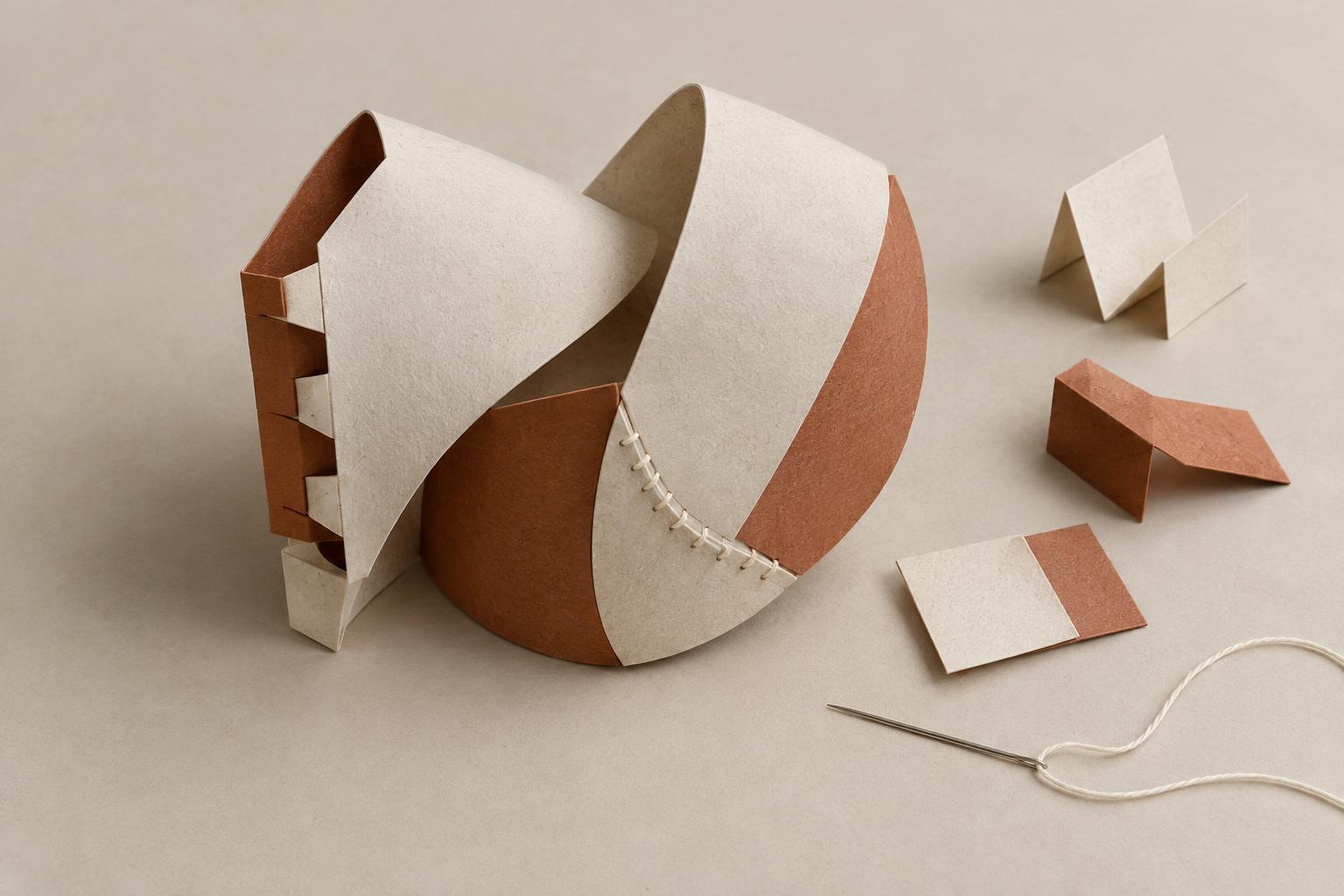
Stitching is a good option when you want a seam to remain visible or prefer to avoid a broad glued overlap. It can join edges with a gap between them, producing a flexible connection that glue may not provide. Pre-punch evenly spaced holes rather than forcing a needle through a completed form. Keep holes away from the edge so the thread is less likely to tear out, and avoid pulling each stitch so tight that it puckers the paper.
Stitching has its own trade-offs. Thread, knots, and holes become design elements, even if they are small. Thin paper may need a folded edge or an added strip behind the seam to distribute the pull. For a rigid sculpture, stitches alone may allow more movement than you want; a hidden tab can supply the structure while a stitched line provides the visible detail.
Make a sample seam before making the sculpture
A useful test needs only two offcuts shaped like the pieces you plan to join. Make a short version of the proposed seam, let any adhesive set, then gently bend, lift, and turn it in the directions the finished sculpture will experience. Look for peeling, tearing, warping, or an unwanted gap. Check it from the angles at which the sculpture will be seen, not just from the worktable.
If the seam fails, change one variable at a time. Widen a tab, move stitch holes farther from the edge, add a reinforcing strip, or shift the joint to a less stressed part of the form. You can also combine methods: tabs for alignment, glue for a firm bond, and a few stitches where the construction should be celebrated. The best joint is the one that supports the shape you intend and leaves you able to assemble it cleanly.