Start with what needs a home
A few pens, a pencil and a highlighter may not seem like an organization problem. Yet these small tools are often the first things to spread across a desk. A holder can make them easier to find, but only if it matches the way you reach for them. The useful question is not which organizer looks tidier in a photograph. It is whether you need quick access, clear separation, or a little of both.
Before choosing a container, gather the writing tools you actually use at your desk. Set aside dried-out pens and duplicates you do not want within reach. Then notice the mix: are most items similar in length and shape, or do you also have erasers, sticky-note flags, clips and short pencils? That small inventory will tell you more than the size of the empty space on your desktop.
What a pen cup does well
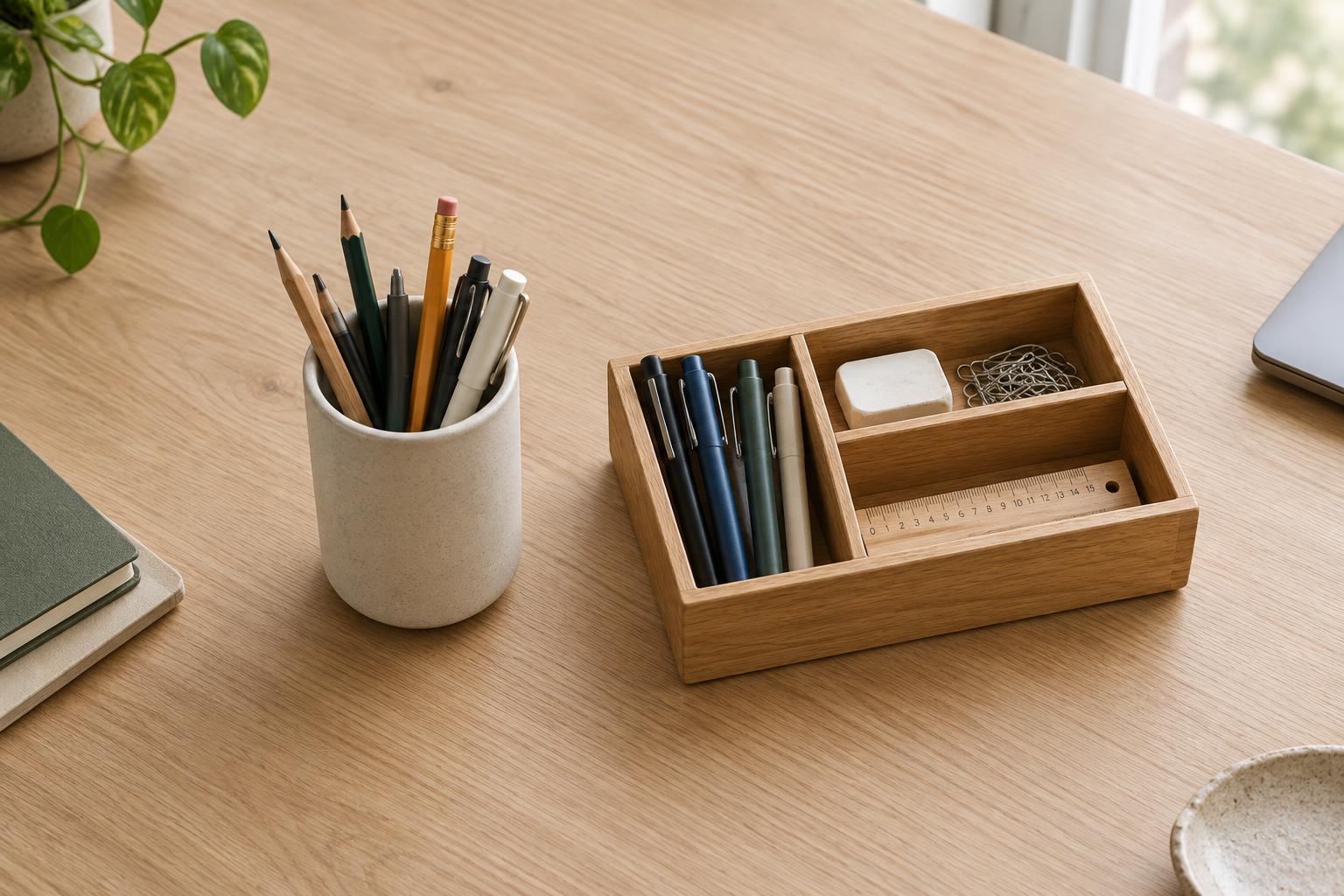
A pen cup offers one open landing place. You can return a pen without aiming for a particular slot, and you can usually see the tops of several tools at once. It works especially well for a modest collection of full-length pens, pencils and markers that you use interchangeably. Its small footprint can also suit a desk with limited open surface area.
The trade-off is that tools share the same space. A favorite fine-tip pen may disappear among similar barrels, while a short pencil can sink below taller items. If the cup is packed tightly, finding one tool means lifting or stirring the rest. A wider cup may make its contents easier to see, but it also takes up more room. Try leaving enough space to remove a single pen without pulling others along.
Shape and weight matter in everyday use. A stable base is helpful if you tend to grab tools quickly, and a smooth inner surface is easier to wipe clean when graphite dust or ink marks accumulate. A cup does not need to be sold as a desk accessory: a sturdy jar or small vessel can serve the same purpose if its opening and height suit your tools.
When compartments earn their space
A compartment organizer divides tools by type or task. One section might hold daily pens, another pencils, and a third correction tape or spare leads. That separation makes sense when you use distinct tools for distinct jobs and do not want to sort through them each time. Low compartments can also keep small supplies visible rather than letting them fall to the bottom of a deep cup.
The cost is more structure. Dividers occupy space, and narrow sections can be awkward for thick markers or an assortment that changes over time. An organizer may look orderly while still being inconvenient if the item you use most sits behind another group. Think about where your hand naturally reaches, then put frequent-use tools in the nearest, least crowded section.
Check whether the compartments suit the tools you own rather than the categories printed on a product listing. A shallow tray is useful for short items but may not contain long pencils well. Tall sections can hold writing tools upright, while lower ones suit clips and erasers. If you need both, a mixed-height layout may be more useful than a grid of identical openings.
Choose for your workflow, not just your desk size
If you write with one or two favorite pens and occasionally switch to a pencil, a cup may be enough. If you regularly move between writing, sketching, labeling and highlighting, compartments can reduce the time spent looking for the right tool. Neither approach requires keeping every spare on the desktop. Refills and rarely used colors can live in a drawer, leaving the visible holder for tools that earn their place.
Consider the movement around the holder, too. A container beside your dominant hand is convenient, but it should not block the area where you write or place a notebook. On a shared desk, labeled sections may help people return supplies consistently; for one person, labels may add little. If you carry tools between rooms, a portable pouch or caddy might solve the problem better than either fixed option.
Try a simple setup before committing
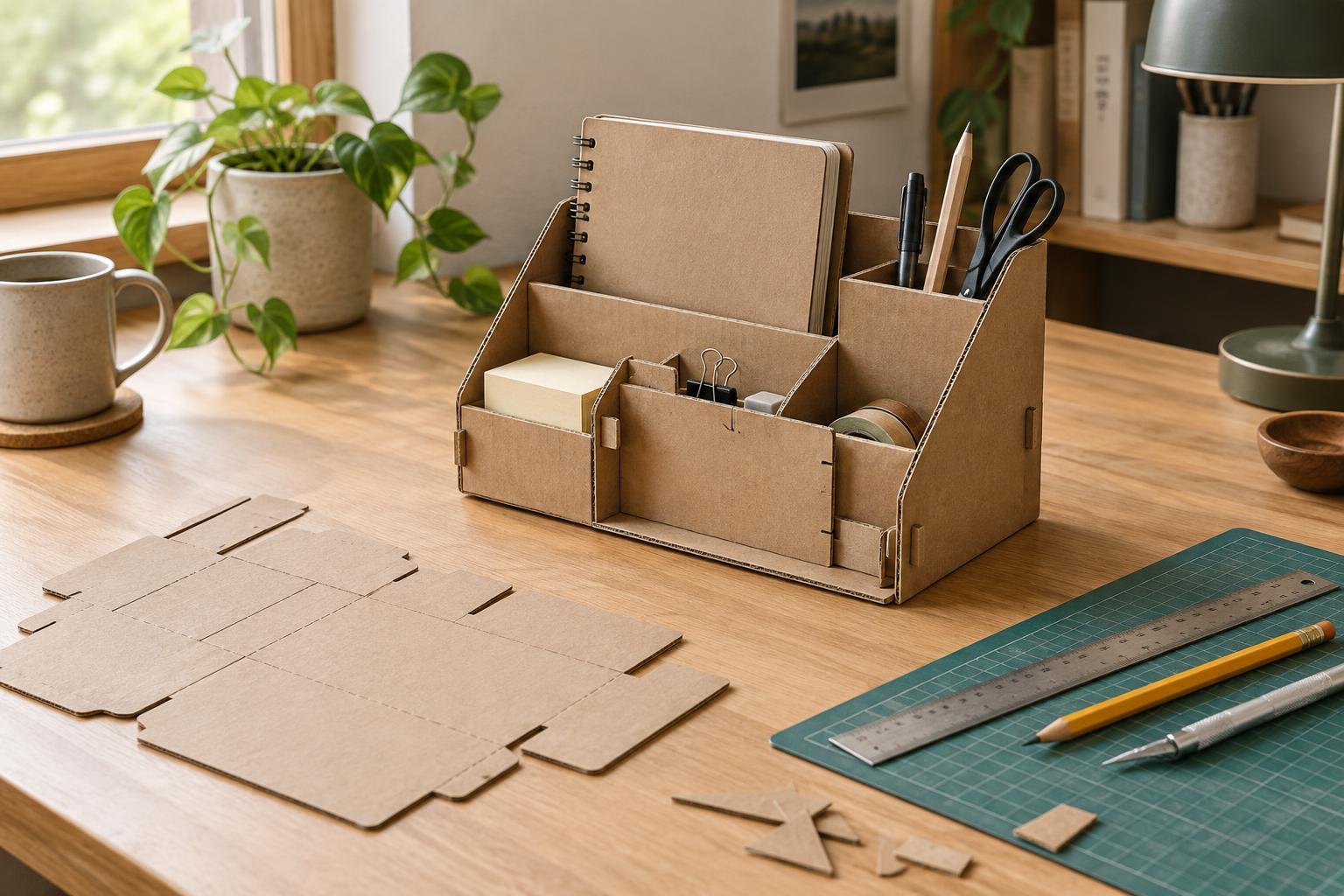
You can test the choice with containers you already have. Use a mug as a pen cup, or place a few small boxes in a shallow tray to mimic compartments. Live with the arrangement through your usual desk tasks. Notice what you can find at a glance, what gets knocked over and what you repeatedly leave lying outside the holder. Those observations point to the shape and capacity you need.
A hybrid setup is often the simplest answer: keep frequently used pens upright in a cup and place small or task-specific items in one shallow compartment. Whichever arrangement you choose, avoid filling every inch on day one. A little open space makes tools easier to return, and an easy-to-use home is more likely to stay useful than a perfectly sorted one.