Start with a place, not a product
An appealing basket can make an untidy shelf look like an easy problem to solve. But a container cannot decide what belongs on that shelf. Bought too early, it may hide things you no longer need, take up space better used another way, or prove awkward for the objects you reach for most often.
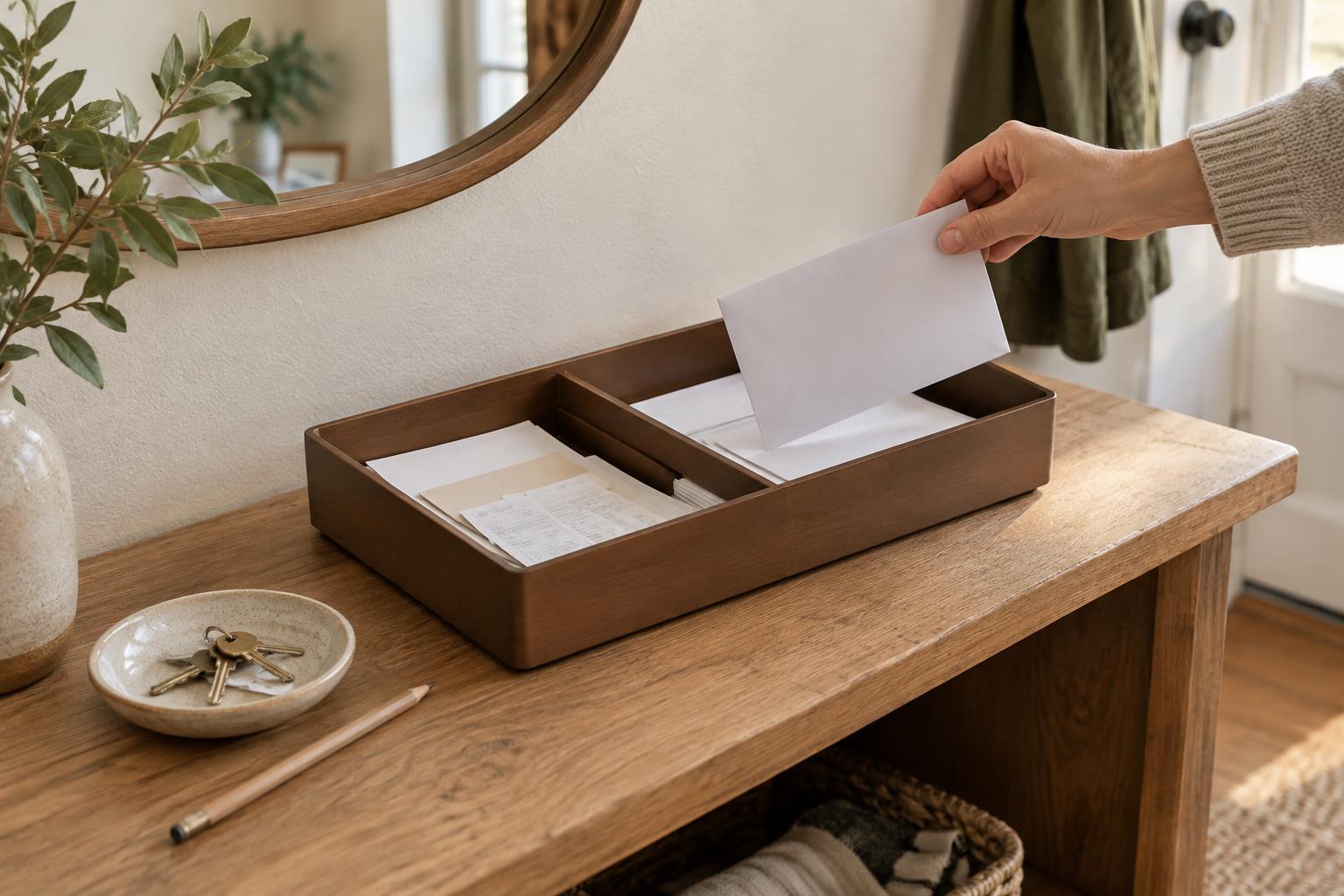
Choose one small area to sort first: a kitchen drawer, an entryway shelf, or the space under a bathroom sink. Set aside enough time to finish that area, including putting things back. A single shelf is a useful starting point if an entire cupboard feels daunting. Before emptying it, ask what the space should help you do. Should it make keys easy to find, keep cleaning supplies together, or free up a work surface? That purpose will guide the decisions that follow.
See what you have and make clear decisions
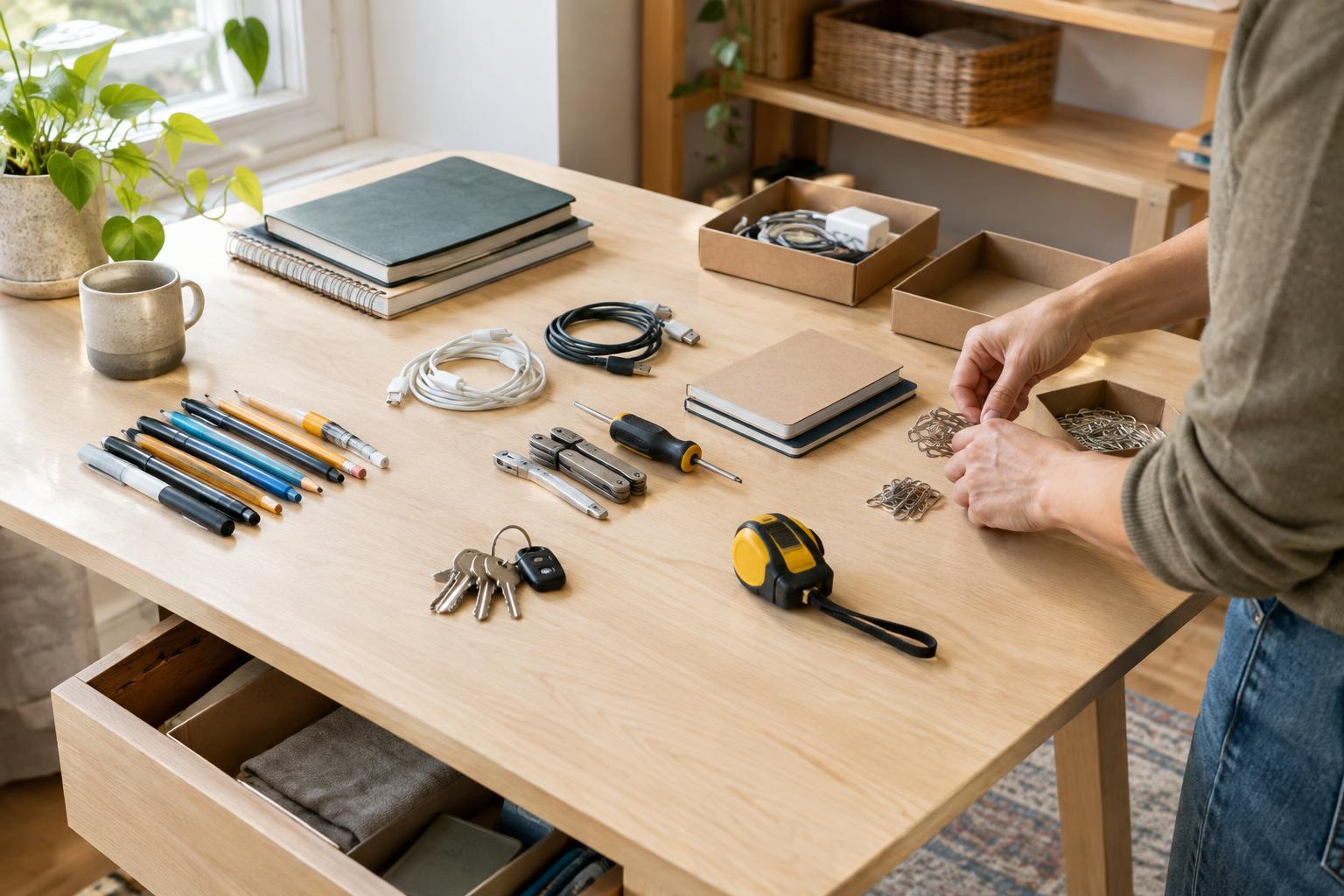
Take everything out of the chosen area and group similar items where you can see them. Put spare batteries with batteries, reusable bags with bags, and loose stationery with stationery. Seeing a category together makes duplicates and incomplete sets easier to notice. It also reveals objects that have drifted into a space simply because there was room.
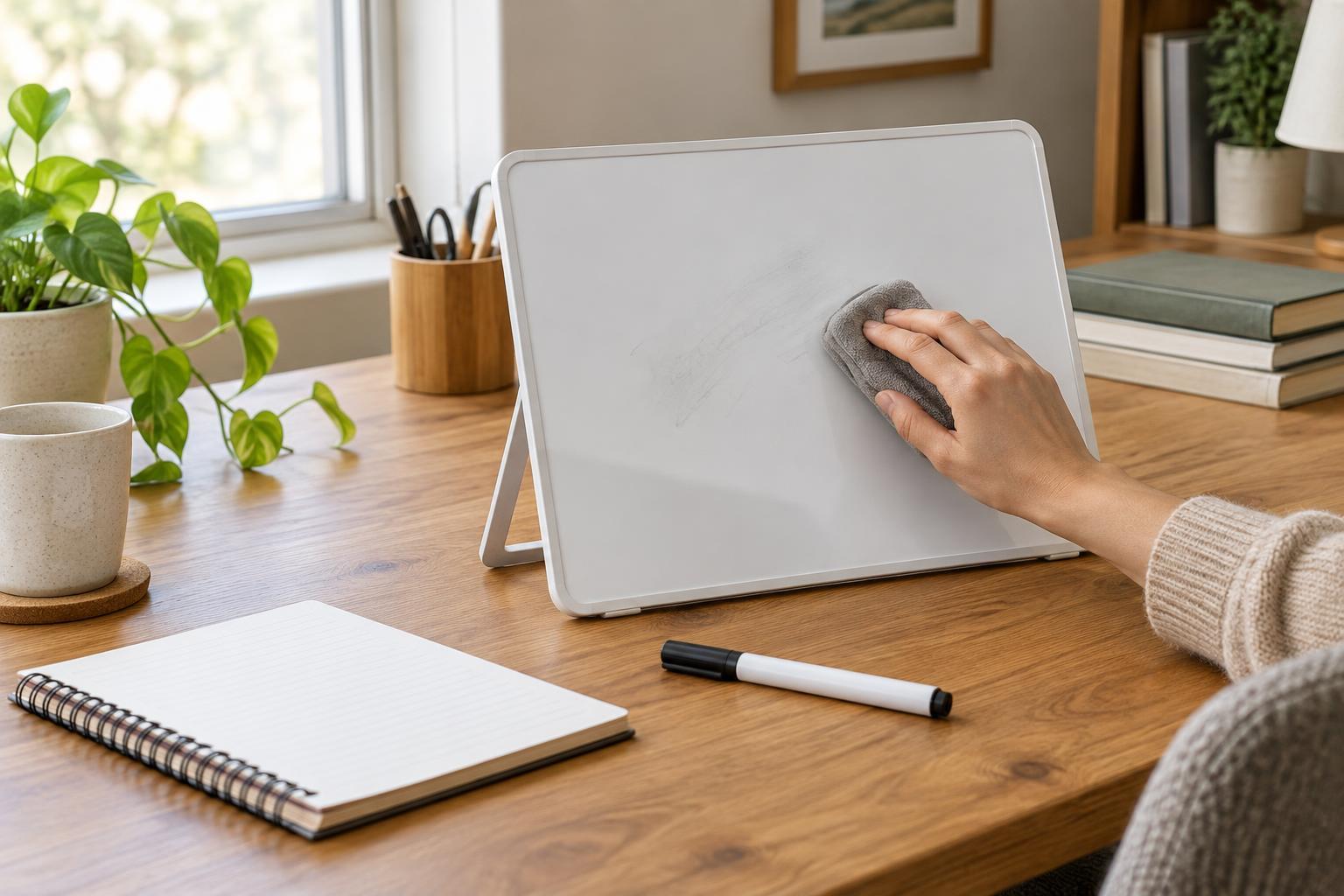
Give each item a destination: keep here, keep elsewhere, pass on, recycle or discard where appropriate, or decide later. Use the last group sparingly; a small, dated decision box is more useful than a permanent pile of uncertainty. Check local disposal guidance for items such as batteries or chemicals rather than dropping them into an ordinary bin.
For the things you keep, consider use rather than just type. A tape measure used weekly may belong near a workbench, while a spare one used rarely could live with other backup tools. If several people share the space, ask where they would naturally look for an item. A storage system is easier to maintain when its locations make sense to the people using it.
Group by activity and frequency
Once the obvious extras are gone, arrange the remaining objects into working groups. These might be lunch-packing supplies, shoe-care items, gift-wrapping materials, or everyday chargers. Grouping by activity can be more helpful than grouping strictly by material or shape: scissors may belong with wrapping paper if that is where they are most often needed.
Put frequently used groups within easy reach and occasional supplies in less convenient spots. Leave enough room to take an item out without dismantling the rest of the shelf. A perfectly filled container may look efficient, but it can slow down daily use. Notice whether some objects need to stand upright, stay visible, or be protected from spills. Those requirements matter more than matching every container in the room.
Measure the contents and the space
Before shopping, measure the available width, depth, and height. Check for hinges, pipes, sloping walls, and doors that may reduce usable space. In a drawer, note its interior dimensions and whether a tall organizer would catch when the drawer closes. Measure a few bulky objects too, rather than assuming their category will fit a standard box.
Now estimate the volume of each group as it will actually be stored. Fold textiles, gather cables, or stack small supplies in a temporary pile. This helps distinguish a need for a shallow tray from a need for a deep bin. It also keeps you from buying one large container for items that should live in different places. Write down the measurements and the purpose of each potential container, not just a shopping list of sizes.
Try the arrangement before making it permanent
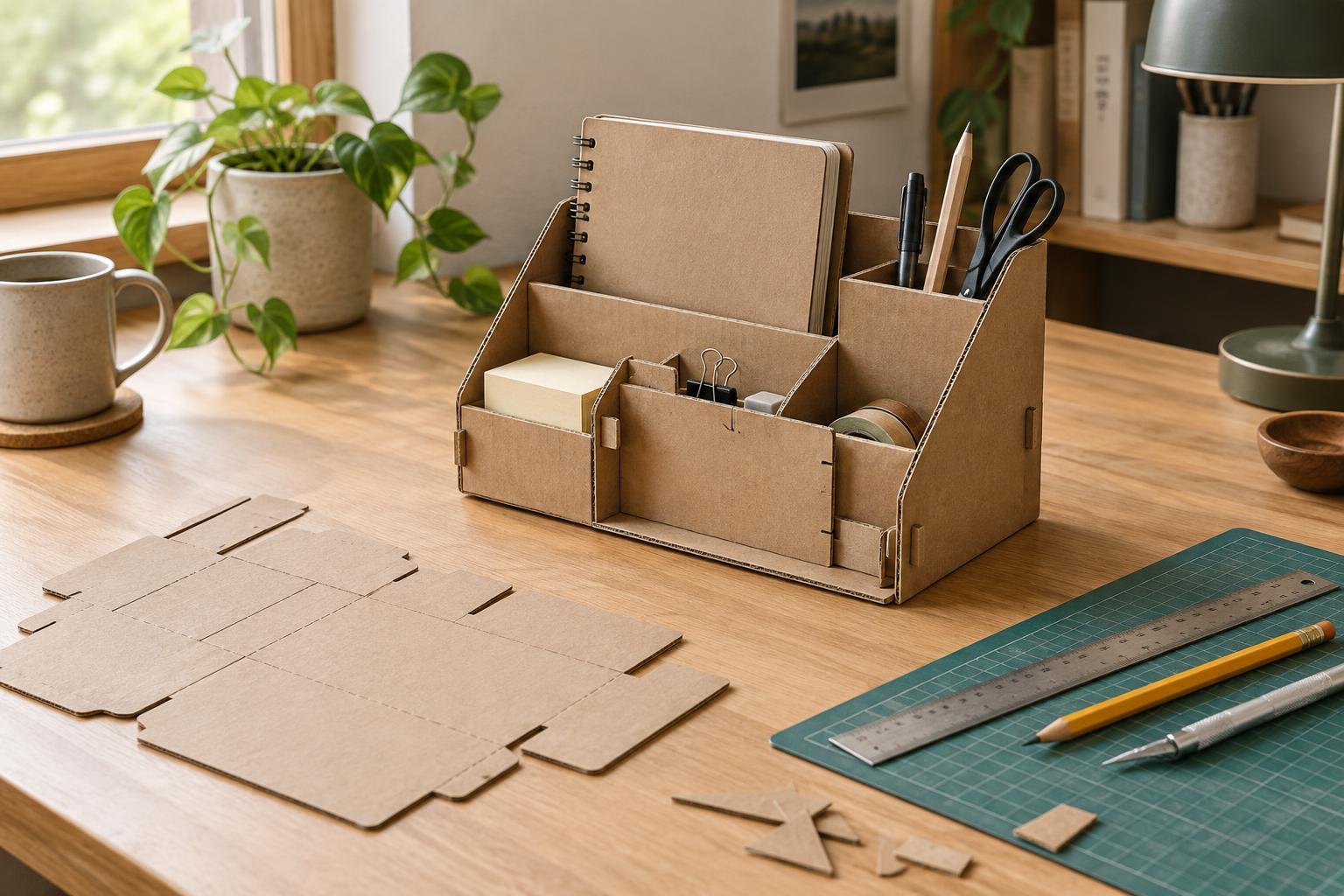
Use what you already have to test the layout. A spare shoebox can stand in for a drawer divider, and an existing basket can show whether a group is convenient to lift from a shelf. Temporary labels help when several people use the area. Live with the arrangement through a few normal routines, then notice what gets left out and what is difficult to put away.
Buy a container only when it solves a specific problem the test revealed. You may need a washable tray for items that leak, a divided box for small parts, or no new container at all. Look for a fit that leaves space for your hands and does not block nearby items. Sorting first makes the purchase more deliberate: the container serves the belongings and the routine, rather than asking the household to adapt to the container.