A handle is a connection between hand and object
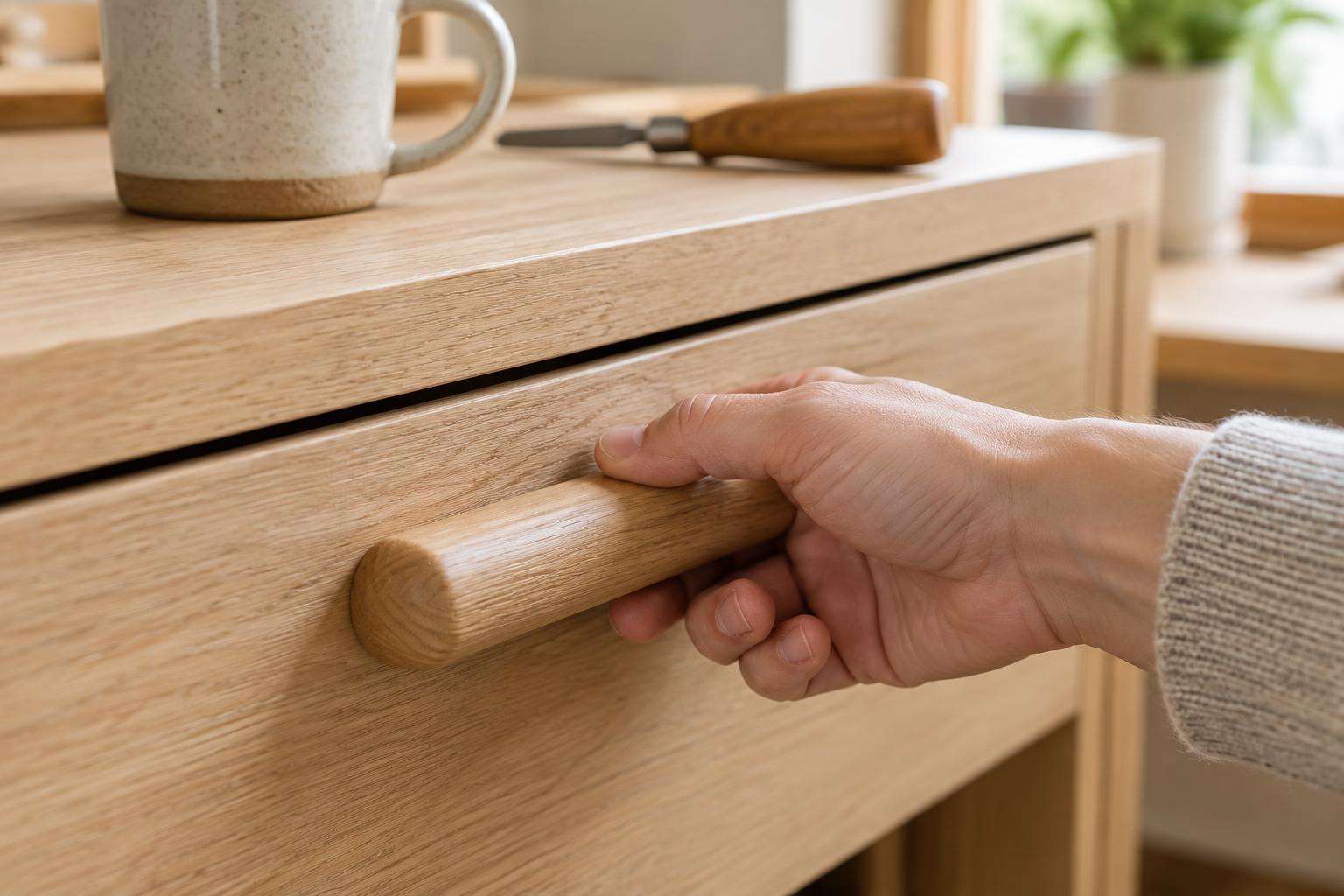
A handle does more than provide a place to hold. It lets the hand apply force in a useful direction while the object resists, moves, or turns. That job changes from one object to another: a drawer pull needs to draw a drawer outward, a cabinet handle may help swing a door, and a pitcher handle must remain manageable as its contents shift.
Good handle design begins with the action rather than the shape. Ask where the hand approaches from, what must move, and whether the user will pull, lift, twist, or steady the object. A handle that feels generous when examined on its own may become awkward once it is mounted against a wall or next to another object.
Grip size should suit the task
A very narrow handle can concentrate pressure on a small part of the fingers. A bulky one may be difficult to wrap the hand around, especially when the user needs to maintain a secure grip. Neither thin nor thick is automatically better: the right size depends on how much force the task requires and whether the handle is meant for fingertips or the whole hand.
Consider the difference between opening a light cabinet door and carrying a full watering can. The cabinet may work well with a small pull that several fingers can catch. The watering can benefits from a grip that offers a stable hand position and does not create an uncomfortable edge under load. Rounded contact surfaces can feel more forgiving than sharp corners, but an extremely smooth or rounded handle may also be harder to control with wet hands.
If several people use an object, avoid designing around a single hand size. A practical handle offers more than one comfortable place to make contact or enough length for users to adjust their grip.
Clearance makes a grip usable
Clearance is the space between a handle and the surface behind it, or around the handle where the hand needs to travel. It is easy to overlook because an empty handle can appear roomy. Once fingers enter that space, knuckles may meet a drawer front, a wall, or the edge of a neighboring door.
Check clearance during the full motion, not just at the moment of first contact. A hand pulling a drawer may rotate slightly as the drawer starts moving. A hand opening a cabinet near a corner may need room to follow the door’s swing. Gloves, damp hands, and the need to grasp quickly can also change how much usable space a handle seems to provide.
More clearance is not always desirable. A handle that projects far into a narrow passage can snag clothing or become an obstacle. The aim is enough room for a deliberate grip without creating a new problem in the surrounding space.
Position and leverage change the effort
Leverage describes how a force applied at a handle helps move an object around a pivot or along its path. On a hinged door, a handle placed farther from the hinge generally makes the door easier to swing than one placed close to it. On a drawer, the concern is different: a centered pull can help the drawer travel straight, while pulling from one side may encourage it to skew, depending on its construction.
Orientation matters too. A vertical pull can give the hand several possible heights on a cabinet door. A horizontal pull may offer a natural grip on a wide drawer. Before choosing either, consider the direction in which the hand will actually pull and whether the wrist must bend sharply to do it.
For containers and portable objects, look at balance as well as leverage. A carrying handle placed away from the loaded object’s balance point can cause the object to tilt. Sometimes a second hand position, such as a small support grip, makes pouring or carrying easier to control.
Test the handle in its real setting
A simple mock-up can reveal more than a drawing. Attach a temporary pull to a sample door or drawer, or hold a proposed handle shape against the object it will serve. Try the movement slowly and at normal pace. Notice where fingers press, whether knuckles have room, and whether the hand can release the handle without catching.
Repeat the test with the object in ordinary use. Put items in the drawer, fill the container to a typical level, or approach the cabinet while carrying something in the other hand. Invite people with different hand sizes to try it if the object will be shared. Their preferences may differ, but repeated points of discomfort are useful design clues.
The best household handle is rarely the most striking shape in isolation. It is the one whose grip, clearance, and position quietly support the action people need to perform.