A hinge does more than let something turn
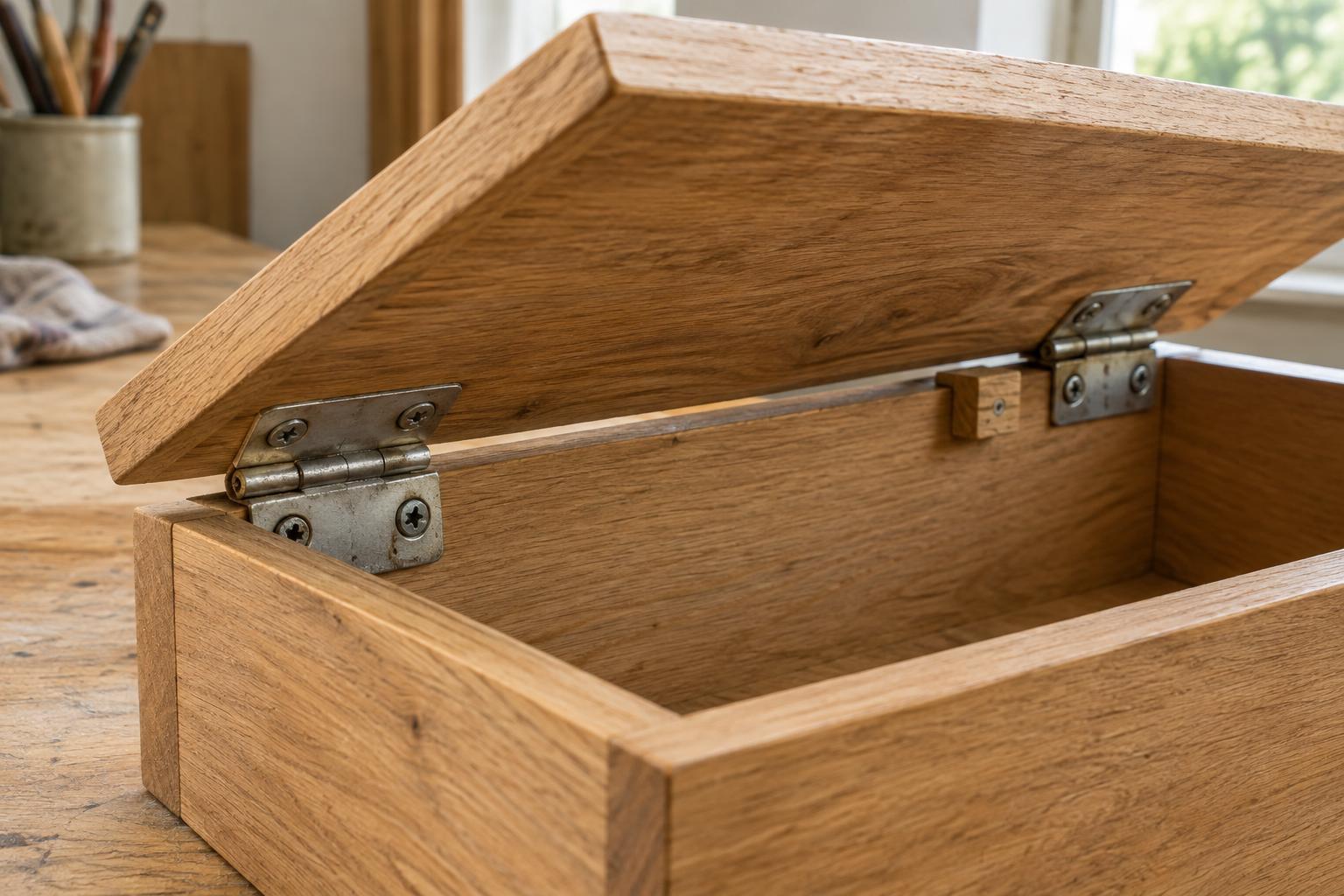
A hinge connects two parts while allowing controlled rotation. On a cabinet, it holds the door at a consistent height as well as letting it open. On a box, it keeps the lid attached while guiding its path. Failure is not always a broken metal leaf or pin: it may first appear as a gap that changes, a door that scrapes, or screws that need frequent tightening.
To understand a hinge problem, look beyond the hinge itself. The moving part, its weight, the distance from its center of mass to the hinge line, the material holding the screws, and the way the object is used all affect the connection. A strong hinge mounted in a weak surface can still come loose. A well-mounted hinge can still be damaged if the object is regularly pushed beyond its intended range.
Load is about leverage, not just weight
A wide door puts a different demand on its hinges than a narrow door of the same weight. As its weight acts farther from the hinge line, it creates more turning force at the connection. That force can make the outer edge sag and can pull on the upper fasteners. Hanging a heavy item from a door handle adds another load that the original design may not have allowed for.
The surrounding material matters too. Screws need enough sound material to grip, and the hinge leaves need to sit flat against their mounting surfaces. If a screw hole is stripped, simply tightening the screw may not restore the connection. If a door or lid has changed shape, adjusting the hinge alone may not solve the misalignment.
When choosing a hinge for a project, consider the full moving part rather than selecting by hinge length alone. Think about its size, weight, mounting material, and where someone will apply force to open it. More hinges can help distribute load, but only when they are positioned and aligned so they actually share the work.
Motion needs a deliberate stopping point
A hinge defines an axis of rotation, but it does not always provide a suitable stop. If a lid opens until the hinge leaves bind, the hinge may become an accidental brake. Pushing farther can bend a leaf, stress its fasteners, or damage the material around them. A cabinet door that repeatedly strikes a nearby wall can suffer similar stresses even if the hinge itself has not reached its limit.
A separate stop, support, or restraint gives the moving part a clear end to its travel. Depending on the object, that might be a lid stay, a door stop, a bumper, or a shaped part of the frame. The best choice depends on how the object is handled: a light lid that is opened gently presents a different problem from a heavy lid that could fall shut. The aim is to let the stop absorb the end-of-travel force without forcing the hinge or its screws to do that job.
Repeated use exposes small errors
Each opening and closing cycle moves the hinge pin and loads its mounting points. Over time, a little play at the pin or a little movement around a screw can become noticeable at the far edge of a door. A slight alignment error can also make parts rub on every cycle. The result may be a hinge that squeaks or feels stiff, even though no single use seemed unusually hard on it.
Look for a pattern before making an adjustment. Does the door rub only near the end of its travel? Do both hinge leaves sit flat? Is the pin area loose, or does the whole hinge shift against its mounting surface? These observations help distinguish wear in the hinge from a loose fastening or a changing frame. Forcing a stiff object through its travel can hide the cause briefly while adding stress elsewhere.
Design and maintain the whole connection
For a new project, start with a straight, stable mounting area and leave enough clearance for the part to move without rubbing. Position hinges so their axes line up; otherwise they may fight each other as the object turns. Test the full motion before finishing the assembly, paying attention to what happens at both the closed and fully open positions.
For an existing object, begin with simple checks: remove loads that do not belong on the moving part, inspect for loose fasteners, and clean debris from areas where parts meet. If a pin or joint needs lubrication, use a small amount appropriate to the hinge and wipe away excess that might attract dirt. Replace visibly bent or badly worn hardware rather than relying on repeated adjustment. Thinking of the hinge, its fasteners, the supporting material, and the motion stop as one system makes problems easier to diagnose—and easier to prevent.